image-title

Call on Congress to Reduce Military Aid to Colombia & Support Victims of Violence

As you will recall, last year the Congress made many positive changes in U.S. policy towards Colombia – changes that couldn’t have been made without committed activists like you.

Picking up the phone, demanding your voice be heard. With the foreign aid subcommittees in the House and Senate set to “mark up” their respective bills in mid-July, it’s time to call your representative and senators and urge them to stand by Colombia’s victims of violence.

Call your Representative and Senators today and ask them to support the continued reduction of military aid to Colombia in this year’s foreign aid bill. See below for a list of Illinois Representatives & Senators, foreign policy staffers, and their contact information. Also, if you don’t know who your members of Congress are go to:

http://www.congress.org/

and type in your zip code to find out.


When you call, ask to speak with the foreign policy aide

. If he or she is unavailable, please leave the following message on his or her


voicemail:


“I am a constituent calling to encourage Rep./Senator  ____________ to ensure that this year’s foreign aid bill stands by Colombia’s victims of violence. Last year, the Congress moved U.S. policy in the right direction by reducing military aid. Now, with credible reports linking the Colombian military to extrajudicial killings of civilians, Congress must continue to cut aid to Colombia. Instead of fueling war, the U.S. should be supporting Colombia’s victims of violence – small farmers trying to turn away from coca, refugees and the internally displaced, and Afro-Colombian and indigenous communities – in addition to the courageous efforts of human rights defenders.

 I urge you to share my concerns on U.S. aid to Colombia directly with the chair of the foreign operations subcommittee before the foreign aid bill goes to mark up.


Can I count on Rep/Senator ________ to communicate these concerns?

Please let me know. My phone number is ___________. Thank you.”


When

you

decide to take positive actions on behalf Colombia’s victims of violence, send us an email to let us know what you did.

We’ve already achieved some momentous changes in U.S. policy towards Colombia, but we’ve got to keep building on our successes – we must keep pushing that ball up the hill!

Your calls make a difference!  For more information, contact Danielle Wegman at

dwegman@crln.org

or 773-293-3680.


Illinois


Representatives


Bobby Rush (D-


1

st


)


– John Marshall,

202-225-4372


Jesse Jackson (D-


2

nd


) ­


– Charles Dujon

, 202-225-0773


Dan Lipinski (D-


3

rd)


– Keith Devereaux,

202-225-5701


Luis Gutierrez (D-4

th

)


Greg Staff

, 202-225-8203


Rahm Emanuel (D –


5

th


)


– Luis Jimenez,

202-225-4061


Peter Roskam (R


-6

th


)


Vicky Sanville,

202-225-4561


Danny Davis (D


-7

th


)


– Charles Brown,

202-225-5006


Melissa Bean (D-8

th

)


– J.D. Grom,

202-225-3711


Jan Schakowsky (D-9

th

)


– Nina Besser,

202-225-2111


Mark Kirk (R-10

th

)


– Rich Goldberg,

202-225-4835


Jerry Weller (R-11

th

)


– Alan Tennille,

202-225-3635


Jerry Costello (D-12

th

)


– Dan McCarthy,

202-225-5661


Judy Biggert (R-13

th

)


– Brian Petersen

, 202-225-3515


Bill Foster (D-14

th

)


– Peter Judge,

202-225-2976


Timothy Johnson (R-15

th

)


– Jennifer Mascho,

202-225-2371


Donald Manzullo (R-16

th

)


–  Nien Su,

202-225-5676


Phil Hare (D-17

th

)


– Kemi Jemilohun,


202-225-5905


Ray LaHood (R-18

th

)


– Diane Liesman,

202-225-6201

Read More


Its All About People!

CRLN is a grassroots organization, working for justice and peace for the poor majorities in Latin America, and depends upon its members and a network of volunteers. Some of the ways volunteers assist CRLN include:

  • helping at CRLN events
  • assembling monthly mailings to CRLN members
  • writing human rights advocacy letters to officials in Latin America and the U.S.
  • organizing educational events and speakers in your congregation or in other organizations
  • hosting visitors from Latin America

Your special talents and interests may be of help in new endeavors – let us know what you can do and we’ll find a way to use your abilities!

Get Involved


You can answer God’s call to walk with the oppressed by getting involved at CRLN in many ways.

If you’re not already a member,

follow this link to learn about becoming one today

.

To learn more about how you can effectively advocate with your elected representatives,

follow this link

.

Change your life by participating in a CRLN delegation.

Learn more by following this link

.

Tell Me More

For more information, to volunteer in the office, or help in other ways, contact Sharon Hunter-Smith at

shunter-smith@crln.org

Read More

by Alexandra Buck

Here in Menomonee Falls, it’s holiday season again: pumpkin pies, snowy days, and Christmas lights. But I can’t see any of this the way I used to, before I traveled to Colombia for two weeks in August. I went with a group from the Chicago Presbytery and the Chicago Religious Leadership Network. We met with church leaders who defend the human rights of people displaced by the armed conflict.

One especially difficult afternoon our delegation visited Afro-Colombian women heads of households who had been forcibly displaced from their villages around Colombia. Many of their husbands had been murdered, disappeared, or recruited by either paramilitaries or guerrillas, two groups in the armed conflict.

Felicidad, whose name means happiness, recounted the years before when she was forced to leave her village by an armed group and, with a small child holding her hand and pregnant with another, found shelter in the slums outside Bogota. Rosa told us about her three children whom she cannot afford to send to school and about the threats she has received to leave the corner of a warehouse she currently calls home. Juana shared the pain of having her 5 year-old son’s arm severed when hit by a truck in the road while she was searching for work to feed her family.

None of the women in the room receive sufficient reparation for their displacement to sustain their families. Worst of all, in many cases their status of displacement has been denied, thereby excluding them from compensation promised under government law.

After Juana spoke, we had snacks and conversation in fellowship, despite language differences and extreme divergences in our lived experiences.

Now, our delegation is fundraising money for a Day Care Center for these women’s children. The least we can do, after they shared their hurt lives and the little they have, is share some of our great wealth to fulfill one aspect of their need. With a Day Care center, the children will be secure, fed, and educated so that their mothers can work to support the family.

Experiencing the incredible faith of the Presbyterian Church of Colombia and all of its partners gave me a deeper sense of faith than I have ever had. I am convinced that being faithful to our God means taking risks that challenge our comfortable involvement in political and economic systems that oppress our sisters and brothers all around the world. Following Christ means demanding that the ignored are heard, that the vulnerable are cared for, and that our selfish, worldly desires are de-prioritized in seeking a more equitable distribution of power and wealth. This is not politics; this is faith.

I feel urgently that it is time we as a Christian community stand up like our Colombian sisters and brothers to work for a more just, peaceful world as we are meant to do through the example of Jesus Christ. Jesus fought against the powers that oppressed. He challenged empires and governments. To call ourselves Christians in his name, we need to do the same. And Colombia is a perfect place to begin.

If you feel called to be in solidarity with our Colombian sisters and brothers, consider being an

Accompanier

. This is a program of the Presbyterian Peace Fellowship.  PCUSA is also in solidarity through policy and advocacy efforts, such as the

General Assembly Resolution 11-18

.

Instead of Christmas presents this year, I have asked my family and friends to donate the money they would have spent on my gifts to the Day Care project. I have all I need; others should receive from the abundance of this world.  We are still raising funds, so if you can contribute, please contact me as soon as possible.

Read More
image-title

Thanks to all of you who have urged your members of Congress to support HRes 630, condemning the coup in Honduras. Today you have another opportunity to act on behalf of democracy. See below for the Action Alert from SOA Watch.

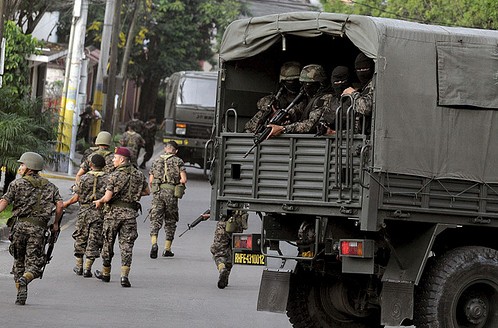
Earlier this week, the SOA graduate-backed Honduran military coup regime refused all diplomatic options to return democracy. The U.S. State Department responded by asserting that visas to Hondurans would no longer be granted under the coup. Late yesterday State Department officials made it clear that they are considering legally defining the situation as a “military coup.” This would create an automatic cut-off of all remaining aid to Honduras. The coup regime immediately responded by saying that they would allow the rightful President Zelaya to return with amnesty, but not as president. Clearly the coup leaders are caving to the pressure.  For more background information, check out this article:

http://www.reuters.com/article/vcCandidateFeed1/idUSN27328207

. We need you to act now to return democracy to Honduras. Please make two very important phone calls!  For information on how to respond, please read below or click the “read more” link.

1.) Call the State Department at 202-647-5171 or 1-800-877-8339 and ask for Secretary Clinton. Deliver the following message:

“My name is ________ and I live in ______ (city/state). I am calling to ask you to legally define the de facto regime in Honduras as a military coup and cut off all aid to Honduras until President Zelaya is unconditionally reinstated.”

2.) Call the White House at 202-456-1111 and repeat the same message

“My name is _______ and I live in __________ (city/state). I am calling to ask you to legally define the de facto regime in Honduras as a military coup and cut off all aid to Honduras until President Zelaya is unconditionally reinstated.”

Read More
image-title


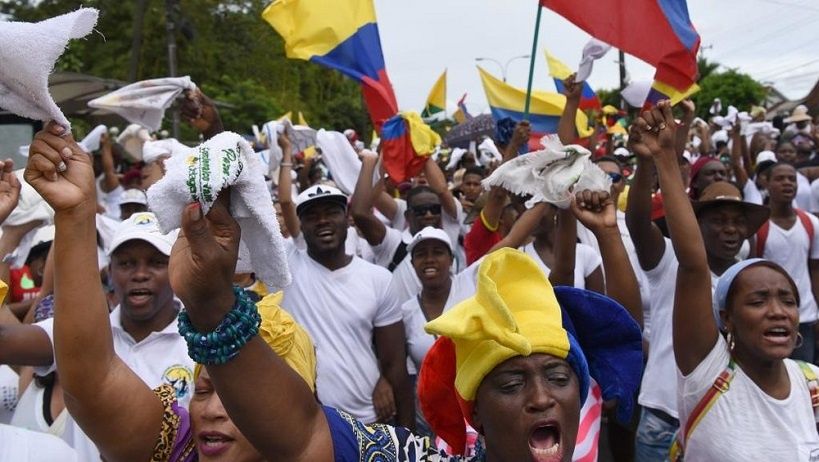
Today a national and international campaign for the protection of Colombia’s human rights defenders will be launched in Bogotá. In Colombia, being a human rights defender is a dangerous, often deadly job and the situation is only getting worse. Those working on issues ranging from displacement to the rights of women, Afro-Colombians, the indigenous and other victims of the armed conflict are threatened, attacked, stigmatized, and put under illegal surveillance on a daily basis. In response to this situation over 200 organizations across the globe, including CRLN, have joined the United States Office on Colombia to help develop an international campaign for the Right to Defend Human Rights.

The Campaign will be launched today by the United Nations Special Rapporteur on the situation of Human Rights Defenders, Margaret Sekaggya, in Bogotá. Click “Read More” for more details.

The Campaign has five policy goals it will be urging the Colombian government to enact over the next year. These are:


  1. End impunity for violations against human rights defenders


  2. End the misuse of state intelligence


  3. End systematic stigmatization


  4. End unfounded criminal proceedings


  5. Structurally improve the protection programs for people at risk

To read more about the Campaign, it’s declaration and recommendations please go to

http://www.usofficeoncolombia.com/

.

Read More
image-title

Delegation to Meet with Social Justice and Human Rights Organizations

Since the June 2009 military coup in Honduras, CRLN members have partnered with local and national organizations to work to restore democracy to Honduras.  Two of those local partners,

La Voz de los de Abajo

and

Casa Morazan

are organizing a weeklong delegation to Honduras, to build ties with Honduran organizations working on behalf of social justice.  Join us – to hear directly from human rights leaders in Honduras so that we are equipped to advocate for just US policies.

The coup in Honduras, led by a graduate of the US’s School of the Americas program, has led to the deaths of human rights and social justice leaders in Honduras and called into question the US’s commitment to democracy in this hemisphere.  The cost of the delegation is $1,200 including airfare.  Please prayerfully consider joining us on this delegation and working with us upon your return to advocate for policies that will encourage restoring democracy in Honduras.

For more information, call 773-293-2964

.

Recent CRLN Webstories on Honduras


https://www.crln.org/Condemn_Military_Coup


https://www.crln.org/Honduran_Coup_Tom_Loudon_Report


https://www.crln.org/Honduran_consulate

Summary of Delegation from La Voz de los de Abajo and Casa Morazan

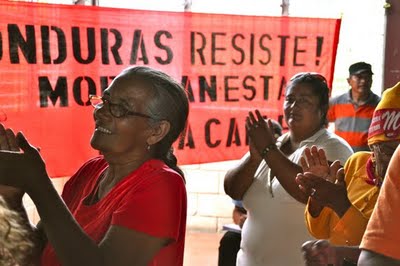
For more than 2 months, the Honduran people and their
organizations have surprised the world with their sacrifice and bravery in
mobilizing daily in resistance to the coup of June 28.  In response to the call from social organizations and the
Honduras National Front Against the Coup, La Voz de los de Abajo and Casa
Morazan is organizing a week-long delegation to Honduras, with the overall goal
of building a solidarity movement supporting the social justice movement in
Honduras and strengthening ties between U.S. organizations and activists and our
counterparts in Honduras.

There is limited space on the delegation. We are looking for
people involved in solidarity work, media, cultural work, trade union and
workers’ rights, healthcare, immigrant rights and others who are interested in
learning directly about the situation in Honduras and willing to help bring
information about the Honduran people’s movement to the U.S.

The delegation will meet with organizations that are
participating in the National Front Against the Coup and with human rights and
alternative media organizations. The National Front Against the Coup is the
coordinating organization for all the organizations in the country that are
resisting the coup. It holds regular general assemblies in which decisions are
made for resistance activities. Below is an introduction to some of the organizations that our delegation will have the opportunity to meet and to talk with.


The Central Nacional
de los Trabajadores del Campo (CNTC) The National Center for Rural
Workers


is one of the largest
and most active campesino base organizations in Honduras. It was founded in 1985
when 5 campesino groups joined together to build an organization dedicated to
the struggle for land for the landless and poorest farmers.  It
organizes not only for land, but also for access to healthcare, education,
housing and other basic services. The CNTC has affiliated communities in most of
the 18 departments (states) of Honduras. It was one of the few campesino
organizations to publicly oppose U.S. intervention in Central America during the
1980’s and it has continued to take progressive positions on international and
national social justice issues.  Because of its work in the
countryside its communities and leaders have frequently been targets for
governmental and landowner repression. The CNTC is a member of the Popular
Block, the National Coordinator for Popular Resistance and since the June
28 coup it has been an active participant in the National Front
Against the Coup (Frente Natcional en Contral el Golpe).


El Comite de Familiares de los Desaparecios en Honduras
(COFADEH) The Committee of the Families of the Disappeared in Honduras


was rounded on November 30, 1982 in Tegucigalpa. COFADEH is a center for moral
and political resistance to the abuses of government and an organization for the
defense and promotion of human rights. Its objectives are to fight against
impunity; to use the law and justice to end the practice of politically and
ideologically motivated forced disappearance of persons; to contribute to the
protection of the full application of human rights and to maintain alive the
collective memory of the past.


El Consejo Cívico de Organizaciones Populares e
Indígenas de Honduras (COPINH) The Civic Council of Popular and Indigenous
Organizations of Honduras


is an activist indigenous organization in the
southwestern region of Honduras with national reach. It was founded in March of
1993 to fight for the recognition of and achievement of political, social,
cultural and economic rights for the indigenous peoples in Honduras. It is also
a center for analysis of the regional and national conditions with the aim of
developing actions and proposals on an ongoing basis for the achievement of its
goals. COPINH is an active member of the Popular Block, National Coordinator of
Popular Resistance and it is an active member of the National Front Against the
Coup.


La Central General de Trabajadores


(CGT) The General
Workerr’ Center is one of the union
centersin Honduras. It was formed in 1970 and has aroudn 120 thousand affiliated
workers. The CGT is one of the few workers’ organizations to survive through the
decade of the 1980’s which saw the most cruel and bloody refpression against the
working class and the other diverse organized sectors of the people. The CGT is
one of the largest organizations active in the National Front Against the Coup.


The organization LOS NECIOS


is a political organization working for radical change in the dominant and unjust
social and economic structures in order to build a different society. The
organization is centered in Tegucigalpa and is composed of members, mainly
youth, from different sectors who are committed to social transformation.
The Necios’ political activity is organizing in diverse social sectors,
political education and ongoing analysis of the national reality. Much of their
work is also in alternative media. The Necios organization was a member of the
National Coordinator of Popular Resistance prior to the coup.


Colegio de Profesores de Educación Media de Honduras
(COPEMH) The College of Secondary School Professors of
Honduras


is the organization of
all the high school teachers in the country. Teachers have played an extremely
crucial role in Honduran society and COPEMH is the strongest teachers’
organization in Honduras with an impressive ability to mobilize and sustain the
mobilization of its members and supporters. It is an important participant in
the National Front Against the Coup and at least 2 of its members have been
killed during the repression since the coup on June 28th


La Organización Fraternal Negra de Honduras
(OFRANEH) The Fraternal Black Organization of Honduras


was founded in 1979 to defend the
Garifuna and other Afro-Honduran’s rights, lands, and culture and to fight for
justice in all spheres of life for these communities. The Garifuna people are
the largest ethnic minority in Honduras and OFRANEH has struggled for legal
recognition and protection of their lands and territory, and for bilingual
education. OFANEH is an activist organization that has participated, since its
founding, in the movements for social justice in Honduras; it has also been a
target for repression throughout its history. It is currently an active
participant in the National Front Against the Coup.


Dr. Luther Castillo and the
First Garifuna Hospital in Honduras


Dr. Castillo is a Garifuna physician and outspoken community organizer and also the
director of the Luaga Hatuadi Waduheno (“For the Health of Our People”
Foundation. The foundation is dedicated to bringing health services to the
isolated indigenous communities on the Atlantic Coast. Dr. Castillo graduated
from the Latin American School of Medicine in Cuba in 2005 and returned to his
region to lead the building of the first “Garifuna hospital” which serves 20,000
people. He was named “Honduran Doctor of the Year” by the International Rotary
Club of Tegucigalpa in 2007. Since the coup in June of this year, Dr. Castillo
has been threatened and the coup government has tried to shut down the hospital.
Dr. Castillo was a member of the delegation of Honduran civil society that
toured the United States this summer to lecture on the situation in
Honduras.

Each of these organizations is playing an important role in
the struggle to restore the constitutional order in Honduras, beginning with the
restitution of President Manuel Zelaya Rosales, and in the fight for the “4th
Urn”  aimed at constitutional reform. The delegation will have the opportunity
to visit these organizations and leaders of the National Front Against the Coup
in Honduras, including candidates and elected officials from the Democratic
Unification Party (UD), independent candidates, Carlos H. Reyes and Berta
Caseres, and  anti-coup members of the Liberal Party. The delegation will also
have the oppoortunity to meet with representatives of the communication media,
that have truely informing the people about what is going on in Honduras and to
hear of their experiences and contributions to the resistence.


La Voz de los de Abajo is a Chicago organization that has
worked in solidarity with the social justice movements in Honduras for 11 years.
Much of our work has been directly with the campesino movement and the National
Center for Rural Workers (CNTC). Over the past 11 years we have participated in
organizing for the Pastors for Peace caravans to Mexico, Honduras and
Nicaragua.  We have organized many small delegations that have
traveled to campesino and indigenous communities across Honduras and
participated in conferences and visits to social organizations in Tegucigalpa.


Read More
image-title

We are in the process of updating these principles.  Please stay tuned for the revised version.

Chicago New Sanctuary Coalition Principles for Immigration Policy

The Chicago New Sanctuary Coalition (CNSC) and Immigrant Welcoming Congregations live out an interfaith vision.  We challenge faith communities and leaders through education, advocacy, and action for immigrant justice.  We recognize each individual as a child of God and as such, deserving of justice and mercy regardless of country of origin, migratory status, race, ethnicity, religion, age, gender identity or sexual orientation.

We live in a time of an immigration crisis and therefore, as people of faith, we are compelled to social action.  We understand that freedom cannot exist for some while is it not fully attainable for others. Freedom cannot exist for some at the cost of the suffering of others: this then is oppression. The United States of America’s current policies are fundamentally exclusionary, oppressive and erroneous in its understanding of the realities of migration.

We recognize structural violence, historically given and economically driven conditions, to be at the root of this crisis. Therefore immigration, trade, environmental and international development policies necessitate transformation to reflect our beliefs in the principles of justice and liberation for all people.


1. Pathway to Citizenship

Immigrants living in the U.S. without authorization must have access to a path to permanent residency and citizenship.  Marginalization drives people to depend on underground means of survival; this is dangerous both for these individuals and the common welfare.  The current crisis is destroying families and communities and demands a comprehensive solution that will allow for a future for sustainable and just immigration policy. We recognize inclusive legalization as the only way to ensure safety and guarantee rights for all people.  A pathway needs to be available for all including skilled and unskilled works and must not be bound to economic barriers that exclude.


2. Family Unity and Integration

Families and households should be allowed to legally migrate and be reunified with family members in a timely and efficient manner.  Family values are central to sustainable communities.  We believe strongly in a right to reunite and integrate.  These tenets should be central in any comprehensive immigration policy reform.


3. Protection for All Human Rights

Human rights are by definition universal.  The immigration crisis has perpetuated an infringement on the dignity of the person.  Human rights include but are not limited to the universal entitlement and protection of the basic rights to survival, emotional and physical security, and access to housing, healthcare and education. The rights of children deserve special attention because of their particular vulnerabilities.

Violations of human rights occur in both countries of emigration and those of immigration.  It is imperative that the rights to mobility, residency and nationality be ensured for all those who migrate to seek the ability to flourish.  Along with the United Nations Covenant on Economic, Social and Cultural Rights, we assert all workers’ rights to fair wages that support decent livelihood for workers and their families, the right to organize in trade unions, safe and healthy working conditions.  Full worker rights must be recognized, protected and enforced.  The state is obligated to uphold these rights.


If any employment-based immigration program is instituted, the number of visas should be revised according to the signs of the times such as current economic reality.  The option of a pathway to citizenship must be offered to the worker and their family.  All workers should be able to find a pathway to citizenship regardless of skill or education level.


4. Humane Enforcement Strategy

The militarization of border has not successfully stopped the flow of migration.  It has damaged the natural environment, has driven migrants into remote desert regions and causes thousands of deaths of men, women and children.  Militarization has resulted in excessive spending and has not met its intended goals.  ICE and law-enforcement agencies must stop using tactics that terrorize immigrant communities and cease using racial profiling to target certain groups of people. They currently abuse their authority with impunity, rather ICE and law enforcement agencies should be held accountable by independent organizations.

Enforcement-only strategy is not helping immigration or slowing migration.  We need to ensure due process and access to legal counsel that is competent in immigration law.  Immigration authorities should not treat people with civil offenses as if they were criminals.  If immigrants are held in detention facilities, their full human rights must be respected, including access to medical and legal services as well as religious counsel.  We also need alternatives to traditional detention and to halt the privatization of detention, especially in the cases of children.  There should be no profiting off a failed immigration system.


5. Address Root Causes of Migration

While just and comprehensive immigration reform would represent great progress, we must examine what is really broken.  International economic and political conditions often constrain people’s opportunities and make migration one of the few viable options to meet their basic human needs.  While migration has historically been a part of the human experience, the complexity and gravity of the current global migration phenomenon requires a broad-based social and political response that includes, but are not exclusive to, the following:


  • Trade agreements

NAFTA (North American Free Trade Agreement) and other free trade agreements have failed to create opportunity for people to fully realize their basic human needs.  In Mexico, NAFTA has only exacerbated gaps in wages and increased the cost of basic foodstuffs.  NAFTA has not encouraged sustainable economic growth in Mexico nor      curbed migration.  Bilateral/multilateral trade agreements continue to be negotiated worldwide.  Any trade agreement should build mutual, just, and sustainable results for all participating countries.


  • International Development Policy

The World Bank Structural adjustment policies (SAPs), conditions on loans from the International Monetary Fund and World Bank have had severe implications for less developed countries.  They have had a paralyzing effect on countries’ ability to lift themselves out of debt.  The debt incurred has set up a system of dependence between developed and developing countries.  Sustainable and equitable development is necessary for improved well-being and for the an accurate understanding of current migration trends.


  • Environmental injustice and disaster

Trade, unbridled Capitalism, and “progress” have led to the commodification of the environment of many lesser-developed countries.  This has for example shifted subsistence farming into monoculture cash crops destroying local economies as well as causing widespread environmental degradation.  Trade agreements need environmental standards.

Climate refugees are also increasing in numbers as a result of Climate Change but also because of the degradation of the ecosystem.  As disasters continue to increase with intensity greater numbers of people are being forced to move or migrate.  We need to address these emerging needs both in terms of immigration but also from an    environmental justice standpoint.


Click here to return to the main CNSC web page

Read More

COURT WATCH

was founded by Sisters Pat Murphy and Joanne Persch of the Sisters of Mercy and Sisters and Brothers of Immigrants. They were moved by their faith and conscience to stand in solidarity with immigrant communities, especially those who remain in detention, who are often the most vulnerable and invisible.

OBJECTIVES

of the Court Watch Program are to stand in solidarity and serve as a presence in Detained
Immigrant Court to let those involved in this system know that we are watching and we care about what happens to our immigrant sisters and brothers.  By serving as a public witness we aim to
bring transparency to this broken system and educate outside communities about the
current conditions of immigrants in detention. It is our goal that through monitoring and documenting our observations we also support the urgent and imperative need for comprehensive immigration
reform.


WHO IS BEING DETAINED?

Each year, as many as 400,000 immigrants are detained by Immigration and Customs
Enforcement (ICE) and they often remain detained for some months unless they
become eligible for bond.

Many of these immigrants have no criminal histories and are being detained on minor charges as well as the civil charge of entering the country without authorization. They are pursuing various forms of legal relief that are available to immigrants, such as asylum, cancellation of removal, waiver of removal, or relief under the Convention Against Torture (CAT).


WHAT IS DETENTION COURT LIKE?

Detention Court is located in the west Loop at 525 W.Van Buren, corner of Canal, in Ste.
500; (312) 697-5800 ext 0.  Immigrants in detention are frequently not present in the courtroom for their hearings.  Rather, they appear via Video-Teleconferencing (VTC).

As many of the detainees are non-native speakers of English, they
communicate via a translator, who may either be present in the courtroom or be
connected telephonically through a translation service.


YOU CAN BECOME A COURT WATCHER!

In order to stand in solidarity for immigrant justice we must provide support, share the voice of immigrants in detention with the public, and let the Department of Justice know that we are
watching. Immigration Detention Court hearings are held Monday – Friday from 9am-12pm and 1pm-4pm, except for Federal holidays. Contact Interfaith Community for Detained Immigrants or email icdichicago.org.


Immigration

Court Watch is a program of the Interfaith
Committee for Detained Immigrants

www.
icdichicago.org


FY
Statistical Year Book, U.S. Department of Justice, Executive Office of
Immigration Review, March 2005

Read More

Faith-Based Organizations

Chicago New Sanctuary Coalition:

CNSC, a project of the Chicago
Religious Leadership Network on Latin America, is an interfaith coalition of
religious leaders, congregations and communities, called by our faith to
respond actively and publicly to the suffering of our immigrant sisters and
brothers.


Catholic Campaign for Immigration Reform:

CCIR is a campaign to mobilize Catholic institutions, individuals, and other persons of good faith in support of a broad legalization program and comprehensive immigration reform.

www.justiceforimmigrants.org/


Interfaith Immigration Coalition:

IIC is a partnership of faith-based organizations committed to enacting fair and humane immigration reform that reflects our mandate to welcome the stranger and treat all human beings with dignity and respect.

http://www.interfaithimmigration.org


Interfaith Worker Justice:

IWJ advocates for justice for all workers in the U.S. – native-born citizens, legal residents, and those who are forced to live and work in the shadows, undocumented workers and their families.

http://www.iwj.org


Jewish Council on Urban Affairs:

JCUA combats poverty, racism and anti-Semitism in partnership with Chicago’s diverse communities.


www.jcua.org


Lutheran Immigrant and Refugee Services:

Witnessing to God’s love for all people, we stand with and advocate for migrants and refugees, transforming communities through ministries of service and justice.

www.lirs.org

Illinois Organizations


Illinois 
Coalition for Immigrant and Refugee Rights:

ICIRR is dedicated to promoting the rights of immigrants and refugees to full and equal participation in the civic, cultural, social, and political life of our diverse society.


http://www.icirr.org


Immigrant Youth Justice League:

A Chicago-based network that represents undocumented youth and allies in the demand for immigrant rights through education, resource-gathering, and youth mobilization.

www.iyjl.org

National Organizations


Center for New Community:

A national organization committed to building community, justice, and equality. The Center is grounded in many faith traditions, and builds community where the dignity and value of all humanity is manifest.


http://www.newcomm.org


The Fair Immigration Reform Movement:

FIRM is a national coalition of grassroots organizations fighting for immigrant rights at the local, state and federal level.


http://www.fairimmigration.wordpress.com


National Immigrant Justice 
Center:

NIJC provides direct legal services to and advocates for immigrants, refugees and asylum seekers through policy reform, impact litigation, and public education.


http://www.immigrantjustice.org


Reform Immigration for America:

A national network of advocacy groups. If you sign up for updates on this site, you will be sent updates on events and campaigns specific to your zip code.


http://reformimmigrationforamerica.org/

Detention and Due Process Organizations


Detention Watch Network:

DWN focuses on immigration detention issues. They post information about due-process-related concerns in proposed comprehensive reform legislation.


www.detentionwatchnetwork.org/


Rights Working Group:

RWG strives to restore the American commitment to protect civil liberties and human rights for all people in the U.S. RWG has grown a strong coalition of civil liberties, human rights and civil rights, national security, and immigrant rights organizations to work hand in hand to restore due process.


www.rightsworkinggroup.org

U.S./Mexico Border Organizations


Coalición de Derechos Humanos:

Coalición de Derechos Humanos (“The Human Rights Coalition”) is a grassroots organization which promotes respect for human/civil rights and fights the militarization of the Southern Border region, discrimination, and human rights abuses by federal, state, and local law enforcement officials affecting U.S. and non-U.S. citizens alike.


www.derechoshumanosaz.net/


No More Deaths:

No More Deaths is an organization whose mission is to end death and suffering on the U.S./Mexico border through civil initiative: the conviction that people of conscience must work openly and in community to uphold fundamental human rights.


www.nomoredeaths.org/


BorderLinks:

An international leader in experiential education that raises awareness and inspires action around global political economics.  Organizes “delegations” to visit the border region or Chicago, IL to understand migration issues first-hand.

www.BorderLinks.org

Read More
image-title

Timeline of Events Surrounding Coup

Both the U.S. and Honduran mainstream media has published misinformation about the events surrounding the coup of June 28,2009.  For example, the allegation that President Zelaya wanted to change the constitution in order to extend his time in office was invented by the coup leaders and repeated early and often.  However, President Zelaya never stated this.  The following timeline includes critical events leading up to and following the coup, including social legislation passed by President Zelaya in the months before the coup:


November 11, 2008:


President Zelaya announces his intent to conduct an opinion poll to see if the people want to have a fourth ballot box installed at polling places during the next election (11/29/09).  This fourth ballot box would be in addition to the ballot boxes for President, Congress, and local officials for the purpose of holding a non-binding referendum asking people if they want the government to hold a National Constituent Assembly to draft a new constitution.


February 2009:


President Zelaya increases the minimum wage by 60%. Chiquita (formerly United Fruit Company) and Dole join the Honduran Business Council in complaining that this will cut into their profits and lead to mass unemployment.  However, this increase results in salaries that are still less than a third of a living wage for Hondurans.


March 24, 2009:


President Zelaya issues a decree to the National Statistical Institute to hold the opinion poll on June 28, 2009.  Article 5 of the Honduran “Civil Participation Act” of 2006, approved by Congress and the Supreme Court at the time, allows public officials to perform non-binding public consultations to inquire what the population thinks about policy measures.  While the constitution can only be changed by a 2/3 majority of the Congress, Zelaya was merely attempting to gauge public opinion as an advisory measure for Congress.


March 25, 2009:


The Attorney General’s office notifies Zelaya that if he proceeds with the opinion poll, he will be charged with abuse of power.


May 2009:


The Supreme Court, the Congress, and the Supreme Electoral Tribunal all rule that the opinion poll is illegal, in spite of the fact that in 2006, the Congress had passed and the Supreme Court had approved the above-mentioned Civil Participation Act allowing for non-binding public consultations.


June 25, 2009:


Gen. Romeo Vasquez, trained at the U.S. Army School of the Americas, tells President Zelaya that the armed forces will not distribute ballots for the non-binding referendum as ordered by the president.  President Zelaya fires him.


June 26, 2009:


Supreme Court rules that Gen. Vasquez be reinstated.  President Zelaya refuses to do so, saying “If an army rebels against a president, then we are back to the era of the cavemen, back to the darkest chapters in Honduran history.”  He and his supporters go to the Air Force base to collect and distribute the ballot boxes themselves.


June 28, 2009:


Early in the morning, armed forces led by Gen. Vasquez storm Zelaya’s home, disarm the Presidential guard, and fly him to Costa Rica.  The plane stops at Palmerola, a joint U.S. and Honduran military airfield.

The military patrols the streets in tanks and fly overhead in planes.  Electricity, phone lines, and international cable TV lines are cut; water is cut off to some neighborhoods; TV and radio stations supportive of Zelaya are taken off the air; and the stations still on the air report no news.

Nine ministers in Zelaya’s administration are detained.  A dozen Zelaya ministers go into hiding, fearing arrest.

An extraordinary session of Congress is called, but not all legislators are notified or present.  There is later dispute over whether Congress had a quorum.  A fake letter of resignation from President Zelaya is read and a vote is taken to remove Zelaya from office and install Roberto Micheletti, President of the Congress, as President.  Micheletti immediately orders a 24 hour curfew for all citizens which lasts for three days.  People cannot leave their houses even to buy food or water, without fear of army retaliation.  After the third day, the curfew is suspended and reinstated arbitrarily, at the whim of the coup government, for the next several months.

The Front of Resistance to the Coup is born, a coalition of labor, farmworker, student, indigenous, Garifuna (a mixed Afro-Caribe people), and feminist groups.  People who had not been part of protests in the past join the Front’s non-violent resistance in daily public demonstrations and marches in spite of the curfew.

All Latin American countries, the European Union and much of the rest of the world unequivocally condemn the coup and call for the reinstatement of President Zelaya.  Many over the next several days recall their ambassadors and cease economic relations with Honduras.  Secretary of State Clinton, refusing to use the word “coup,” condemns the “action” taken against President Zelaya and calls on “all parties in Honduras to respect the constitution and the rule of law.”  President Obama calls Zelaya’s ouster “illegal.”  However, the U.S. does not recall its ambassador, withdraw its military personnel from Honduras, cut off aid, or cease trade relations with Honduras.


June 30:


UN General Assembly calls for restitution of Zelaya as president of Honduras.


July 1:


Introduced by Micheletti, Congress issues an order suspending freedom of assembly, freedom of transit, due process, and permitting search and seizure without a warrant.


July 2:


European Union countries recall their ambassadors to Honduras.


July 4:


Organization of American States (OAS) suspends Honduras’ membership.


July 5:


President Zelaya flies to Honduras.  Crowds gather at the airport to meet him, but coup government prevents the plane from landing.  1 killed, dozens wounded.


August 4:


The State Department sends a letter to the Senate to “clarify” the U.S. position on the events in Honduras.  “We energetically condemn the actions of June 28. We also recognize that President Zelaya’s insistence on undertaking provocative actions contributed to the polarization of Honduran society and led to a confrontation that unleashed the events that led to his removal.”  The State Department is still unwilling to call the events of June 28 a coup.


September 3:


U.S. State Department stops $30 million in non-humanitarian aid from going to Honduras but is still unwilling to call the events of June 28 a military coup.


September 21:


President Zelaya returns to Honduras secretly and takes up residence in the Brazilian Embassy.  The coup government again declares a curfew, which lasts until Sept. 23 at 10 a.m., only to resume at 4 p.m. that same day.  People are trapped in their houses, many without food or water.  Nevertheless, many defy the curfew and gather outside the Brazilian Embassy in support of Zelaya that night.


September 22, 2009:


Early in the morning, police violently break up the gathering of Zelaya supporters.  Mr. Micheletti issues a secret decree suspending the constitution and civil liberties for 45 days, finally published in the government register September 26.  Campaign of harassment begun against those in the Brazilian Embassy.


September 30, 2009:


Police invade the National Agrarian Institute, arresting 50 farmworkers who had been occupying the building since the coup.  The farmworkers were trying to prevent the coup government from destroying or changing land titles that were finally being registered for farmworkers under Zelaya’s land reform measures.


October 29, 2009:


Assistant Secretary of State Thomas Shannon negotiates an accord between Zelaya and Micheletti, in which Micheletti agrees to let the Congress vote on Zelaya’s restoration to the presidency in return for Zelaya’s agreement that he will not seek a constitutional assembly or change the constitution, that he will support November 29 elections and encourage his supporters not to protest them in any way, that the army will be responsible for elections logistics and “keeping order” during the campaign season and on election day, and that he will participate in a “unity and reconciliation government” with those who carried out the coup.  Sec. Shannon makes clear that the expectation on all sides is that Congress will vote on Zelaya’s reinstatement very soon, by November 6 at the latest.


October 30, 2009:


Congress announces it will go on indefinite recess.


November 3:


Sec. Shannon announces that the U.S. will recognize the legitimacy of the November 29 elections whether or not Zelaya is restored to the presidency.


November 9:


President Zelaya announces he will no longer support the accord, since the Congress shows no sign of voting on his reinstatement.

Read More