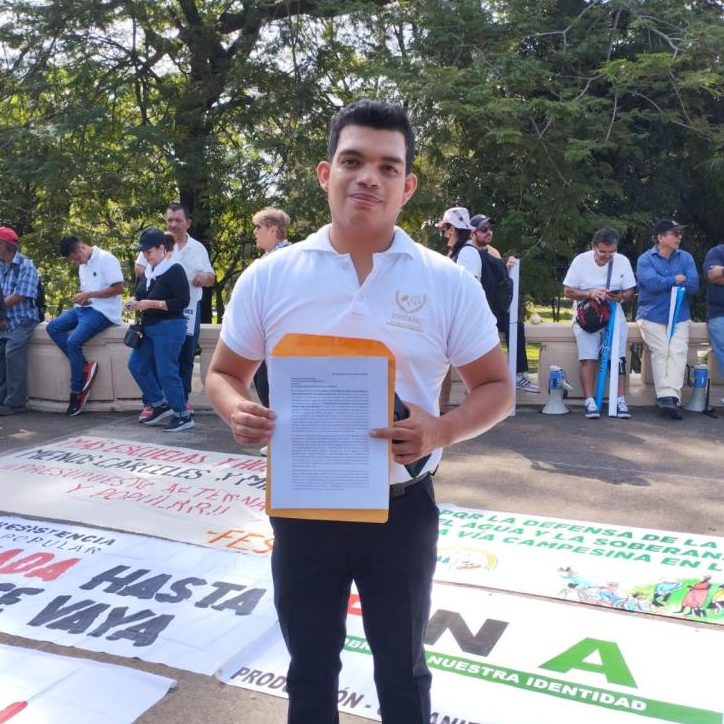
Fidel Antonio Zavala Pérez, a human rights defender and whistleblower who has faced unjust political persecution in El Salvador who was acquitted of business fraud charges, is now being targeted again by the government of El Salvador through the reopening of his case. This persecution comes in retaliation for his brave efforts to expose the corruption, torture, and medical neglect he endured during thirteen months of pre-trial imprisonment. CRLN is one of 52 organizations from 16 countries that have signed a joint statement, delivered by the Community and Human Rights Defense Unit (UNIDEHC) to El Salvador’s Human Rights Ombudsman. This statement demands that the government drop all charges against Zavala, end its disinformation campaign, and investigate the human rights violations he has reported. We extend our gratitude to the Committee in Solidarity with the People of El Salvador (CISPES) for their advocacy and providing invaluable information.
Zavala’s case highlights the broader pattern of repression under the administration of Nayib Bukele, where human rights defenders and social movement leaders are systematically targeted. Recently, police harassment has escalated, with officers visiting Zavala’s mother’s home in an attempt to intimidate him further. CRLN joins the international community in denouncing these acts of persecution and reiterates our unwavering support for Zavala’s efforts to seek justice and accountability. We stand in solidarity with him and all defenders of human rights, calling on the government of El Salvador to uphold the rule of law and protect those who courageously speak out against injustice. Together, we must continue to demand the safety and freedom of all who fight for dignity and rights in El Salvador.
In 2024, CRLN’s work with the SWG House of Hospitality exemplified its commitment to community-powered solutions in response to the challenges faced by recently arrived migrant families. The House of Hospitality served as a temporary home for several West African families, providing critical support and resources. CRLN pivoted to focus on services within the context of accompaniment, emphasizing leadership development among residents. One significant achievement was hiring a resident member as part-time staff, offering both professional growth opportunities and a platform to contribute to the collective work of the organization.
As families transitioned out of the House to establish more permanent housing, CRLN reallocated resources to support them during this critical period. This process involved extensive logistical coordination, including securing apartments, furnishing homes, and ensuring a smooth relocation. The initiative also addressed administrative tasks related to closing the rental property while maintaining the dignity and security of the families involved. These efforts reflect CRLN’s commitment to a politicized and holistic practice of accompaniment rather than merely providing direct services.
The lessons learned from the House of Hospitality have broadened CRLN’s approach to migrant justice. This initiative underscored the unique challenges faced by non-Latine and African asylum seekers, integrating their experiences into coalition work and advocacy. By framing this effort as a model for community-powered responses, CRLN aims to deepen its analysis and strengthen its role in shifting narratives and advocating for a more inclusive and equitable approach to supporting migrant families.
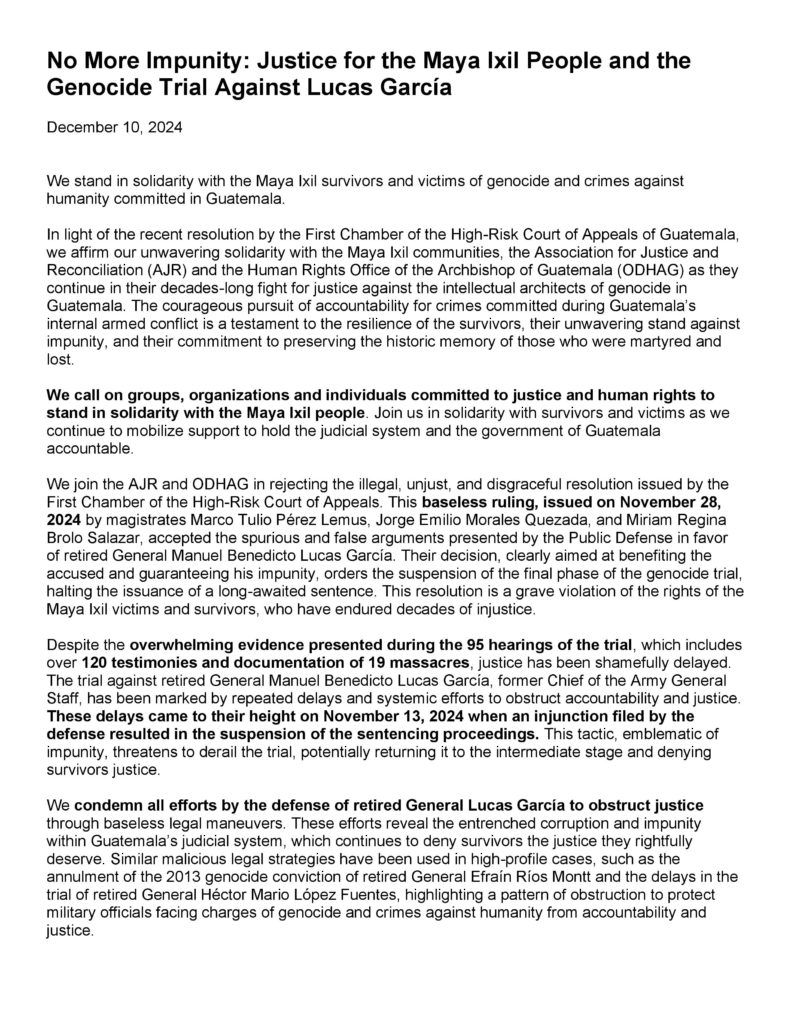
CRLN proudly joins over 30 organizations across the USA, Canada, Central America, and Europe in standing in solidarity with the Maya Ixil survivors and victims of genocide in Guatemala. We condemn the illegal and unjust resolution by the First Chamber of the High-Risk Court of Appeals, which obstructs the final phase of the genocide trial against retired General Manuel Benedicto Lucas García. Despite overwhelming evidence, the judicial system continues to enable impunity, delaying justice for the Maya Ixil people. We echo the determination of the Association for Justice and Reconciliation (AJR) and the Human Rights Office of the Archbishop of Guatemala (ODHAG): “We will not stop until justice is served.” Together, we remain steadfast in supporting their decades-long fight for accountability and historical memory.
No More Impunity: Justice for the Maya Ixil People and the Genocide Trial Against Lucas García
December 10, 2024
We stand in solidarity with the Maya Ixil survivors and victims of genocide and crimes against humanity committed in Guatemala.
In light of the recent resolution by the First Chamber of the High-Risk Court of Appeals of Guatemala, we affirm our unwavering solidarity with the Maya Ixil communities, the Association for Justice and Reconciliation (AJR) and the Human Rights Office of the Archbishop of Guatemala (ODHAG) as they continue in their decades-long fight for justice against the intellectual architects of genocide in Guatemala. The courageous pursuit of accountability for crimes committed during Guatemala’s internal armed conflict is a testament to the resilience of the survivors, their unwavering stand against impunity, and their commitment to preserving the historic memory of those who were martyred and lost.
We call on groups, organizations and individuals committed to justice and human rights to stand in solidarity with the Maya Ixil people. Join us in solidarity with survivors and victims as we continue to mobilize support to hold the judicial system and the government of Guatemala accountable.
We join the AJR and ODHAG in rejecting the illegal, unjust, and disgraceful resolution issued by the First Chamber of the High-Risk Court of Appeals. This baseless ruling, issued on November 28, 2024 by magistrates Marco Tulio Pérez Lemus, Jorge Emilio Morales Quezada, and Miriam Regina Brolo Salazar, accepted the spurious and false arguments presented by the Public Defense in favor of retired General Manuel Benedicto Lucas García. Their decision, clearly aimed at benefiting the accused and guaranteeing his impunity, orders the suspension of the final phase of the genocide trial, halting the issuance of a long-awaited sentence. This resolution is a grave violation of the rights of the Maya Ixil victims and survivors, who have endured decades of injustice.
Despite the overwhelming evidence presented during the 95 hearings of the trial, which includes over 120 testimonies and documentation of 19 massacres, justice has been shamefully delayed. The trial against retired General Manuel Benedicto Lucas García, former Chief of the Army General Staff, has been marked by repeated delays and systemic efforts to obstruct accountability and justice. These delays came to their height on November 13, 2024 when an injunction filed by the defense resulted in the suspension of the sentencing proceedings. This tactic, emblematic of impunity, threatens to derail the trial, potentially returning it to the intermediate stage and denying survivors justice.
We condemn all efforts by the defense of retired General Lucas García to obstruct justice through baseless legal maneuvers. These efforts reveal the entrenched corruption and impunity within Guatemala’s judicial system, which continues to deny survivors the justice they rightfully deserve. Similar malicious legal strategies have been used in high-profile cases, such as the annulment of the 2013 genocide conviction of retired General Efraín Ríos Montt and the delays in the trial of retired General Héctor Mario López Fuentes, highlighting a pattern of obstruction to protect military officials facing charges of genocide and crimes against humanity from accountability and justice.
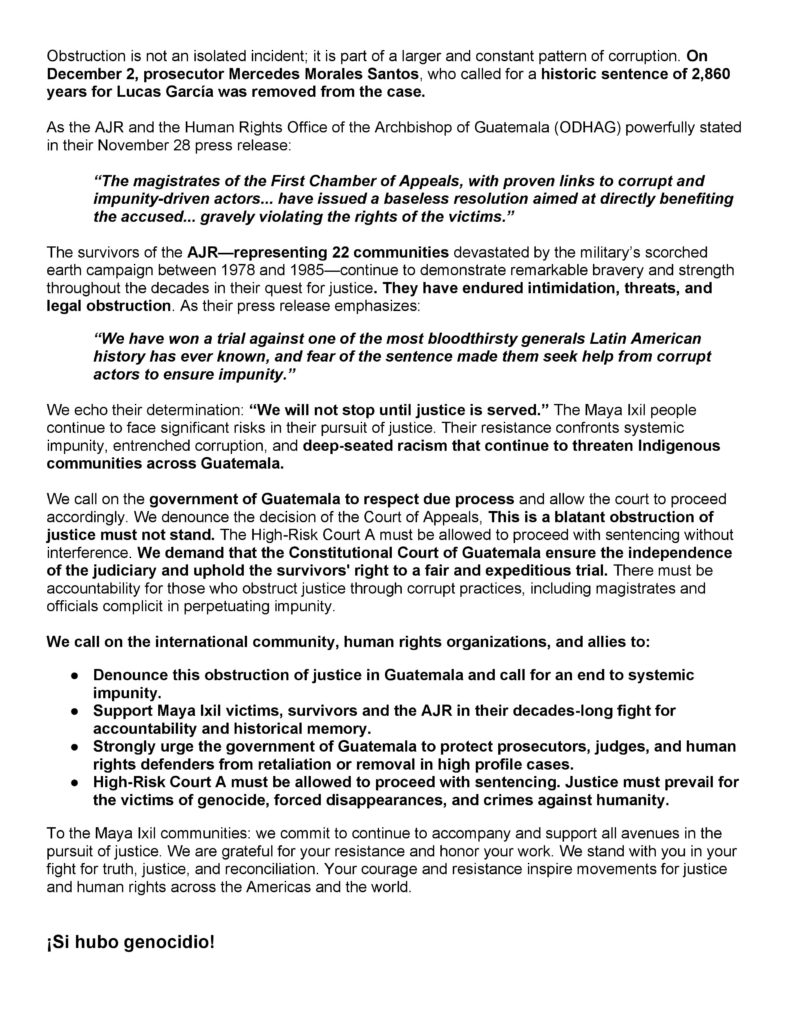
Obstruction is not an isolated incident; it is part of a larger and constant pattern of corruption. On December 2, prosecutor Mercedes Morales Santos, who called for a historic sentence of 2,860 years for Lucas García was removed from the case.
As the AJR and the Human Rights Office of the Archbishop of Guatemala (ODHAG) powerfully stated in their November 28 press release:
“The magistrates of the First Chamber of Appeals, with proven links to corrupt and impunity-driven actors… have issued a baseless resolution aimed at directly benefiting the accused… gravely violating the rights of the victims.”
The survivors of the AJR—representing 22 communities devastated by the military’s scorched earth campaign between 1978 and 1985—continue to demonstrate remarkable bravery and strength throughout the decades in their quest for justice. They have endured intimidation, threats, and legal obstruction. As their press release emphasizes:
“We have won a trial against one of the most bloodthirsty generals Latin American history has ever known, and fear of the sentence made them seek help from corrupt actors to ensure impunity.”
We echo their determination: “We will not stop until justice is served.” The Maya Ixil people continue to face significant risks in their pursuit of justice. Their resistance confronts systemic impunity, entrenched corruption, and deep-seated racism that continue to threaten Indigenous communities across Guatemala.
We call on the government of Guatemala to respect due process and allow the court to proceed accordingly. We denounce the decision of the Court of Appeals, This is a blatant obstruction of justice must not stand. The High-Risk Court A must be allowed to proceed with sentencing without interference. We demand that the Constitutional Court of Guatemala ensure the independence of the judiciary and uphold the survivors’ right to a fair and expeditious trial. There must be accountability for those who obstruct justice through corrupt practices, including magistrates and officials complicit in perpetuating impunity.
We call on the international community, human rights organizations, and allies to:
● Denounce this obstruction of justice in Guatemala and call for an end to systemic impunity. ● Support Maya Ixil victims, survivors and the AJR in their decades-long fight for accountability and historical memory. ● Strongly urge the government of Guatemala to protect prosecutors, judges, and human rights defenders from retaliation or removal in high profile cases. ● High-Risk Court A must be allowed to proceed with sentencing. Justice must prevail for the victims of genocide, forced disappearances, and crimes against humanity. To the Maya Ixil communities: we commit to continue to accompany and support all avenues in the pursuit of justice. We are grateful for your resistance and honor your work. We stand with you in your fight for truth, justice, and reconciliation. Your courage and resistance inspire movements for justice and human rights across the Americas and the world.
¡Si hubo genocidio!
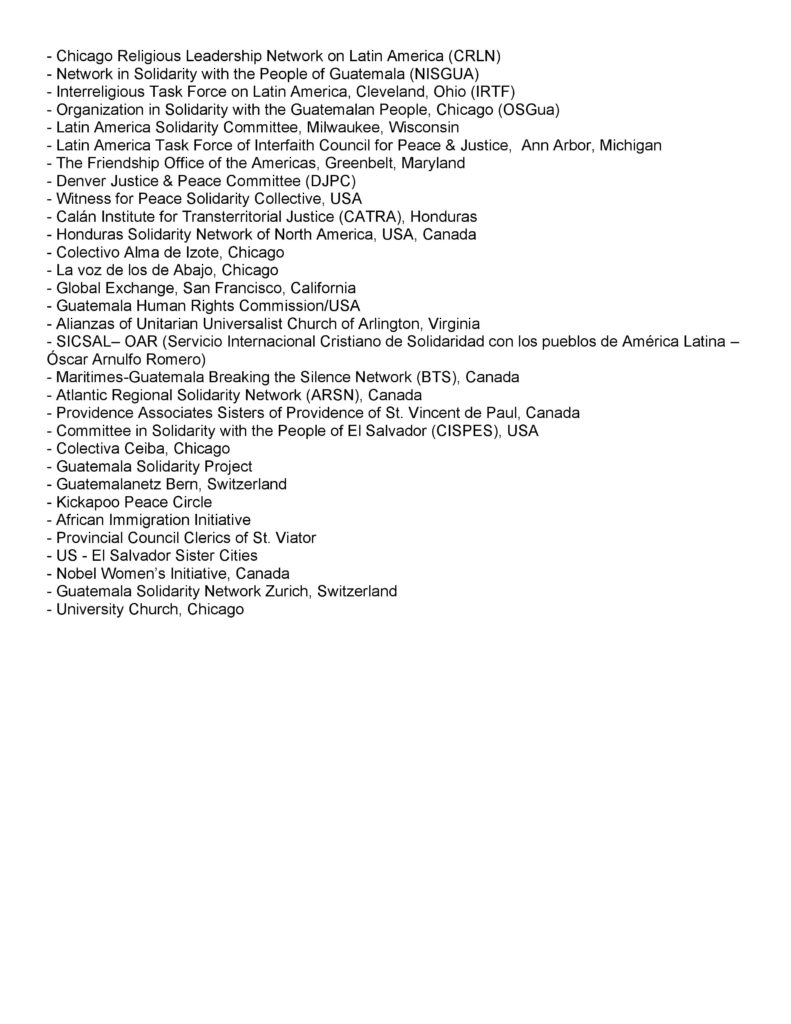
Chicago Religious Leadership Network on Latin America (CRLN)
Network in Solidarity with the People of Guatemala (NISGUA)
Interreligious Task Force on Latin America, Cleveland, Ohio (IRTF)
Organization in Solidarity with the Guatemalan People, Chicago (OSGua)
Latin America Solidarity Committee, Milwaukee, Wisconsin
Latin America Task Force of Interfaith Council for Peace & Justice, Ann Arbor, Michigan
The Friendship Office of the Americas, Greenbelt, Maryland
Denver Justice & Peace Committee (DJPC)
Witness for Peace Solidarity Collective, USA
Calán Institute for Transterritorial Justice (CATRA), Honduras
Honduras Solidarity Network of North America, USA, Canada
Colectivo Alma de Izote, Chicago
La voz de los de Abajo, Chicago
Global Exchange, San Francisco, California
Guatemala Human Rights Commission/USA
Alianzas of Unitarian Universalist Church of Arlington, Virginia
SICSAL– OAR (Servicio Internacional Cristiano de Solidaridad con los pueblos de América Latina – Óscar Arnulfo Romero)
Maritimes-Guatemala Breaking the Silence Network (BTS), Canada
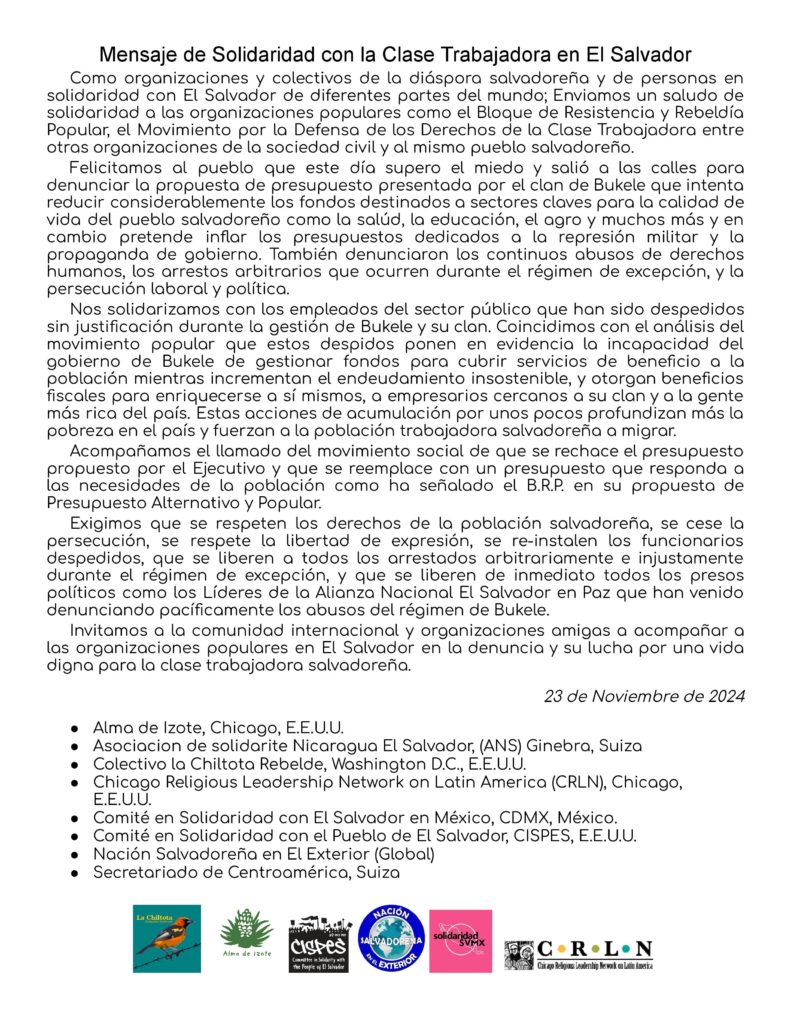
We join the Committee in Solidarity with the People of El Salvador (CISPES), Alma de Izote collective in Chicago, and other organizations and groups in solidarity with the people of El Salvador.
November 23, 2024
As organizations and collectives from the Salvadoran diaspora and individuals in solidarity with El Salvador from different parts of the world, we send a message of solidarity to popular organizations such as the Block of Resistance and Popular Rebellion (Bloque de Resistencia y Rebeldía Popular), the Movement for the Defense of Workers’ Rights, and other civil society organizations, as well as to the Salvadoran people.
We commend the people who, on this day, overcame fear and took to the streets to denounce the proposed budget presented by Bukele’s regime. This budget seeks to significantly reduce funds for key sectors essential to the quality of life of the Salvadoran people, such as health, education, agriculture, and more, while inflating budgets dedicated to military repression and government propaganda. Protesters also denounced ongoing human rights abuses, arbitrary arrests under the state of emergency, and labor and political persecution.
We stand in solidarity with public sector employees who have been unjustly dismissed during Bukele’s administration. We agree with the analysis of the popular movement that these dismissals reveal the government’s inability to manage funds to provide beneficial services to the population, while it increases unsustainable debt and grants fiscal benefits that enrich the regime, its close allies, and the wealthiest in the country. These actions of wealth accumulation by a few deepen poverty in the country and force the Salvadoran working population to migrate.
We support the call of the social movement to reject the budget proposed by the Executive Branch and to replace it with a budget that addresses the population’s needs, as outlined in the Block of Resistance and Popular Rebellion’s Alternative and Popular Budget proposal.
We demand respect for the rights of the Salvadoran people, an end to persecution, respect for freedom of expression, the reinstatement of dismissed workers, the release of all those arbitrarily and unjustly detained under the state of emergency, and the immediate release of all political prisoners, including the leaders of the National Alliance El Salvador en Paz, who have been peacefully denouncing the abuses of Bukele’s regime.
We invite the international community and allied organizations to join the popular organizations in El Salvador in their denunciations and their struggle for a dignified life for the Salvadoran working class.
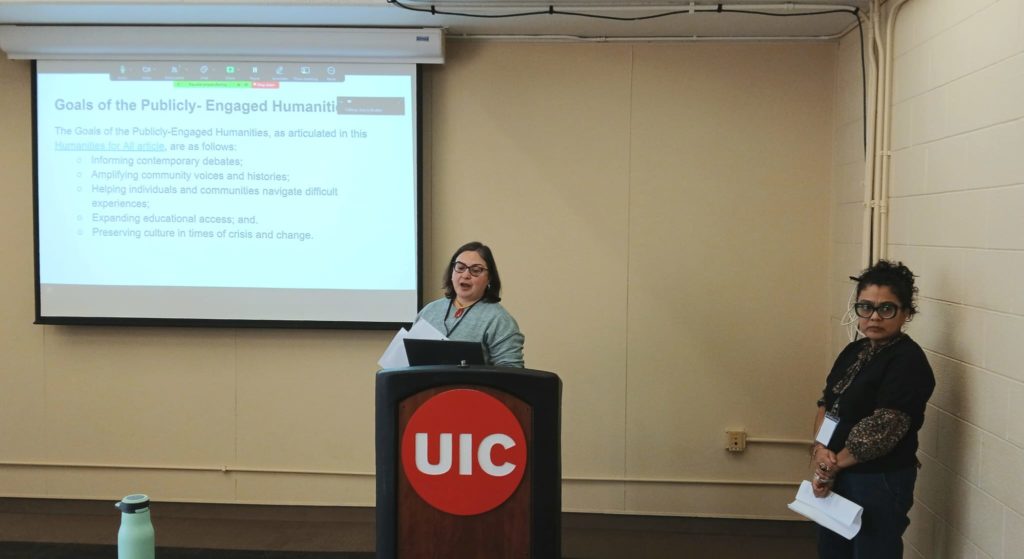
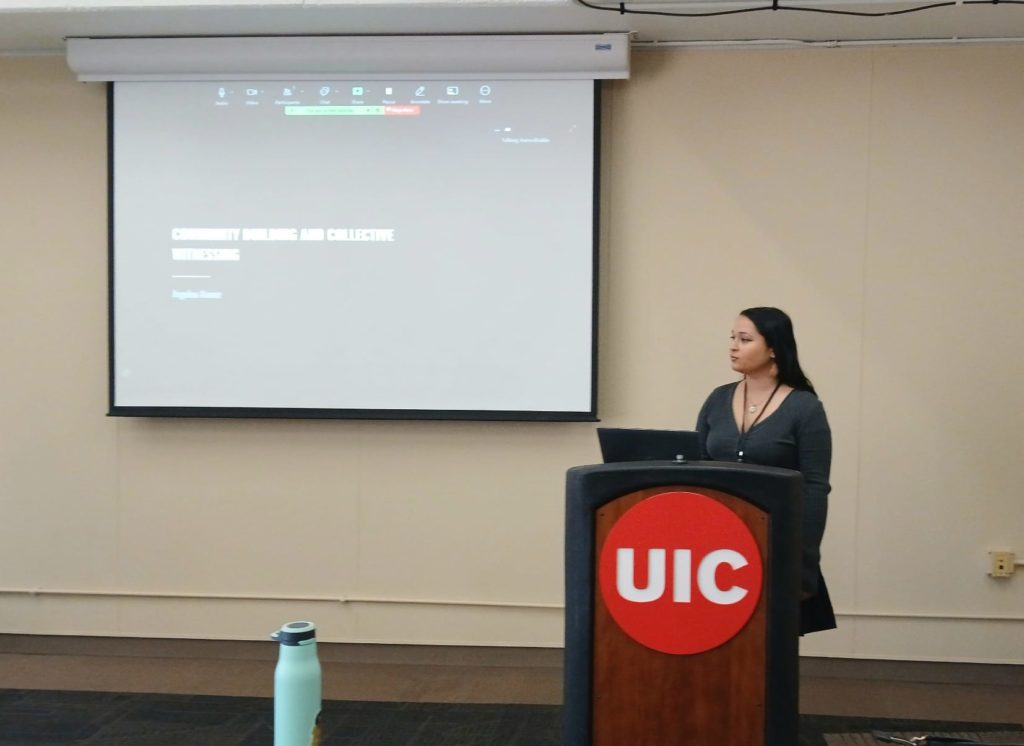
Midwest Association for Latin American Studies (MALAS) conference, November 8, 2024
At the 2024 Midwest Association for Latin American Studies (MALAS) conference, Jhonathan Gómez, along with DePaul University’s Dr. Susana Martínez, Dr. Lydia Saravia, and Angelina Álvarez, presented the Ni Olvido, Ni Perdón: Central American Historical Memory Project. This panel explored the powerful intersections of historical memory, social justice, and community engagement in the context of Central American human rights struggles. The presentation delved into the use of archives for preserving historical memory, with Susana Martínez and Lydia Saravia highlighting how archival research serves as a foundation for understanding the political and cultural history of Central America. They discussed how archival materials can be used to document human rights violations and inspire contemporary social movements.
Angelina Álvarez also contributed to the discussion by emphasizing the importance of community building and collective witnessing in the struggle for justice. This aspect of the project underscores how shared histories of resistance can forge stronger connections across communities, especially among those who have been displaced or affected by political violence. Jhonathan Gómez concluded the session by framing the project’s impact on CRLN’s broader work in supporting human rights defenders. The panel provided an opportunity for the audience to engage with the historical and ongoing struggles for justice in Central America, fostering a dialogue on democracy, memory, and collective action towards better futures. This presentation at the MALAS conference was a vital part of the ongoing effort to connect academic scholarship with real-world activism, contributing to the collective vision of a more just and equitable future.
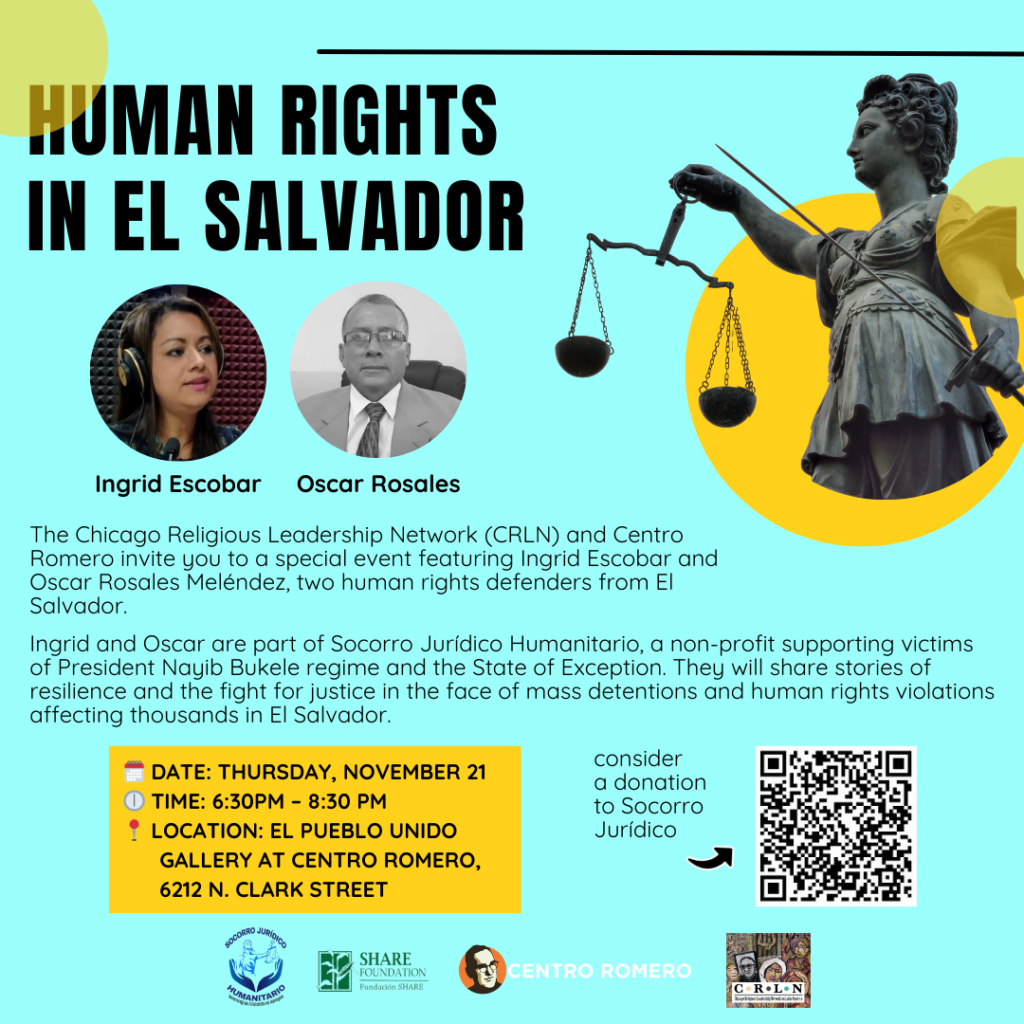
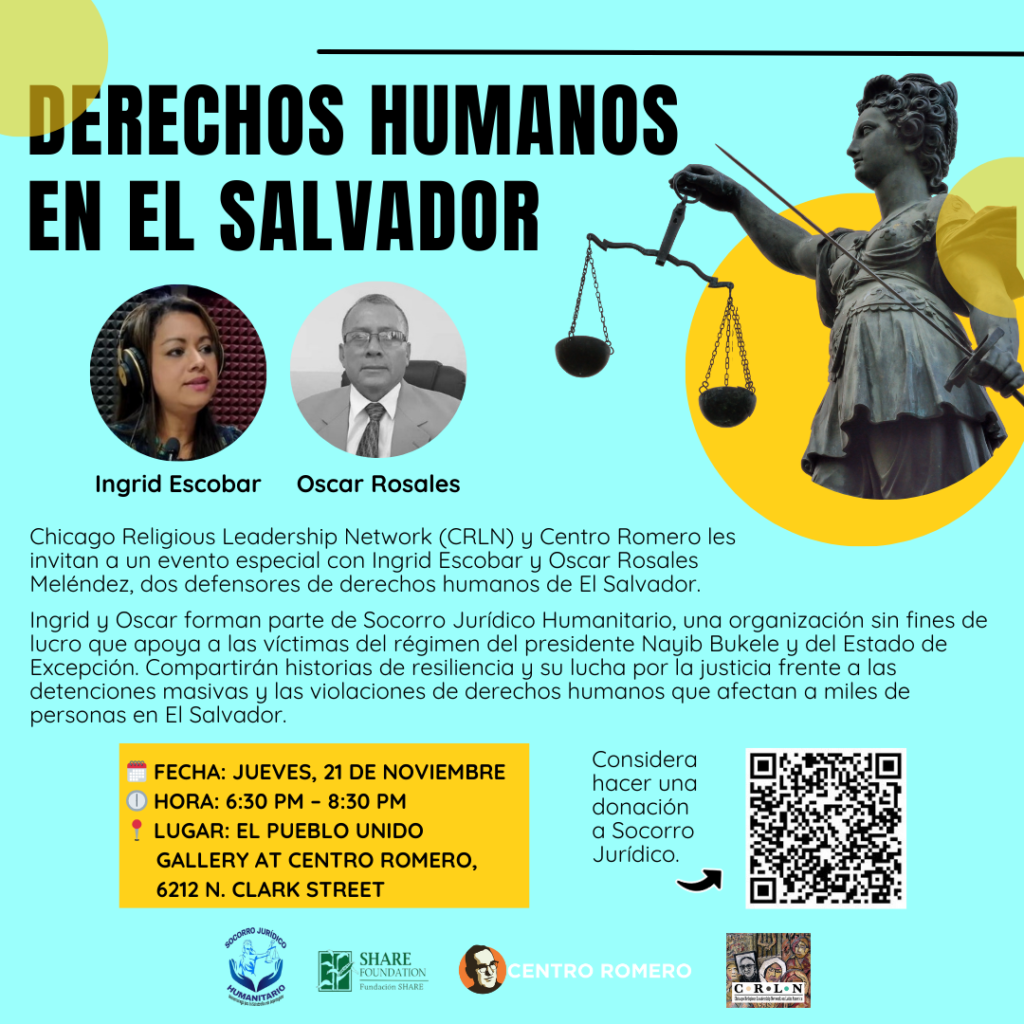
Human Rights in El Salvador: A Community Forum and Fundraiser for Human Rights in El Salvador
The Chicago Religious Leadership Network (CRLN) and Centro Romero invite you to a special event that combines learning, solidarity, and action. Join us on Thursday, November 21, at 6:00 PM, at El Pueblo Unido Gallery at Centro Romero, 6212 N. Clark Street, for a community forum and fundraiser to support the critical work of Socorro Jurídico Humanitario, community Non-Profit in El Salvador advocating for victims of state repression under President Nayib Bukele’s State of Exception.
A Growing Crisis in El Salvador Under Bukele’s regime, El Salvador has experienced grave human rights violations that have raised concern internationally.
Since March 2022, over 70,000 people have been arbitrarily detained under El Salvador’s Estado de Excepción (State of Emergency), according to human rights organizations. Aimed at combating gang violence, it has resulted in widespread human rights abuses, including torture, overcrowded prisons, prolonged detention without trial, death and forced disappearances, according to Amnesty International. As of February 2024, Amnesty documented approximately 78,000 detentions, highlighting the urgent need for international solidarity and action.
In addition to these abuses, Bukele’s government has taken steps to dismantle democratic institutions in El Salvador. In May 2021, the Legislative Assembly, dominated by Bukele’s allies, removed constitutional court judges and the attorney general, actions that effectively crippled the judicial system’s ability to act independently. Critics from international organizations like Amnesty International and the Inter-American Commission on Human Rights (IACHR) have condemned these moves as an attack on the rule of law and a shift toward authoritarianism.
These actions have set the stage for further violations of basic freedoms, as the separation of powers and the checks and balances that are critical to a functioning democracy have been severely undermined. Furthermore, press freedomand civil society have been severely curtailed under Bukele’s rule. Journalists and human rights organizations face harassment, surveillance, and even criminal charges for their work. Bukele has been accused of using legal measures and threats to silence dissent, undermining the media’s ability to operate freely. In 2020, the Committee to Protect Journalists (CPJ) reported that journalists in El Salvador were facing increasing threats from the government, which has waged a campaign to discredit the press and stifle critical voices. Bukele’s administration continues to foster an environment where journalism is criminalized, and independent reporting is at risk of being silenced.
These violations paint a troubling picture of the disregards for fundamental human rights and freedoms. As the Bukele regime consolidates power, international human rights organizations continue to call for increased scrutiny and accountability for the systematic repression of El Salvador’s citizens.
This forum aims to shed light on these issues and support the work of Socorro Jurídico Humanitario, which advocates for those unjustly impacted by these policies. The organization stands as a lifeline, providing legal assistance, psychological support, and material aid to detainees and their families. This event will raise funds to sustain their work and amplify their efforts to defend human rights.
About the Event This community forum will feature presentations from Ingrid Escobar and Oscar Rosales Meléndez, two human rights defenders from El Salvador who are actively addressing the injustices of the State of Exception. Through their stories and firsthand accounts, we will explore the impacts of mass detentions and the ongoing struggle for justice in El Salvador.
The evening will include:
• A presentation by Ingrid and Oscar on the human rights crisis.
• A discussion on how international solidarity can support those affected.
• An opportunity to contribute directly to the lifesaving work of Socorro Jurídico Humanitario.
About the Speakers Ingrid Escobar is the Director of Socorro Jurídico Humanitario and a lifelong human rights advocate. She has been on the frontlines of labor and human rights defense in El Salvador, dedicating her career to protecting vulnerable populations.
Oscar Rosales Meléndez, a lawyer and humanitarian, has decades of experience supporting displaced and marginalized communities. He is deeply committed to providing legal and material support to those affected by state repression.
All funds raised during this event will go directly to Socorro Jurídico Humanitario to sustain their critical efforts, which include:
• Legal defense for detainees and their families.
• Psychological care for victims of trauma.
• Financial aid, food, and medical support for affected families.
The human rights community in Chicago, a city with its own rich history of social justice movements understands the power of solidarity. The people from the diaspora of El Salvador have been an important part of the Chicago community, let us show our solidarity.
Join us for this important conversation.
Event Details 🗓️ Date: Thursday, November 21 🕕 Time: 6:00 PM – 7:30 PM 📍 Location: El Pueblo Unido Gallery at Centro Romero, 6212 N. Clark Street
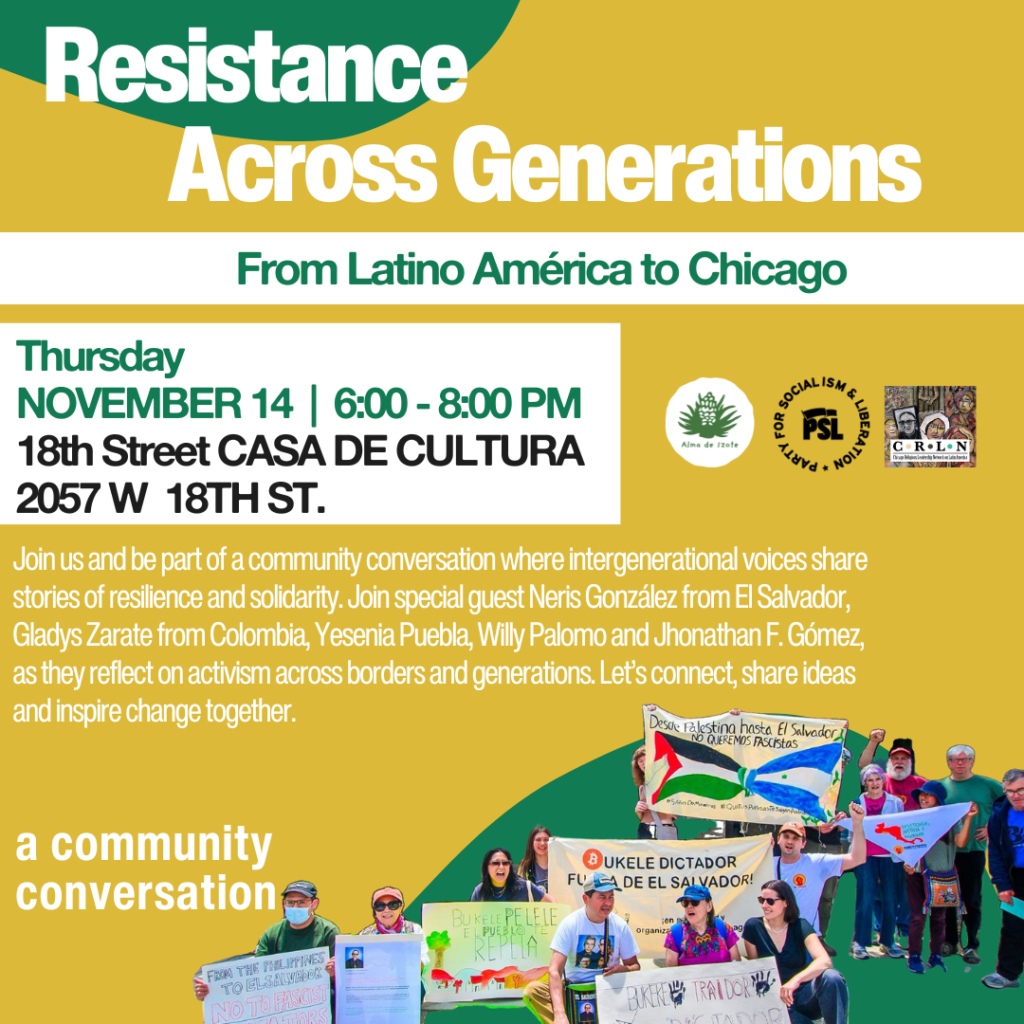
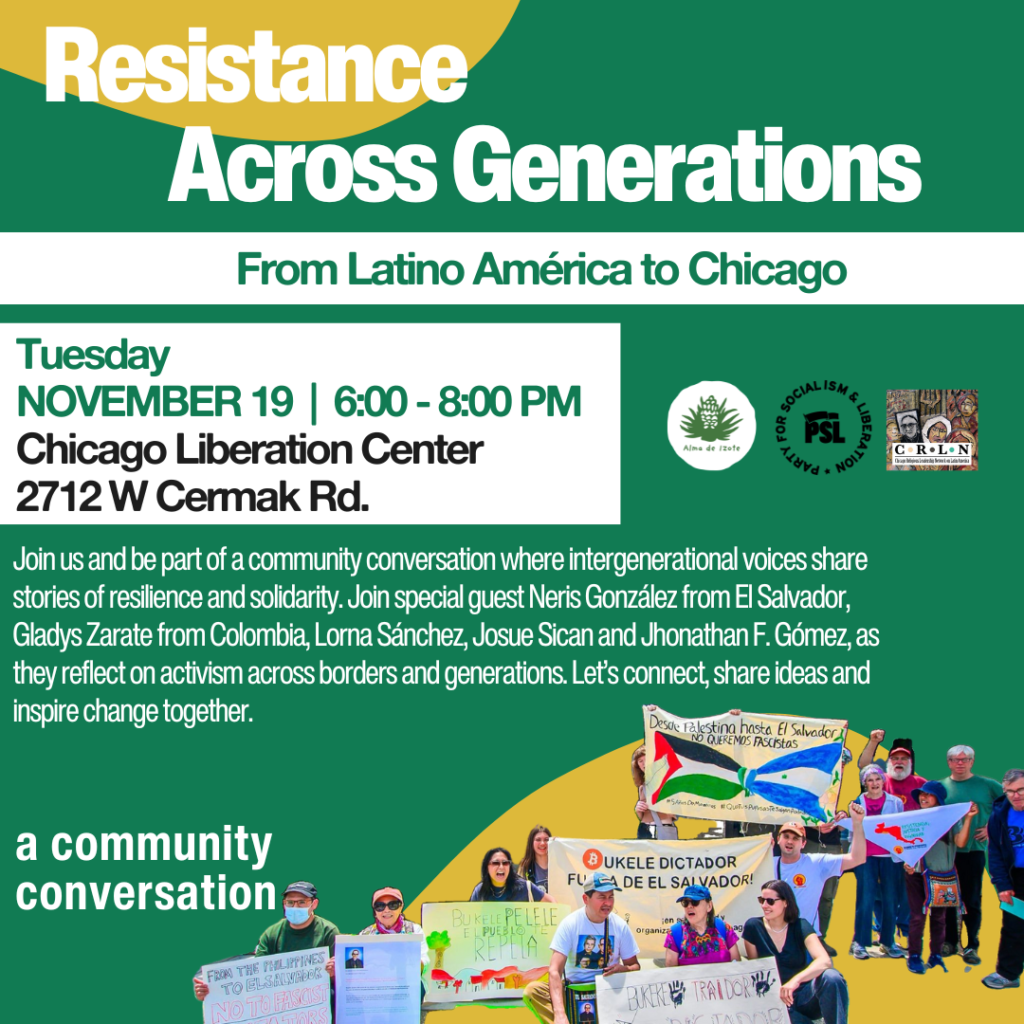
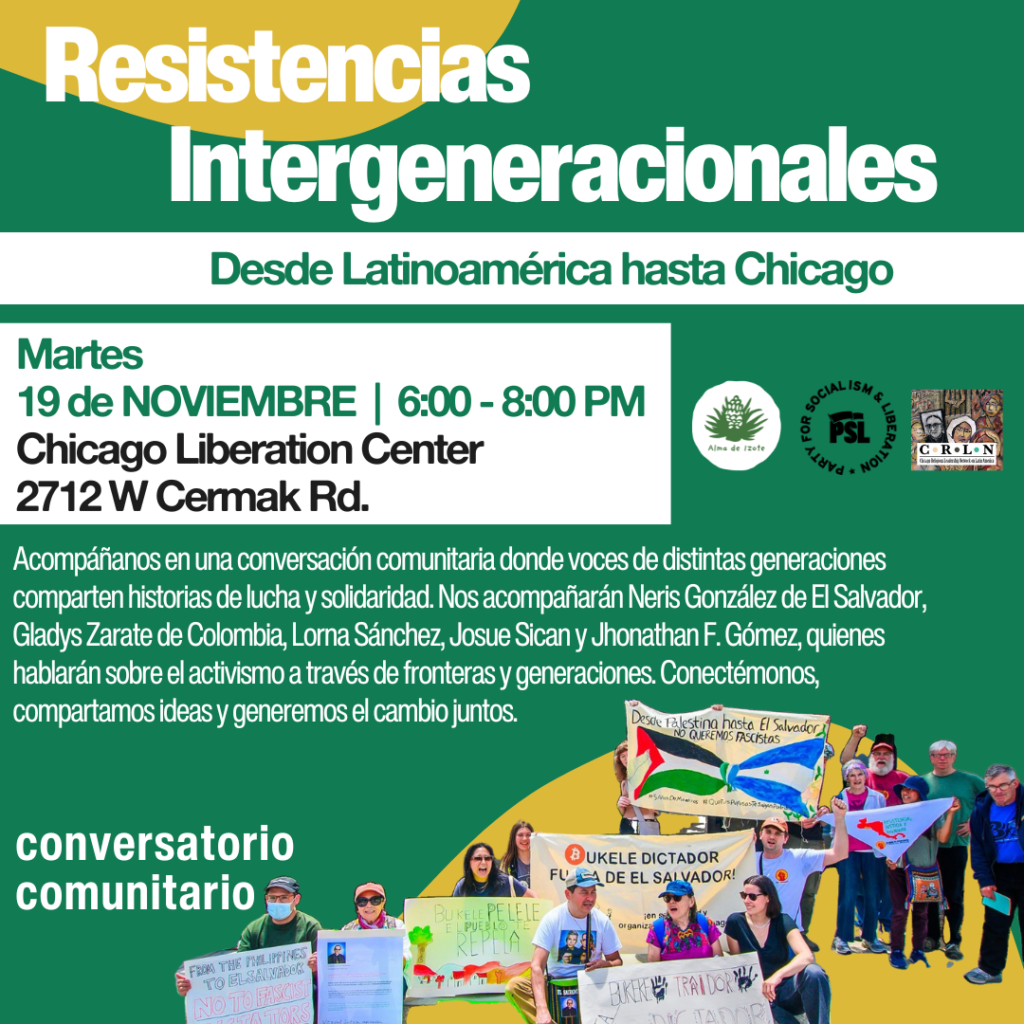
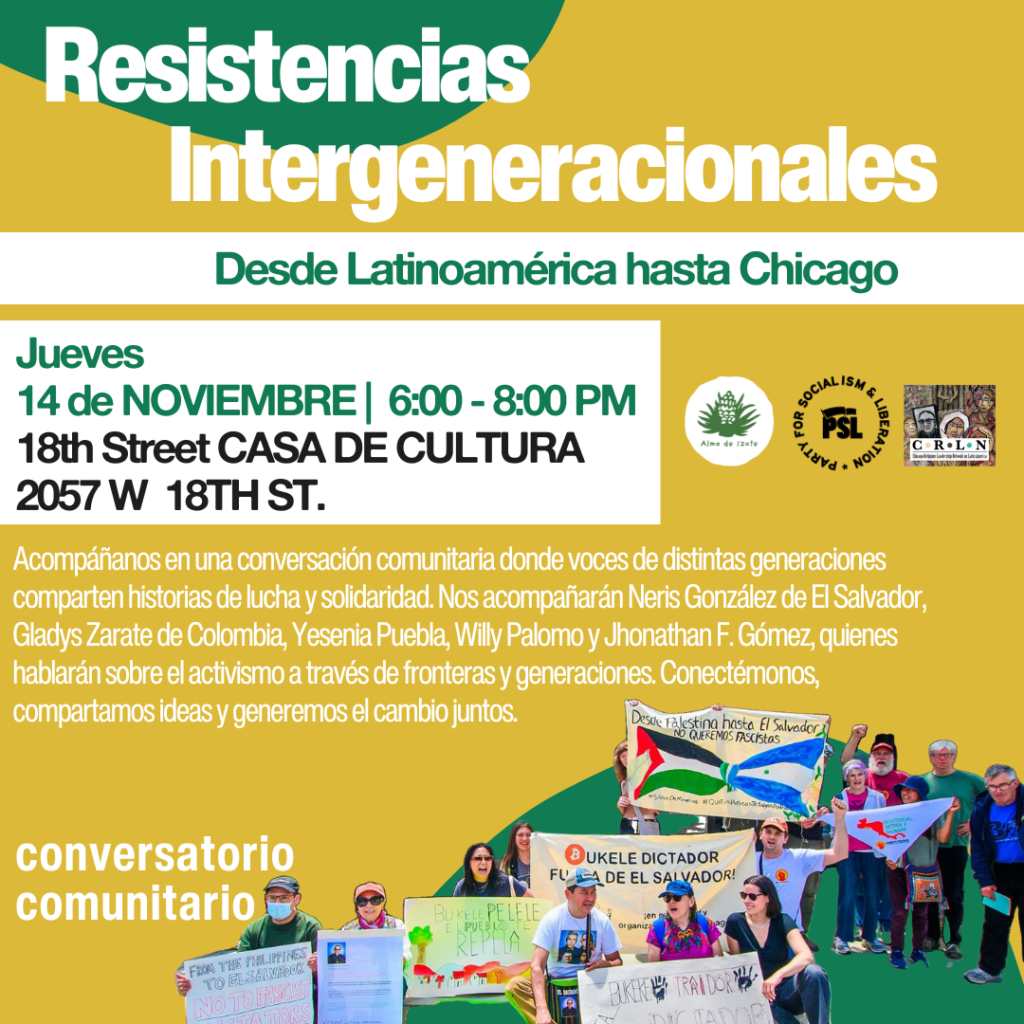
Resistance Across Generations: From Latino América to Chicago
CRLN has a long standing history in the struggle for human rights, immigrant justice, and international solidarity. At times, a gathering space for activism in Chicago, CRLN has emphasized the importance of connecting generations and communities in shared resistance against systems of oppression. The upcoming events, Resistance Across Generations: From Colombia to El Salvador to Chicago, highlights the intersections of these themes, showcasing the enduring legacies of intergenerational and international activism.
Chicago’s history is deeply rooted in social movements, where migrant communities have played pivotal roles in shaping the city’s landscape. From the labor strikes of the early 20th century to the establishment of bilingual education programs in the 1960s and 70s, the contributions of Latin American migrants have been central to the city’s identity as a sanctuary for everyone. CRLN builds on this foundation, fostering spaces where historical memory and ongoing struggles converge.
In collaboration with the Alma de Izote collective and the Chicago Party for Socialism and Liberation, CRLN’s seeks to honor the work of past generations while nurturing the voices of emerging activists. This initiative, spanning two events in November 2024, will feature distinguished speakers Neris González from El Salvador and Gladys Zarate Cárdenas from Colombia, alongside younger activists from Chicago’s Latin American diaspora representing México, Guatemala, El Salvador and Honduras. Other featured speakers include Lorna Sánchez, Yesenia Puebla, Willy Palomo and Josué Sicán. The events will be moderated by Jhonathan F. Gómez from CRLN. Together, they will explore themes of resistance, exile, migration, and intergenerational solidarity.
These gatherings are not just a platform for storytelling but a call to action—encouraging participants to draw lessons from the past to confront today’s challenges. Topics include historical memory, the impact of migration on activism, and the potential of intergenerational organizing as a transformative force in community work.
CRLN warmly invites you to join us in celebrating resistance and solidarity. Let’s honor the past, connect in the present, and build for the future.
📅 Events Details:
Date: November 14, 2024
Time: 6:00 – 8:00 PM (Doors open at 5:30 PM)
Location: 18th Street Casa de Cultura (2057 W. 18th St. Chicago, IL 60608) Chicago Liberation Center
See the flyer above
Date: November 19, 2024
Time: 6:00 – 8:00 PM (Doors open at 5:30 PM)
Location: Chicago Liberation Center (2712 W Cermak Rd, Chicago, IL 60608)
See the flyer above
This is more than an event; it’s an opportunity to be part of a growing movement for justice.
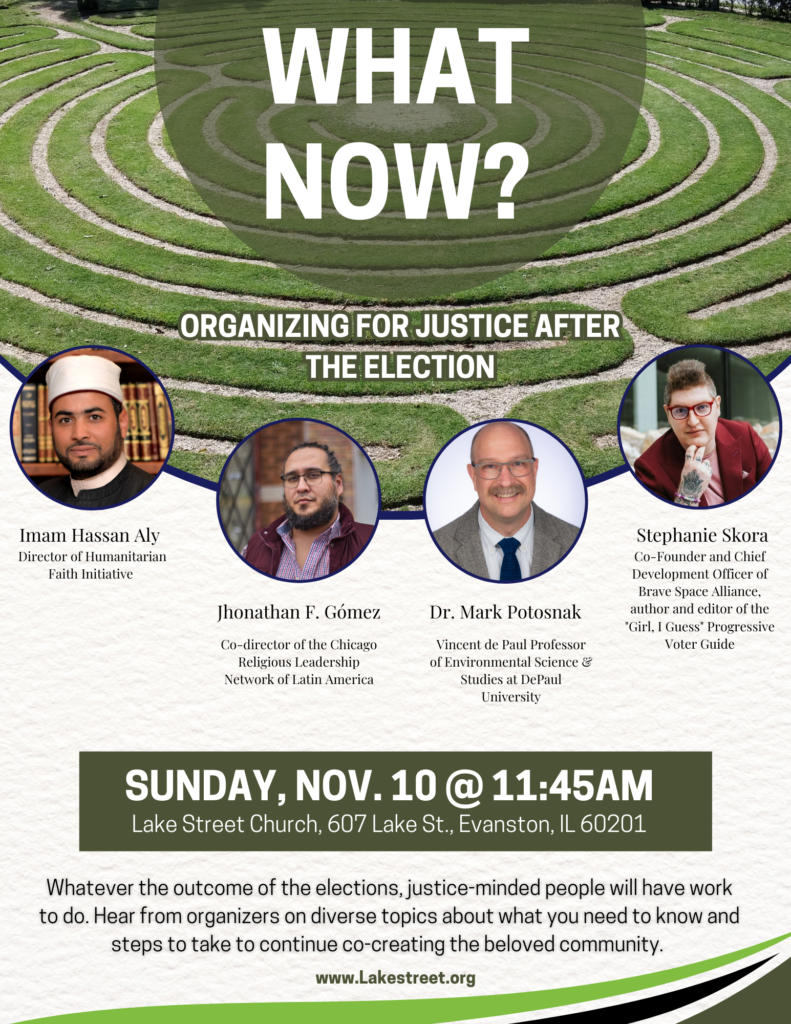
Join us for a discussion titled “What Now? Organizing for Justice After the Election”.
DATE: Sunday, November 10th
TIME: 11:45 AM
LOCATION: Lake Street Church, 607 Lake St., Evanston, IL 60201
At the Chicago Religious Leadership Network on Latin America (CRLN), we understand that marginalized communities in the U.S. have been fighting for justice under all administrations. Our work emphasizes an internationalist perspective and a critique of U.S. foreign policy on Latin American countries. We advocate for the rights of all migrant communities here in the U.S.
We thank Lake Street Church for the invitation to be part of this conversation. Come learn how you can engage in this critical conversation and take action. Your participation matters in co-creating a beloved community.
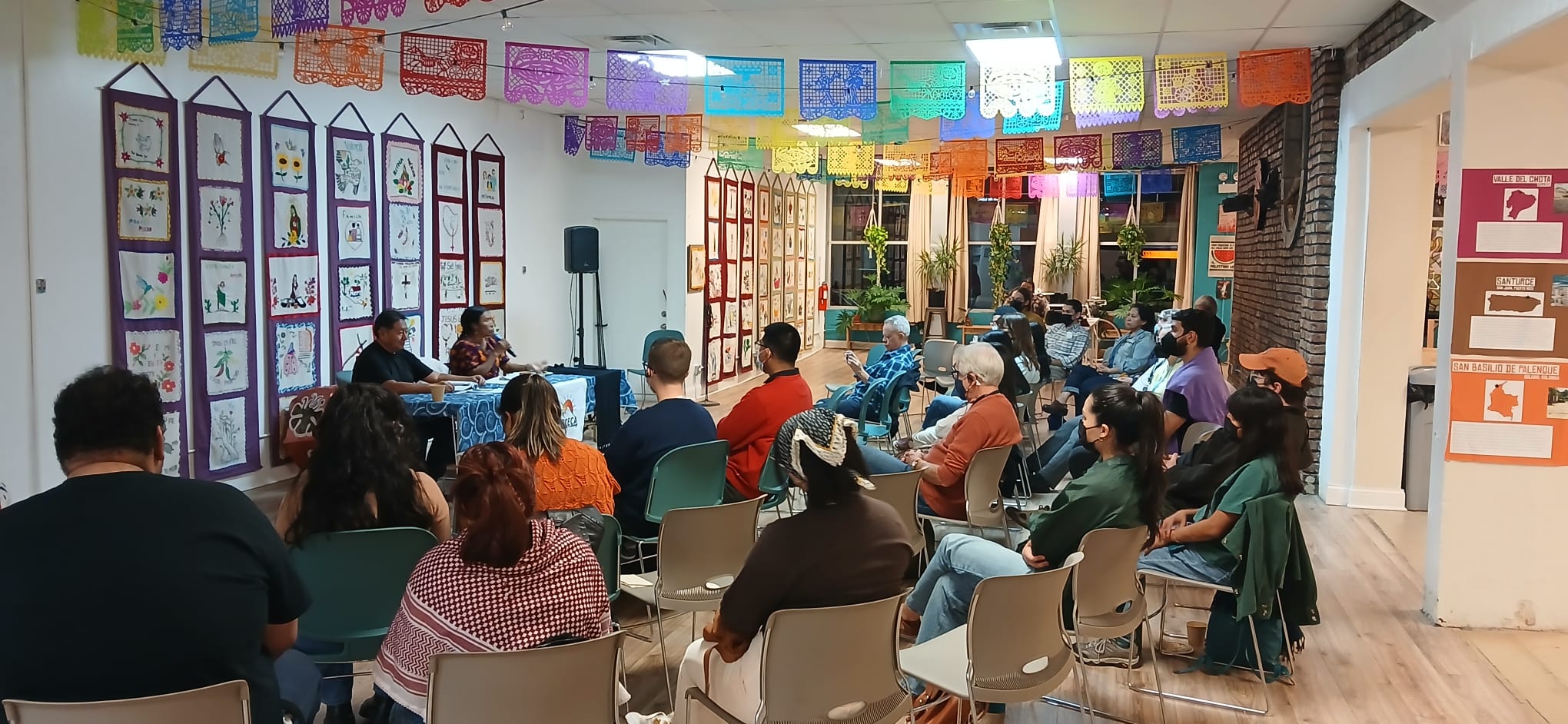
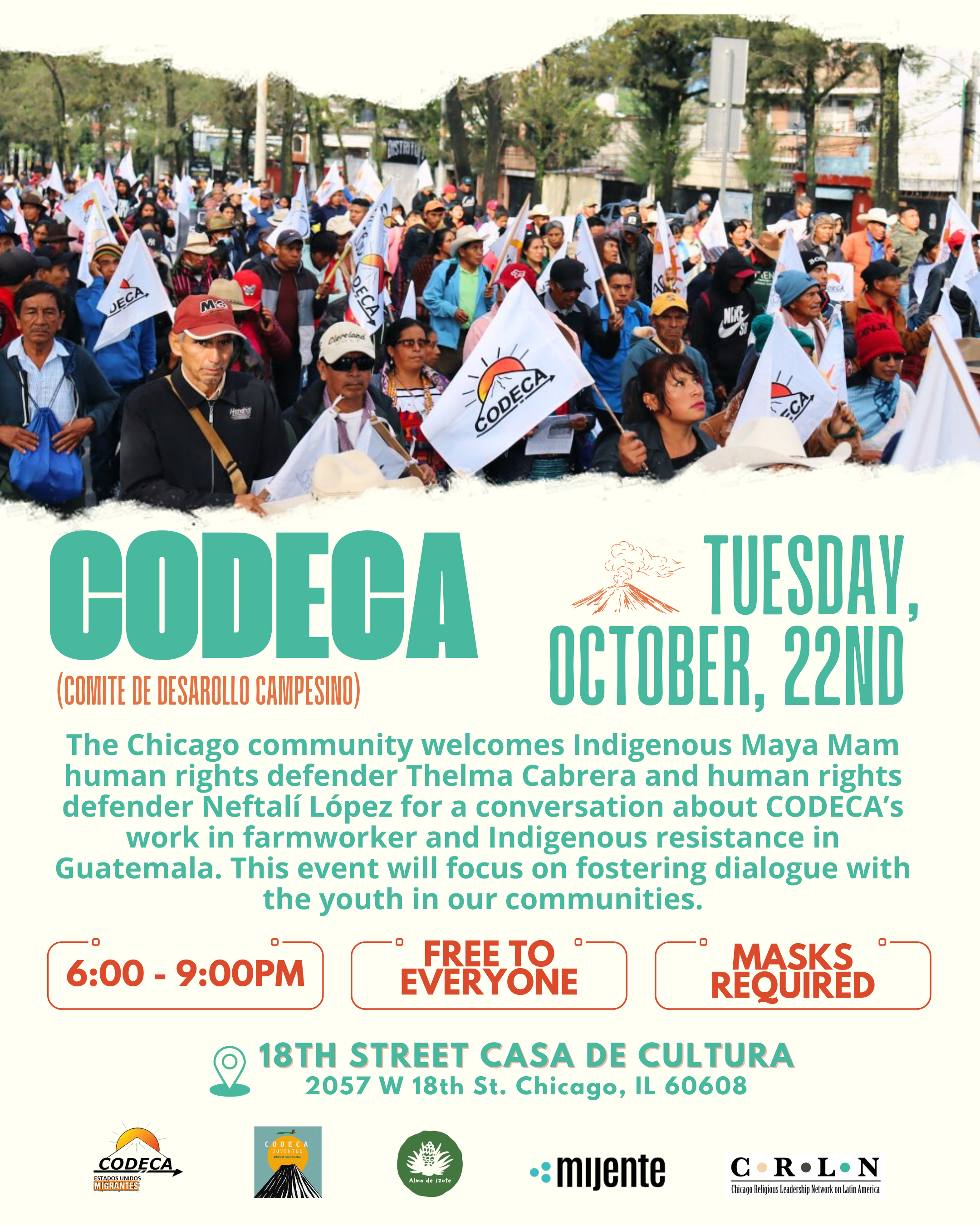
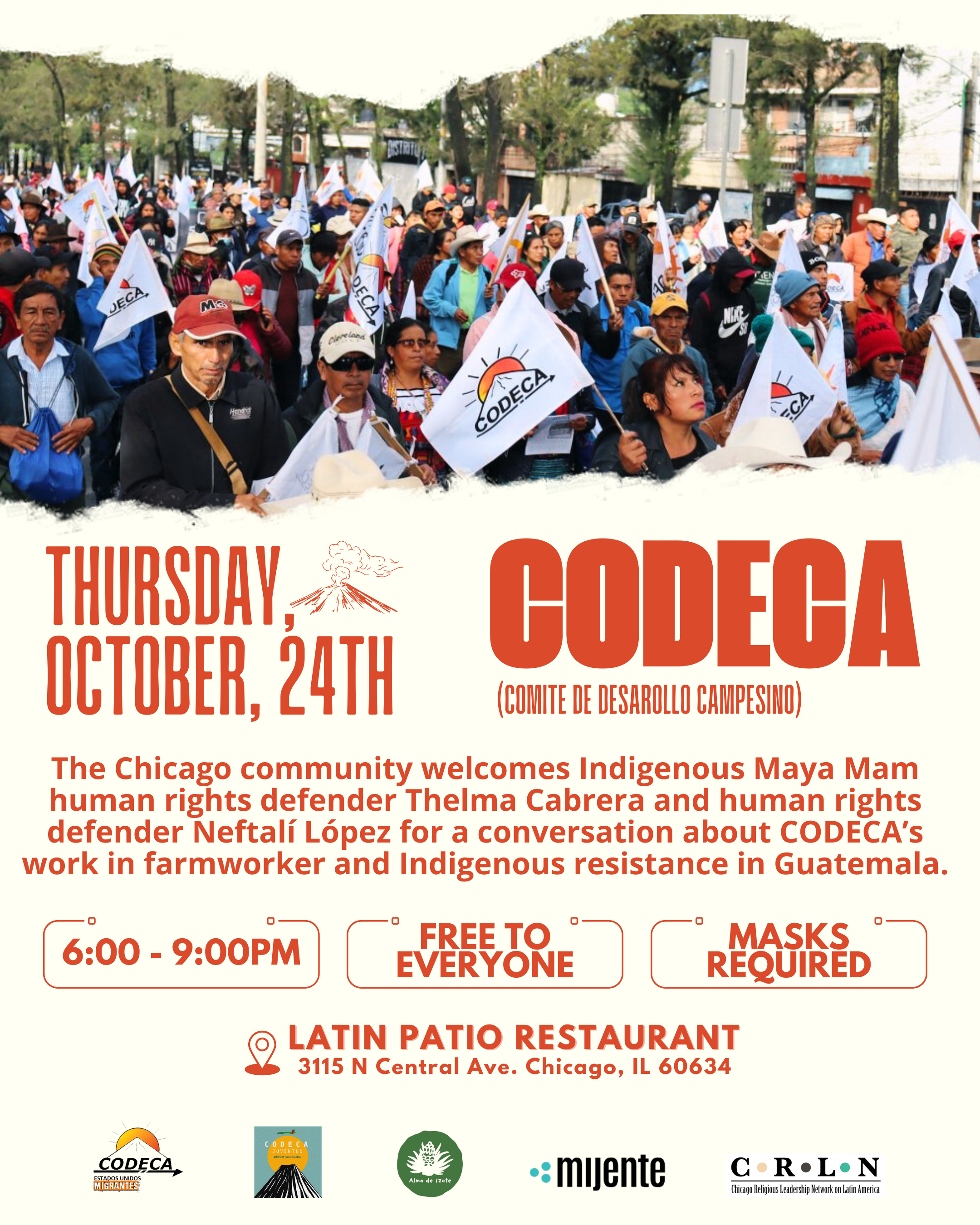
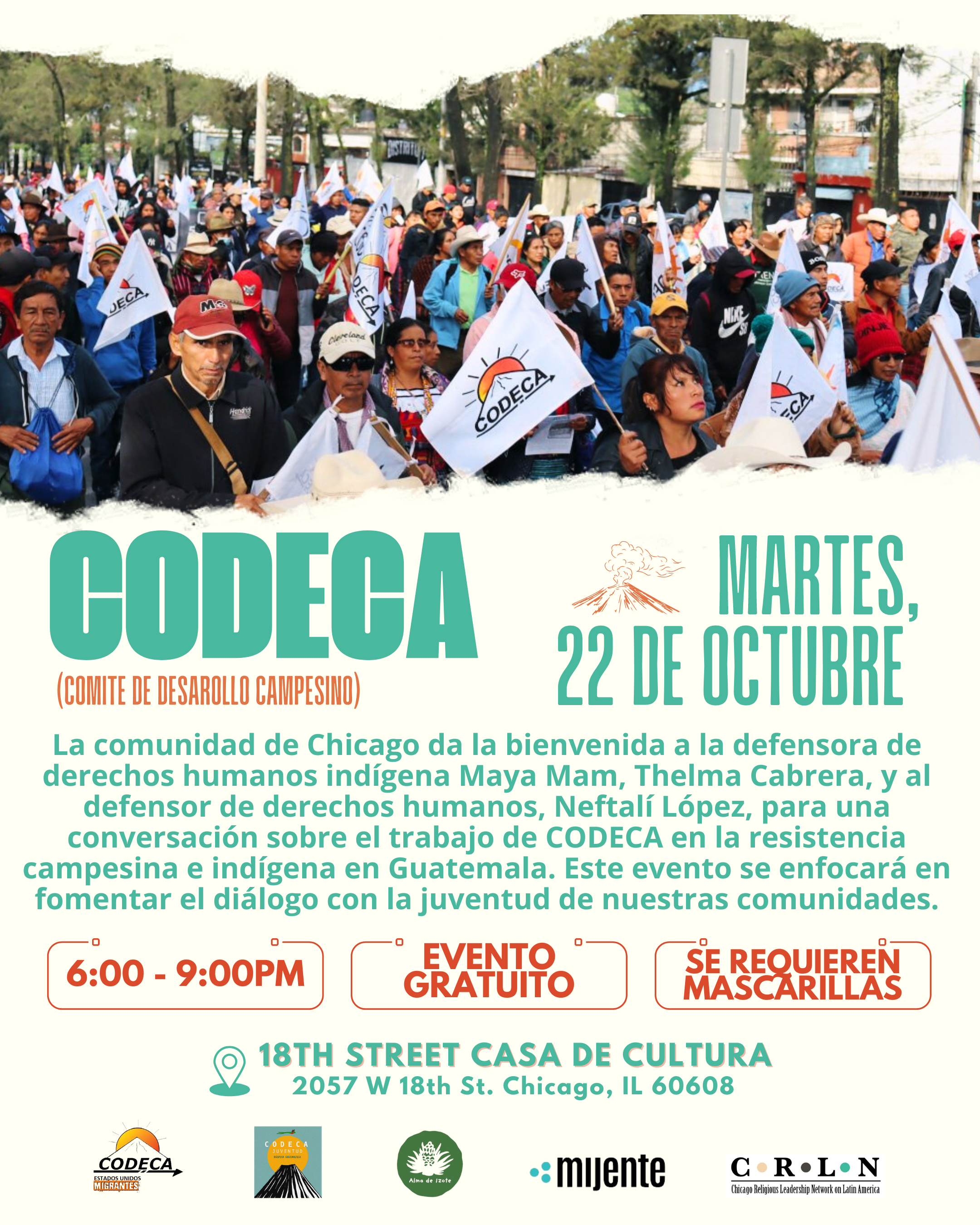
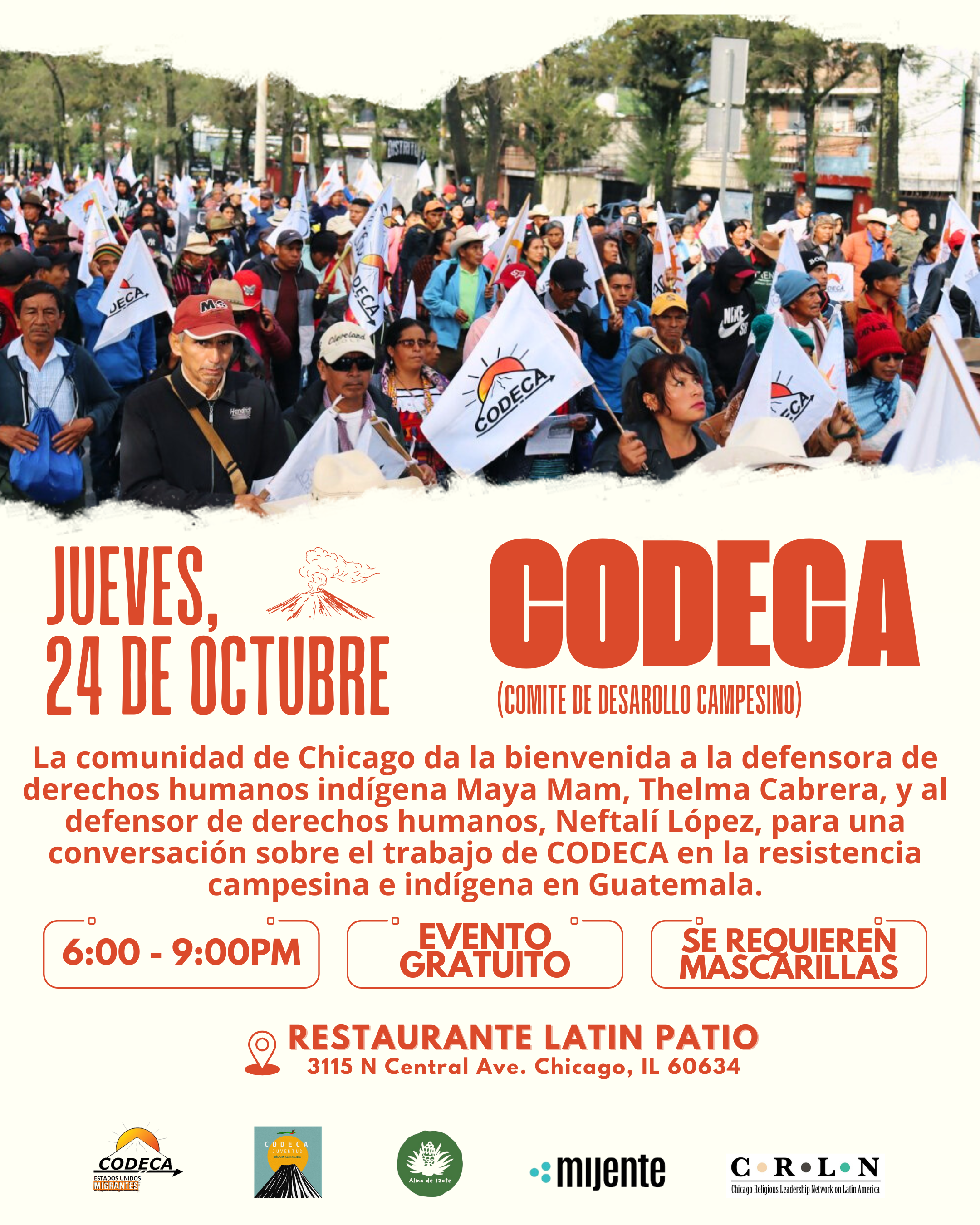
From October 20th to 24th, 2024, Thelma Cabrera and Neftalí López, two prominent Human Rights Defenders from Guatemala, visited Chicago as part of a larger speaking tour. This visit was organized in partnership with local collectives Ceiba and Alma de Izote, along with support from Mijente, CODECA USA Youth, the CCG (Coalición Cordinadora de Guatemala en Chicago), and leaders of the Guatemala community. This marked the first collaboration with Mijente, whose logistical and promotional support contributed to the success of the events. The visit allowed for valuable connections between the guests, local leaders, and various organizations dedicated to social justice and human rights.
On October 21st, a meeting with Mijente’s leadership team in Chicago, along with staff from the national office, and other local activists, provided an opportunity to build deeper connections and discuss common goals in the fight for human rights. The following day, CRLN organized a meeting with its staff, Board of Directors, and the broader network, inviting members of University Church and other groups to discuss the intersection of Indigenous rights, farm worker rights, and the work of CODECA. The meeting also highlighted CRLN’s decades-long commitment to Central America, its roots in liberation theology, and its ongoing solidarity work.
On October 22nd, a youth-focused event was held at the 18th Street Casa de Cultura, attracting over 40 young people. This event allowed Cabrera and López to speak directly with young people about Indigenous justice and the farmworker struggles in Guatemala. It was an opportunity for CRLN to continue its outreach to a new, younger generation on Chicago’s South Side. That same evening, a dinner with over 20 elders and leaders from the Guatemalan community took place at the home of Benjamín Villagrán, strengthening ties with the local community.
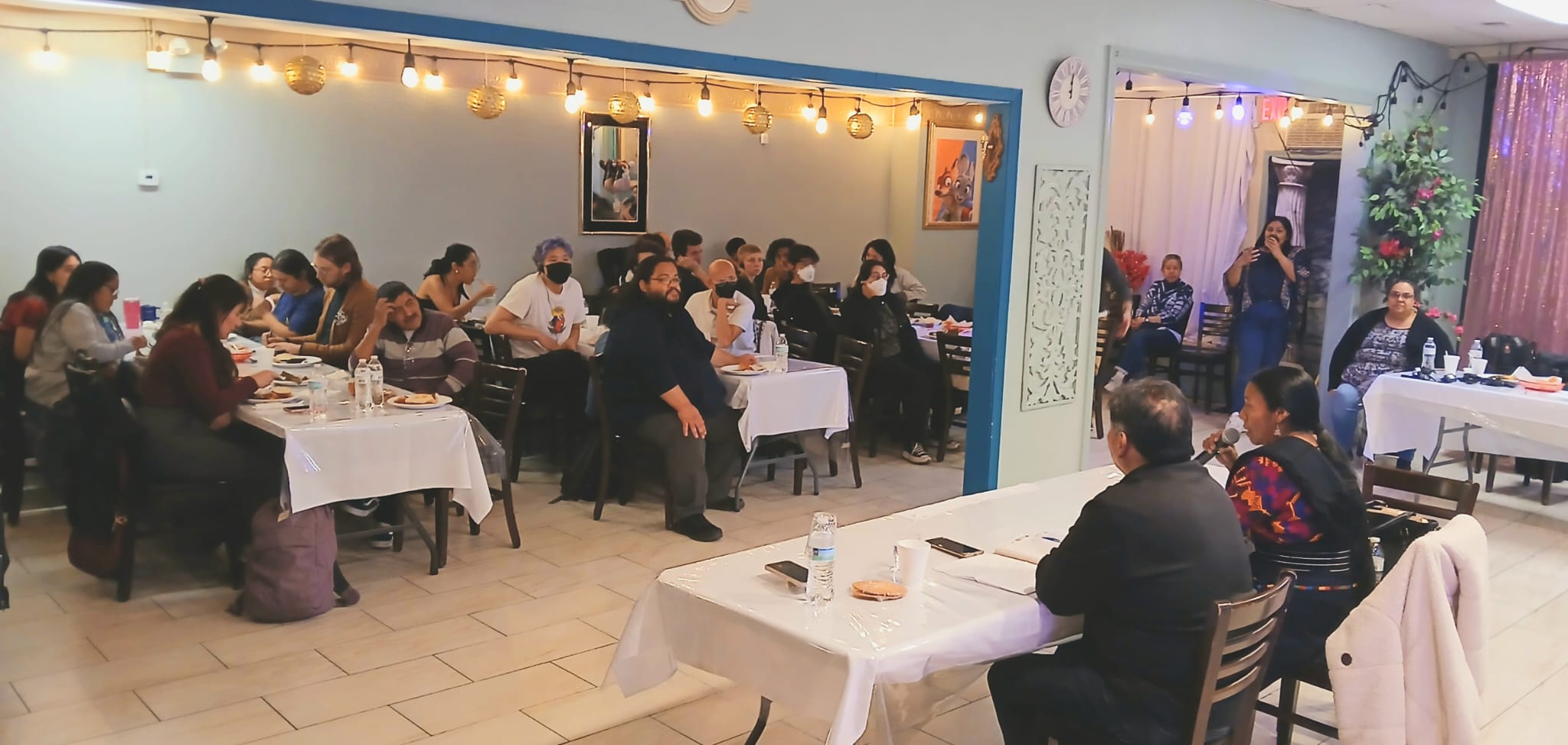
On October 23rd, Cabrera and López visited Urbana-Champaign, Illinois, where they met with a collective of Maya Indigenous youth working on immigrant rights and cultural projects at a local Catholic church. The final evening event, held at the Latin Patio restaurant, brought together over 40 attendees from both the Guatemalan community and the broader Chicago community to discuss shared concerns about human rights conditions in Guatemala. The visit culminated in a meaningful meeting with Congresswoman Delia Ramirez, where human rights issues in Guatemala were discussed, particularly the ongoing threats to human rights defenders. Both public events were supported by CRLN’s contribution of professional translation equipment and simultaneous interpretation to ensure effective communication with attendees. This visit and its events were a direct outcome of the relationship-building efforts of the July delegation to Guatemala and represented a collaborative effort among several groups committed to human rights, justice, and solidarity in Chicago. Additionally, many of the young adults such as Evelyn Zepeda took the lead in the work of these events.
Our solidarity work with the people of Guatemala has evolved over the decades, but one thing remains constant: our belief that Indigenous communities are at the forefront of social change, justice, and liberation. This truth holds across the Americas.
We are honored to partner with Colectiva Ceiba, Alma de Izote, Mijente and Comité de Desarrollo Campesino (CODECA) to welcome renowned human rights defenders Thelma Cabrera and Neftalí López to Chicago. We hope to see you at one or both events.
🗓 Date: Tuesday, October 22
⏰ Time: 6:00 – 9:00 PM
📍 Location: 8th Street Casa De Cultura (2057 W 18th St. Chicago, IL 60608)
Free to everyone. Masks required.
🗓 Date: Thursday, October 24
⏰ Time: 6:00 – 9:00 PM
📍 Location: Latin Patio Restaurant (3115 N Central Ave. Chicago, IL 60634)
Free to everyone. Masks required.
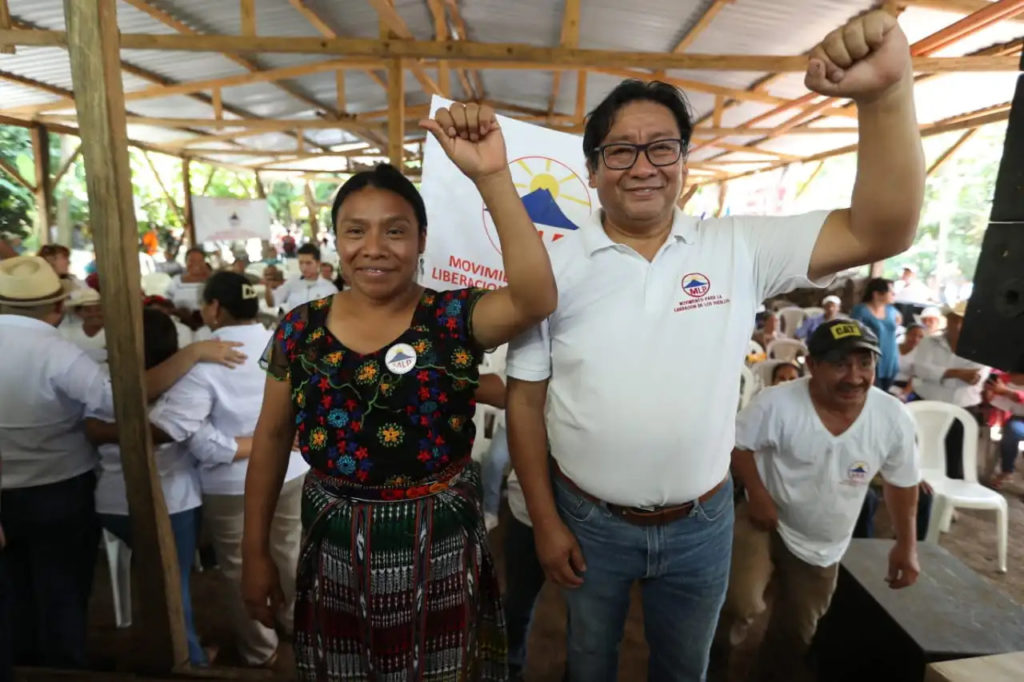
Many of you may remember Thelma Cabrera from her 2019 presidential run. Although she placed fourth, her candidacy inspired rural and Indigenous communities, solidifying her position as a significant political figure in Guatemala.
A renowned Indigenous leader and human rights defender from Guatemala, Thelma is recognized for her tireless work with CODECA, which advocates for land rights, social justice, and the defense of Indigenous and rural communities. A member of the Maya Mam people, Cabrera has emerged as a powerful voice in the fight against corruption, exploitation, and systemic exclusion. In 2019, she ran as a presidential candidate with the Movimiento para la Liberaciónde los Pueblos (Movement for the Liberation of the People, MLP), following in the footsteps of Rigoberta Menchú. Her leadership has made her one of Guatemala’s most prominent voices in the fight for Indigenous self-determination and against the deep-rooted inequalities in the country.
Her presidential candidacy galvanized support from rural areas and indigenous groups, positioning her as a key political figure. Her platform advocated for structural changes, including the convening of a Constitutional Assembly to transform Guatemala into a plurinational state that recognizes Indigenous rights and autonomy. Despite her exclusion from the 2023 election, by the manipulation of the system by corrupt structures, Cabrera’s impact remains significant, continuing to push for systemic change through grassroots mobilization.
Neftalí López is a prominent leader within CODECA, scholar and political consultant, expert on Indigenous Maya customary law and on contexts of juridical pluralism. He was Thelma Cabrera’s running mate in the 2019 presidential election. López is known for his long-standing work in defending the rights of farmworkers and Indigenous peoples, particularly in the areas of land reform and the nationalization of key public services such as energy. His work with CODECA has made him a central figure in mobilizing rural communities against neoliberal policies and corruption that have long marginalized Guatemala’s most vulnerable populations.
During the 2019 campaign, López emphasized the MLP’s goal of convening a Constitutional Assembly to create a plurinational state, ensuring representation and rights for Guatemala’s Indigenous communities. Under his leadership, CODECA has grown into a powerful social and political movement, despite the dangers its members face—38 activists have been killed since the organization’s inception. López remains a dedicated advocate for justice, working to transform Guatemala’s political landscape and build a more equitable society for all.


 DATE: Sunday, November 10th
 TIME: 11:45 AM
 LOCATION: Lake Street Church, 607 Lake St., Evanston, IL 60201