image-title

Central Americans In Exile: What Can We Do To Help?


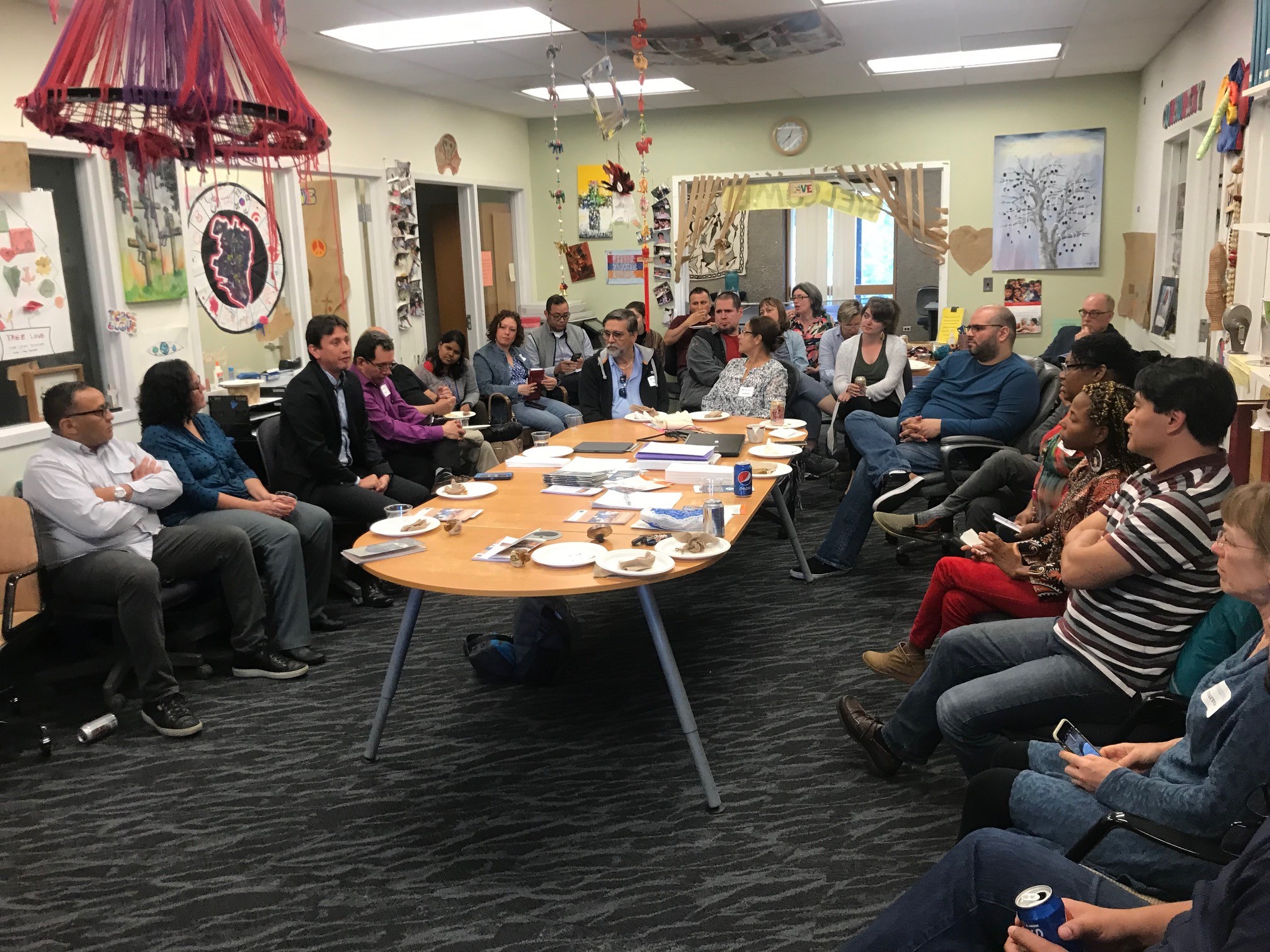
Since October of last year, when large caravans of mostly young people and families from Honduras, Guatemala and El Salvador began moving through Mexico, Maria Magdalena Silva Renteria, known as “Sister Magda,” began to organize humanitarian attention across Mexico for Central Americans and all who seek refuge. Sister Magda is the founder and director of the CAFEMIN shelter for women and children in Mexico City and Coordinator of a national network of frontline migrant defenders in Mexico. She rarely visits the U.S. due to her urgent and life-saving work on the ground. She will make just trhee stops in April–Chicago, Washington, DC and Detroit. Do not miss the chance to connect with this inspiring and thoughtful leader.

Co-sponsored by Alianza Americas, CAFEMIN, and CRLN.

Read More
image-title

Stand on the Side of Righteousness: Immigration Advocacy, Past and Present

Time: 6-7:30 pm

Place: Room 214, Damen Student Center, Loyola University Chicago                                                                                                    6511 N. Sheridan Rd.                                                                                                                                                                    Chicago, IL  60626

You are invited to attend the opening reception for an exhibit which draws from interviews with immigration advocates. Some of those interviewed worked with the Chicago Metropolitan Sanctuary Alliance, now a part of CRLN. The exhibit is now open until the end of April on the second floor of the Damen Center. An online version of the exhibit will be available in early April.

The Immigration Advocacy History Project is supported by a grant from the Student Innovation Fund of Loyola’s Plan 2020.  The project is an effort of a Loyola graduate student group, Historians for a Just Society.  Volunteers interviewed immigration advocates, whose stories will be preserved in the Loyola University Archives & Special Collections. The project also hosted a fall panel on immigrant identity and intersectionality.

For more information, see immigrationadvocacyhistoryproject.wordpress.com or email justhistoryloyola@gmail.com

Read More
image-title

Date: Wednesday, April 10

Time:  6:30 – 8:00 pm

Place: Fourth Presbyterian Church (Gratz Center), Room 4F                                                                 126 E. Chestnut St., Chicago, IL  60611

Parking:  Parking passes available for garage at 900 N. Michigan Ave. building. Access the garage from Rush and Walton Streets. Discounted parking begins at 5:00 pm

In January, a CRLN delegation traveled to Guatemala, just as President Jimmy Morales ordered the International Commission Against Impunity in Guatemala to leave the country and as Congress was preparing a law granting amnesty to war criminals retroactively. They met with Mayan communities and organizations, human rights groups, and talked with people about the roots of migration, resistance to mining and other extractive projects, and the Constitutional crisis gripping the country.

Come with your questions and join us for an evening exploring these themes and ways to respond.

Light food available.

Read More

CRLN has reported on Guatemala’s constitutional crisis already, with concern about President Morales’ defiance of Constitutional Court rulings and military backing for his attempts to oust the International Commission Against Impunity in Guatemala. This is especially problematic this year, with Guatemala’s presidential and Congressional elections scheduled in June. There are already indications that the current Guatemalan administration is trying to manipulate the outcome.

In addition, in the past months, the Guatemalan Congress has prepared a law granting amnesty for those who perpetrated war crimes. The amnesty would be granted retroactively to those few who have already been convicted and jailed, wiping away decades of painstaking work to get justice for the victims who were tortured, raped, and/or murdered. There was an international outcry against the legislation, and on the day the vote was to take place, enough members of Congress walked out that there was no quorum, and the vote was postponed. However, CRLN is concerned that it will come up for a vote again.

Those who are guilty of these crimes still wield a great deal of power, and they are trying various ways to sneak amnesty for themselves into other legislation. For example, Congress, under the guise of finding a solution for the problem of overcrowding in Guatemalan prisons, also has drafted a bill that would set free anyone over 70–those in command during the Guatemalan Civil War would all be over 70.

State-sponsored violence and criminalization against human rights defenders has been on the rise in Guatemala in the last few years.The Worldwide Movement for Human Rights (fidh) reports that in 2018, 26 human rights defenders were murdered, the majority of them Indigenous people defending their lands from mining and other extractive projects. Guatemalan human rights organization UDEFEGUAreported 493 attacks against human rights defenders in Guatemala in 2017.

For all of these reasons, CRLN will ask members of Congress from Illinois to suspend funding for Guatemala until democratic process, rule of law, and protection for human rights is a reality.

For more information on the constitutional crisis, click here

Read More
image-title

CRLN is supporting the Detention Watch Network’s Campaign, #DefundHate, to cut funding for Immigration and Customs Enforcement and Customs and Border Protection. ICE has greatly expanded its detention of immigrants and now detains over 49,000 on a daily basis. Click here to read more about this on Detention Watch Network’s webpage.

Please send your name, address, and email address to shunter-smith@crln.org if you would like us to add your name to a letter that we will take to your Representative and Senators addressing this issue. You can also call the Capitol Switchboard at 202-2243121 and ask to be connected to your Representative and Senators. Here is a sample script:

“Hello, my name is [first and last name] and I’m a constituent from [City, State]. I’m calling as a member of CRLN and as part of the Defund Hate campaign. I just saw the news that ICE has been rapidly expanding the number of immigrants they detain on a daily basis, now over 49,000 people. This is an historic high that has resulted in the separation of tens of thousands of families. They have exceeded their Congressionally-authorized detention funding by about 9,000 immigrants per day Congress must put a stop to this–it cannot make concessions to an administration that refuses to negotiate in good faith. In addition, I am asking Representative/Senator X to commit to cuts in funding to ICE and CBP and restrictions on transfer and reprogramming authorities to prevent them from raiding other accounts to fund their expansion.”

Read More
image-title

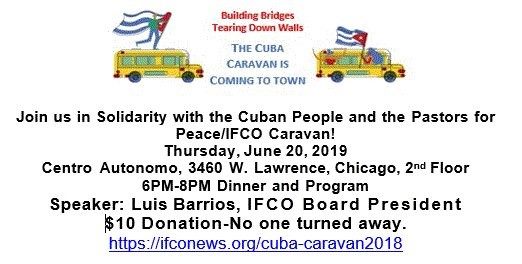
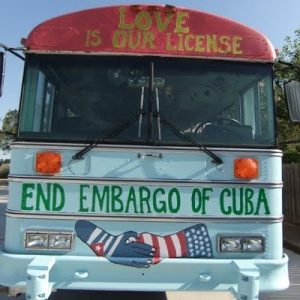
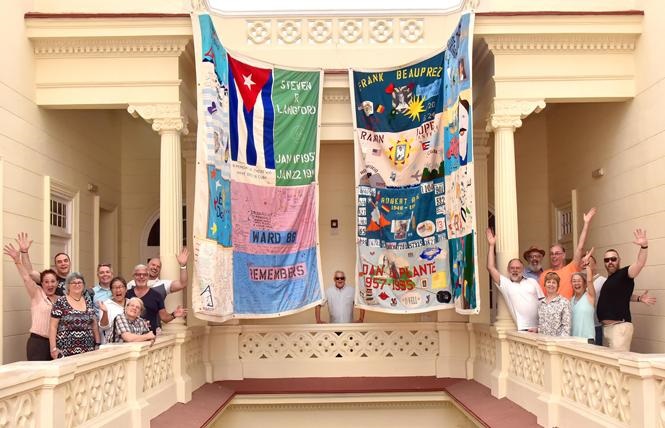
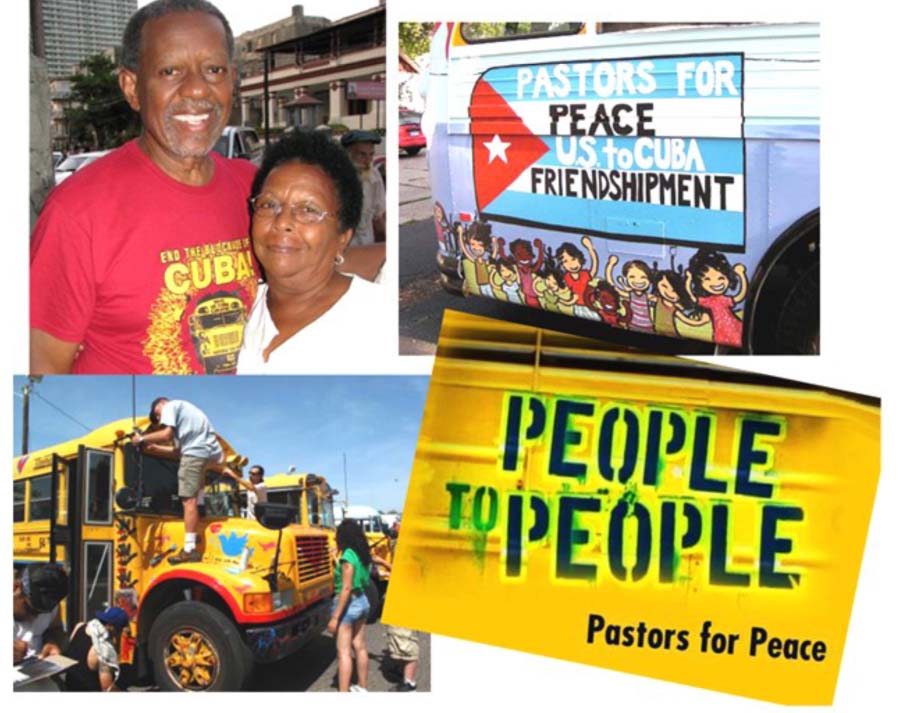
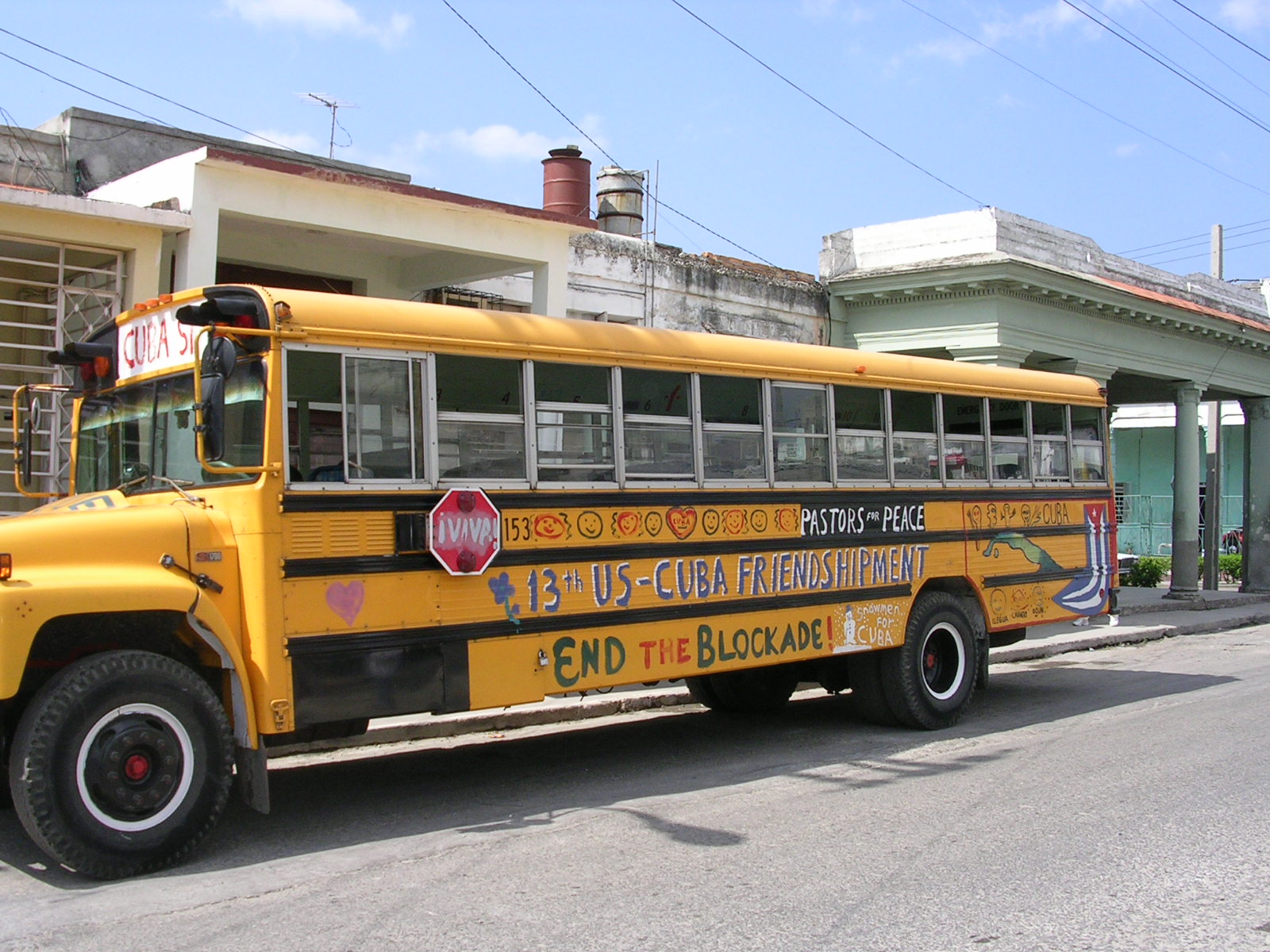
Let’s end US travel and trade restrictions that harm the people of Cuba and the US!

In April of 1960, State Department officials wrote that the goal of the U.S. embargo of Cuba was “…to bring about hunger, desperation and overthrow of the government” (State Department, April 6, 1960).  Today the Cuban people still experience shortages of many essentials including life-saving medicines and medical products.

When we meet with our legislators in DC or in district we advocate for policies that benefit the people of our two countries.  Even though polling shows that 96% of Cubans living on the island support lifting the trade embargo and have said that more tourism would benefit the local economy, President Trump  announced in 2017 that “in solidarity with the Cuban people” the U.S. would add more barriers to trade and travel to Cuba. Since polling has also shown that 63% of Cuban-Americans in Miami-Dade County oppose the continuation of the embargo and 73% of people in the U.S. favor ending the embargo we have to ask who is in favor of these restrictions?

CRLN has worked with faith communities in Cuba and the U.S. for more than twenty years to end harmful U.S. policies, believing that the human rights of Cubans and the people of the US would best be served by lifting all travel restrictions and finally ending the embargo.

We are seeking co-sponsors for the following legislationWe are asking legislators to co-sponsor the following bill that will end restrictions to trade and travel:

S.428 – The Freedom to Export to Cuba Act of 2019 — A bill to lift the trade embargo on Cuba.

U.S. Senators Amy Klobuchar (D-MN), Mike Enzi (R-WY), and Patrick Leahy (D-VT) reintroduced major legislation to lift the Cuba trade embargo. The bipartisan Freedom to Export to Cuba Act (S428) would eliminate the legal barriers to Americans doing business in Cuba and pave the way for new economic opportunities for American businesses and farmers by boosting U.S. exports and allow Cubans greater access to American goods. The legislation repeals key provisions of previous laws that block Americans from doing business in Cuba, but does not repeal portions of law that address human rights or property claims against the Cuban government.  U.S. and Cuban faith communities have long advocated for the lifting of the embargo because of the suffering it causes in Cuba.

We are also asking legislators to urge the State Department to process visas for Cubans in Cuba.  The Trump Administration ordered staff reductions at the US Embassy in Havana, Cuba and at the Cuban Embassy in Washington, DC in response to health issues experienced by some personnel at the US and Canadian Embassies in Havana. Now all staff that would issue visas to Cubans to visit the U.S. have left the Embassy.  The FBI did not find any evidence linking the health issues to actions by the Cuban government during its three visits to the island and the investigation is ongoing.

Now Cubans who want to get visas for tourist travel or permanent reunification with their families must travel to another country to get these visas.  In the past many Cubans were able to obtain visas for five years.  This enabled religious leaders, scientists, artists as well as people with family in the U.S. to travel without applying for a visa each time. This five year visa has been discontinued and Cubans can only receive a visa for one visit in a three month period.   The cost of plane fare, waiting in the third country to see if they can get a visa and the $160 non-refundable fee just to apply have made it financially impossible for most Cubans to apply for a visa.  There must be a way to process Cuban visas in Cuba.  Otherwise the U.S. has effectively created a travel ban against Cubans visiting the US for family reunification or other purposes.

For more information:


More information on S.428 – The Freedom to Export to Cuba Act of 2019 — A bill to lift the trade embargo on Cuba.

https://www.klobuchar.senate.gov/public/index.cfm/2019/2/klobuchar-enzi-leahy-introduce-major-legislation-to-lift-cuba-trade-embargo


Cubans frustrated over U.S. move to end five-year visitor visas

https://www.reuters.com/article/us-cuba-usa/cubans-frustrated-over-us-move-to-end-five-year-visitor-visas-idUSKCN1QZ2D5


Cubans Take to Facebook to Air Grievances Over New Visa Restrictions

https://latinousa.org/2019/03/19/cubansfacebook/


Background Information from before April 2018


Statement by the Cuban Council of Churches regarding recent changes in US policy

https://nationalcouncilofchurches.us/statement-by-the-cuban-council-of-churches-regarding-recent-changes-in-us-policy/


A Cuban pastor’s response to President Trump’s Cuba policies

https://baptistnews.com/article/cuban-pastors-response-president-trumps-cuba-policies/#.Ws6LwC7wYnR


Church World Service Says New Restrictions on Cuban Travel Will Hurt the Cuban People and Churches https://cwsglobal.org/cws-statement-on-cuba-june-2017/


Catholic leaders: Dialogue between U.S. and Cuba must continue

https://www.americamagazine.org/faith/2017/06/20/catholic-leaders-dialogue-between-us-and-cuba-must-continue


U.S. Halt in Visa Services Leaves Cuban Families in Limbo   https://www.nytimes.com/2017/10/05/world/americas/cuba-us-visas.html


Cubans who want to visit the U.S. now face more difficult and expensive hurdles

http://www.miamiherald.com/news/nation-world/world/americas/cuba/article177305716.html


Read More
image-title

April 19, 12:00-3:00pm

Gather at the Corner of Michigan & Ida B. Wells Drive 

(formerly Congress Blvd)

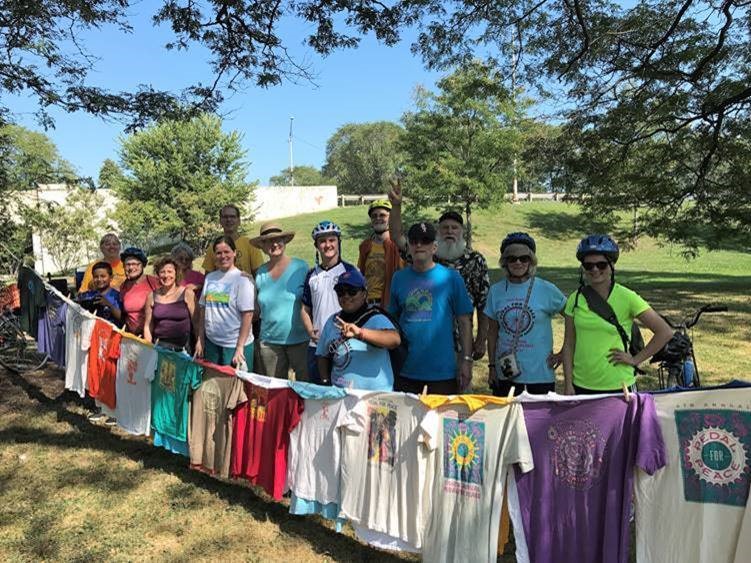
8th Day Center for Justice organized this annual event before they closed their doors last year, but the tradition lives on! A committee of people have been meeting with former 8th Day staff to plan the 2019 Good Friday Walk for Justice around the theme of Justice: Truth in Action.

We live in a post-truth culture, where “alternative facts” replace actual facts and polarizing judgments have more weight than straightforward evidence.  In our post-truth world, it is not that the truth, science and facts have ceased to exist but that they are so easily dismissed.

As Martin Luther King, Jr. once proclaimed, “I believe that unarmed truth and unconditional love will have the final word in reality. That is why right, temporarily defeated, is stronger than evil triumphant.”

Please join us to boldly proclaim the truth, to call out the lies and to be a people that live the truth so that we can create a world of justice and peace. We are grateful to be joined in the Good Friday Walk for Justice by groups and organizations that are living the truth in action and awakening communities, creating change and transforming systems for the common good.

There is no cost to participate. To sponsor this year’s Walk, make checks payable to CRLN (memo GFWalk) and mail to CRLN, 4750 N. Sheridan Rd. #429, Chicago 60640 or Online: https://bit.ly/2DgARe8

Read More
image-title

The Berta Caceres Human Rights in Honduras Act, which would cut off military and police aid to Honduras until impunity for their human rights violations ceases, is due to be reintroduced in a couple of weeks. Rep. Hank Johnson has contacted the 70 Representatives who co-sponsored the bill with him during the last session of Congress to ask them to sign on again to show strength of support when the bill is reintroduced. Those from Illinois who signed on in the 2017-2018 session of Congress are Reps. Rush, Lipinski, Quigley, Danny Davis, Schakowsky, and Foster.

The bill never got out of the Foreign Affairs Committee during the last two sessions of Congress with the Republican majority in the House of Representatives. There is a chance that with a Democratic majority and new progressives in office, it will advance to the floor of the House for a vote. In Illinois, we must contact new Representatives Jesus “Chuy” Garcia (IL-4) and Sean Casten (IL-6) for their support on this bill.

CRLN staff and board members will be in DC April 4-8 and will take letters to all Illinois members of Congress at that time. The letters will include a request to support this bill if it has been reintroduced by then, or to cut off military and police aid by other means if the bill has not been reintroduced yet. Email shunter-smith@crln.org with name and address if you give us permission to add your name to your members of Congress’ letters.

Berta Caceres was an inspired feminist, indigenous rights and environmental activist and leader who was murdered on March 2, 2016. While her case went to court and some of those involved in her assassination were convicted, the intellectual authors of her death have yet to be held accountable, according to her family and an international panel of experts who investigated the case. Berta’s family’s and her organization COPINH’s persistence, along with International solidarity efforts with the family and COPINH, was key to getting her case tried in court at all.

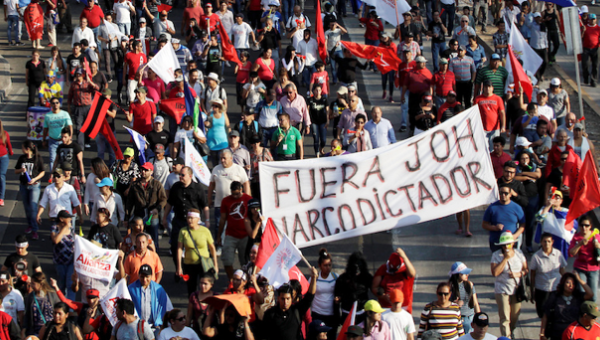
Honduras now has an illegal President, Juan Orlando Hernandez, who “won” an election for a second term that was prohibited by the Honduran constitution, and who shut down the vote counting computers repeatedly to tamper with the election results. He is one of the golpistas, one who was behind the 2009 coup, and he is already planning his re-election campaign for 2021. He has consolidated power through appointments of friends in all branches of government and is a dictator in everything but name. There is a direct connection between his misuse of power and the tens of thousands of people leaving Honduras in a mass exodus on the “caravans.” His brother, a former Honduran Congressman, was recently arrested in Miami and charged with being a major mover of cocaine into the U.S., and his personally appointed national police chief has a history of accepting bribes from drug cartels. He has sought the arrest and conviction of journalists and opposition political figures who try to bring such crimes to light. The corruption of his administration is another reason we should not be sending aid to Honduras.

Articles:

Unavision:  “Judge denies bail  to brother of Honduran president arrested on drug charges”

AP:  “Honduran lawmaker faces defamation trial after naming names”

See previous posts on Honduras on the CRLN website for background on the 2017 Honduran presidential election and the international investigation into Berta’s murder, 

Read More
image-title

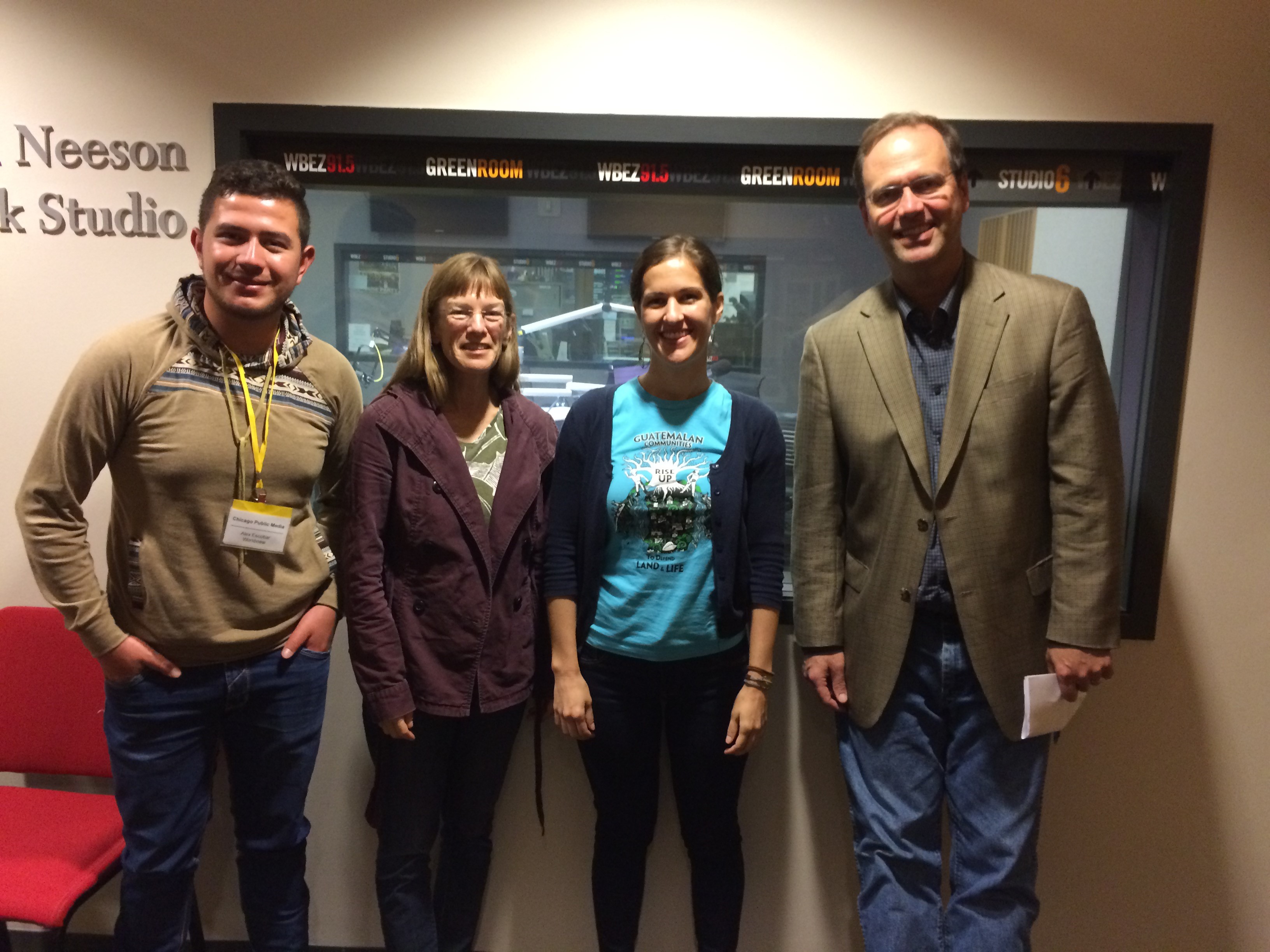
University of California at Santa Cruz Professor of History Emerita, Dana Frank, was in Chicago on February 27 and was interviewed by WBEZ’s Jerome McDonnell on the program “Worldview.” Here is the link:

https://www.wbez.org/shows/worldview-podcast/historian-dana-frank-on-honduran-politics-us-intervention-food-mondays-can-romanstyle-pizza-make-it-in-chicago/662032dc-bc70-4e42-b647-a7709d8f429a

Professor Frank has just published another book, The Long Honduran Night: Resistance, Terror and the U.S. in the Aftermath of the Coup.  CRLN has 3 copies for sale. Please contact Sharon at shunter-smith@crln.org or call the CRLN office at 773-293-2964 if you would like to buy a copy.

Read More
image-title

By Sidney Hollander, Secretary, CRLN Board of Directors

Guatemala is in the grip of a constitutional crisis that threatens to reinstate a regime of dictatorship and death squads supported by the U.S. government.

This is the message that was delivered to me and my fellow members of a CRLN delegation to Guatemala by a variety of human rights activists in January of this year.  Appalled by the looming threat to the modest progress toward righting the historic wrongs that continue to cast a shadow over public life in Guatemala, these activists deplored the recent U.S. retreat from its previous 12 years of support for the effort to bring justice to Guatemala and pleaded with us to help rekindle that support in the U.S. congress.

Because of the urgency and importance of this moment, explained below, CRLN is forming a Guatemala Working Group. Call the CRLN office at 773-293-2964 or email shunter-smith@crln.org if you are interested in joining a CRLN Working Group on Guatemala.

The United States, with a few notable exceptions, has been playing a relentlessly destructive role in Guatemala since at least 1954 when the CIA-engineered a coup that overthrew a democratically elected reformist regime because it was encroaching on U.S. business interests there.  In the ensuing maelstrom of repression and rebellion the U.S. allied itself with the Spanish-descended economic elite and its military, supplying arms and training in support of a barbarous genocidal counterinsurgency that destroyed 440 Mayan villages and killed over 200,000 people, nearly all of them civilians.

The heavy hand of the U.S. did not stop there.  When survivors of these massacres and related repressions sought refuge in the United States, the Reagan administration barred them, thereby inadvertently giving rise to the Sanctuary Movement of churches and synagogues that sheltered these “illegal” refugees in defiance of the U.S. government.

CRLN is a direct outgrowth of that sanctuary work in the 1980s.  Over the years it has continued to stand with Guatemalans in their postwar pursuit of justice and to call out the U.S. government when it impedes that work.

That is the background of the crisis that CRLN found during its January delegation.  The current constitutional crisis has its roots in the crimes of the counterinsurgency.  The long-delayed effort to bring the perpetrators to justice got a big boost about 12 years ago in a fleeting, breakthrough moment when the Guatemalan government, desperate for some measure of international and domestic legitimacy, agreed to cosponsor a United Nations Commission Against Impunity in Guatemala (CICIG, in the Spanish acronym).  Its mandate was to assist the Guatemalan Attorney General in the development of prosecutions relating to crimes from the past as well as from the present.  The U.S. supplied a portion of the necessary funding.

The CICIG has become a victim of its own success.  In its support of dozens of successful prosecutions of perpetrators of the genocide and of sitting politicians, including a sitting president and vice president, the CICIG has come to be seen as a threat to the allied business and military elites that have long dominated Guatemalan politics and government.  It was the 1970s and 1980s threat to this same elite that caused it to launch the brutal counterinsurgency, so it is no surprise that it has launched a counterattack on the CICIG.

The current crisis was precipitated by the present president of Guatemala who, along with his son and brother, has come under investigation and fears that they will be indicted for corruption.  He and his allies for some time have been attacking the CICIG as an agent of foreign powers that are compromising Guatemalan sovereignty.  They have even used high priced lobbyists to win the support of conservative politicians in the U.S.  These attacks came to a head late last year when the president declared that he was ending the mandate of the CICIG.

The resulting political crisis rapidly became a constitutional crisis when the Constitutional Court ruled that the president lacked the authority to terminate the CICIG unilaterally, the president defied the Court and withdrew police protection from the CICIG workers.  He then sought to indict and remove the Court majority on charges that they had acted against the law by ruling against him.   That is where things stand as of this moment in mid-February.

It is painful to report that the United States has jettisoned its 12-year support for the CICIG.  The State Department and the embassy have issued statements in defense of Guatemalan sovereignty and blandly said they favor the rule of law.  They have remained pointedly silent on the CICG, in contrast with the robust support they have voiced in the past.

Guatemalan human rights activists see the CICIG crisis as part of a larger drift toward dictatorship characterized by the reappearance of death squads, the criminalization of protest and opposition generally, and the subordination of independent branches of government to the control of the president acting on behalf of the old elite.  Emblematic of this drift is proposed legislation that would void the convictions that the CICIG has helped to obtain and forbid further prosecutions of crimes committed during the counterinsurgency, thus reinstating the impunity on which elite rule has rested.  In addition, a companion bill would subject nongovernmental organizations to onerous registration and reporting requirements and would outlaw many of their activities.  If this bill is enacted many of the groups with which CRLN works would find it difficult or impossible to operate, and individual activists would find themselves in even greater jeopardy than they are at present.

The awful developments in Guatemala create a particular moment for CRLN.  As members of CRLN we are not powerless to resist Guatemala’s slide toward dictatorship.  We must remain in contact with our partners there.  We must contact U.S. officials and other leaders.  We must spread the word so that our friends and associates in the U.S. can do the same.

Because of the urgency and importance of this moment, CRLN is forming a Guatemala working group.  All members are invited to join.  I definitely will be participating.  I hope many of us will.  We have a lot of work to do.

Call the CRLN office at 773-293-2964 or email shunter-smith@crln.org if you are interested in joining a CRLN Working Group on Guatemala.


Read More