
A scope of the Peace Accord along with the policy implications are weighed in the New York Times Article published on May 17, 2019:
Colombia’s Peace Deal Promised a New Era. So Why Are These Rebels Rearming?
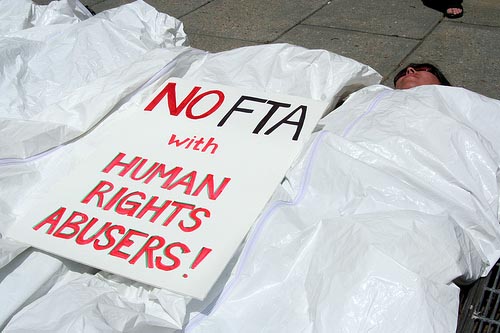
A scope of the Peace Accord along with the policy implications are weighed in the New York Times Article published on May 17, 2019:
Colombia’s Peace Deal Promised a New Era. So Why Are These Rebels Rearming?
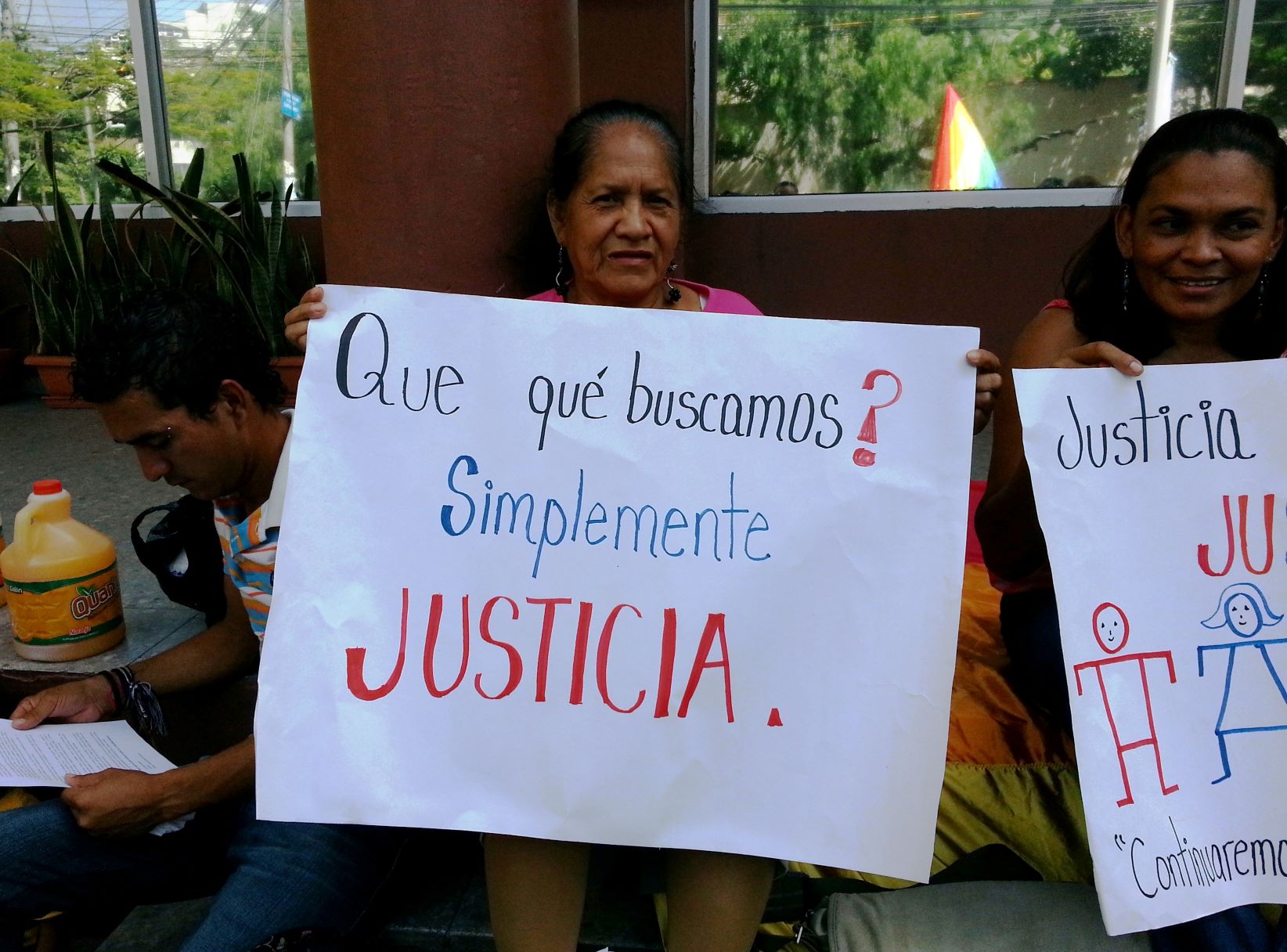
Learn about the deteriorating rights for Colombian workers and Trade Unionists through an article published by The American Federation of Labor and Congress of Industrial Organizations on May 16, 2019:
https://aflcio.org/2019/5/16/murdered-trade-unionists-truth-behind-colombias-trade-agreement
Find an update on Colombia’s Peace Accord from this New York Times article published on May 23, 2019:
https://www.nytimes.com/2019/05/23/opinion/colombia-peace-agreement.html
1989 Dec 01 El Salvador: Bishop Medardo Gómez, Lutheran Church of El Salvador
Also: Senator Paul Simon
1990 No Luncheon in 1990
1991 Mar Guatemala: Bishop Rodolfo Quezada, President Guatemala Catholic Bishops Conference & Peace Negotiations Convener
1992 Feb 13 El Salvador: Fr. Charles Beirne SJ, Central America University (UCA), San Salvador
Also: Senator Alan Dixon
Sep 24 Guatemala: Rigoberta Menchu, Guatemalan Indigenous Leader & Author
1993 Feb 11 Nicaragua: Rev. Gustavo Parjon, Baptist pastor & Director of CEPAD
Oct 29 Guatemala: Fr. Ricardo Falla, SJ, Guatemalan priest, anthropologist, writer, and human rights advocate
1994 Oct 25 Guatemala: Sr. Argentina Cuevas, VP, CONFREGUA Conf Men & Women Religious
1995 Oct 31 Guatemala/USA: Jennifer Harbury, attorney & human rights advocate
1996 Oct 23 Cuba: Rev. Raimundo Garcia, Presbyterian pastor from Cardenas, Cuba
1997 Mar 20 Nicaragua: Fr. Xabier Gorostiaga SJ, President, Central America University, Managua
Oct 23 SOA: Jack Nelson Pallmeyer, Professor & Author of “The School of Assassins”
1998 Nov 5 Chiapas: Ricardo Carvahal, Director, SiPaz Mexico
1999 Oct 28 Colombia: Agustín Jiménez, President, Committee in Solidarity with Political Prisoners
2000 Oct Colombia: Ricardo Esquivia, Vice President, Colombia Evangelical Council of Churches
2001 Oct 25 Vieques: Rev. Wilfredo Estrada, Ecumenical Council Pro-Vieques, Church of God
2002 Oct 24 Cuba: Rev. Raul Suárez, Ebenezer Baptist Church – Visa was Denied
2003 No Luncheon in 2003
2004 Apr 22 CAFTA: Lori Wallach, Director, Global Trade Watch, Washington, DC
Oct 13 Colombia: Hector Mondragon, Human Rights Leader, Colombia – Mennonite
2005 Oct 26 Colombia: Zulia Mena, First Afro-Colombian Congresswoman elected in Colombia
2006 Nov Guatemala: Bishop Álvaro Ramazzini, Diocese of San Marcos & President of Guatemala Catholic Bishops Conference
2007 Nov 6: Venezuela: Sr. Jenny Russián, Vice president of the ecumenical FUNDLATIN & Lisa Sullivan, SOA Watch Latin America Coordinator
2008 Nov 6: Colombia: Elizabeth García, Indigenous Woman & Attorney for Black Communities Process
2009 Oct 22: Mexico: Laura Carlsen, Director of the Americas Program of Center for International Policy
Also: General José Francisco Gallardo, former prisoner of conscience
2010 Nov 04 Honduras: Fr. Ismael “Melo” Moreno, SJ, Director, Radio Progreso
Also: U.S. Rep. Jan Schakowsky
2011 Nov 03 Honduras: Miriam Miranda, Director, Black Fraternal Organization of Honduras (OFRANEH)
2012 Nov 14 El Salvador: Br. Domingo Solis, Director, The Franciscan Office of Justice, Peace & Integrity of Creation, Central America Province
2013 Nov 6 Mexico: Javier Sicilia, Founder, Movement for Peace with Justice and Dignity
Also: Walter Boyd, Executive Director, St. Leonard’s Ministries
2014 Nov 6 Honduras: Karla Lara, Feminist, song-writer, performer, justice activist
2015 Nov 12 Guatemala: Lorenzo Mateo Francisco, Q’anjob’al Coordinator, Snuq’ Jolom Konob
Community Radio Station and member of Prensa Comunitaria
2016 Nov 9 Chicago: Reyna Wences and Berenice Alonzo, members, Organized Communities Against Deportations
2017 Oct 24 Colombia: Carol Rojas, member, Feminist Antimilitarist Network
2018 Nov 1 Chicago: Rev. Dr. Marilyn Pagan-Banks, A Just Harvest
“Sanctuary for All”
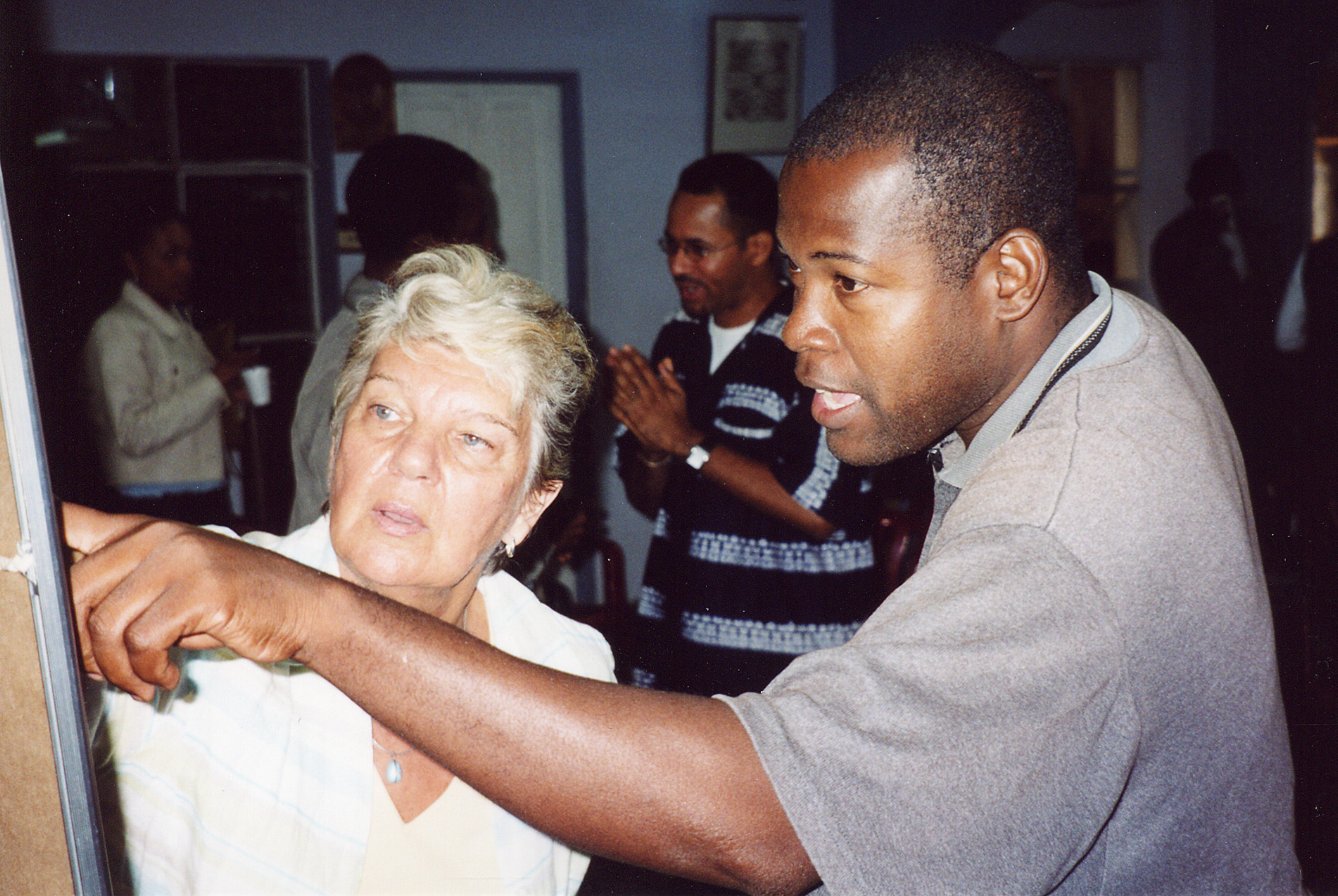
2019: After almost 3 years in detention in Texas, Salvadoran asylum seeker Yesica Jovel is finally released from prison to join the rest of her family. CRLN and Immigrant Welcoming Congregation Lake Street Church held vigils, rallied in Federal Plaza and secured the support of members of Congress, circulated petitions, got news coverage, and found a pro bono lawyer. These combined efforts finally led to her release.
2018: In response to Honduran military violence used against participants in massive street protests following vote counting fraud in the November 2017 presidential election, CRLN sent 4 members on an Emergency Faith Delegation to Honduras to accompany those continuing the protests. While 30 people were killed in post-electoral violence, no one was harmed in protests accompanied by the delegation.
2017: At the 30th anniversary of CRLN’s annual event, Pedal for Peace Bike-a-thon, bikers raised $21,564 for health, education and community organizing projects in Colombia, El Salvador, Guatemala, Honduras and Chicago.
2016: In response to the announcement by the Department of Homeland Security that they would target undocumented Central American families, who had fled life-threatening violence in their home countries, with mass, nationally coordinated immigration home raids, CRLN sends a faith leader letter with 100 signatures to the Regional ICE Director condemning raids as an immoral and inhumane tactic. While they happened in other places, no large scale raids happen in Illinois.
2015: CRLN initiates the Cozette Human Rights Action Fund to honor founding director, Gary Cozette. The fund will support urgent or emergency requests, for which the operating budget does not provide.
2014: CRLN turns out 200 people in front of Rep. Quigley’s office to protest his support for the proposed Trans-Pacific Partnership free trade agreement, educates CRLN membership about the likely negative consequences of portions of the agreement, and engages in a successful campaign to keep it from coming to a vote.
2013: CRLN coordinates with the Network in Solidarity with the People of Guatemala to find Chicago speaking engagements for Anselmo Roldán Aguilar of the Association for Justice and Reconciliation. He speaks about the historic genocide trial that brought former dictator Ríos Montt to trial for genocide.
2012: CRLN initiates the Heidkamp Travel Scholarship Fund to honor long-time Board member, Dick Heidkamp. The fund will provide partial scholarships for people to travel with CRLN on delegations.
2011: In response to the 2009 coup d’etat in Honduras, CRLN compiles a list of post-coup assassinations in order to publicize the gravity of the human rights abuses happening in that country and invites Miriam Miranda, Director of the Garifuna rights group OFRANEH, to speak at the Annual Luncheon. Attendees signed a petition to the Special Prosecutor for Human Rights calling for an end to state sponsored violence against campesino communities seeking land rights.
2010: CRLN’s Congregations in Solidarity with Latin America introduce a resolution at the national Presbyterian Church(USA)’s General Assembly seeking an end to U.S. military use of seven Colombian bases initiated in 2009. The resolution directed the Stated Clerk to petition the Obama Administration to instead support a negotiated peace in Colombia.
2009: CRLN gathers 34 people to attend Ecumenical Advocacy Days in DC. In 16 meetings with policymakers in the House, Senate and State Department, CRLN members called for immigration reform, ending the travel ban to Cuba, and the support of Internally Displaced Persons in Colombia. CRLN merges with long-time allies, Chicago Metropolitan Sanctuary Alliance, under the CRLN name and takes on CMSA’s immigrant justice work.
2008: CRLN arranges for a 2-year sanctuary stay in the U.S. for Milton Mejia, General Secretary of the Presbyterian Church of Colombia, his wife, and 2 sons. He had been receiving death threats for his human rights work. Gary Cozette receives Presbyterian Peacemaker award.
2007: CRLN partnered with DePaul University’s Center for Latino Research to present a photo exhibit documenting the tragic effects of U.S. travel restrictions on Cuban-Americans.
2006: CRLN and the Chicago Presbytery inaugurate a Covenant Partnership to create 10 Presbyterian “Congregations in Solidarity with Latin America” with a delegation of 11 Presbyterians to Colombia for the 150th anniversary of the Presbyterian Church in Colombia.
2005: The World Council of Churches (WCC) gives CRLN its “Blessed are the Peacemakers Award” for “inspiring, courageous and faithful efforts to build a just and peaceful world” as part of the WCC 2001-2010 Decade to Overcome Violence. CRLN was nominated for this award by Rev. David Anderson, Executive Director of the Illinois Conference of Churches.
2004: After educating CRLN constituents and members of U.S. Congress about the adverse impact of the Central America Free Trade Agreement (CAFTA) on labor rights, the environment, & family farmers, CRLN secures two, face-to-face meetings with undecided U.S. Rep. Rahm Emanuel seeking his commitment to oppose CAFTA and support a Fair Trade Benchmarks Bill.
2003: As a result of several visits by key Afro-Colombian leaders to Chicago organized by CRLN, 8 African-American leaders from Chicago join the historic 25-member Witness for Peace July delegation to Afro-Colombian communities under siege in Colombia.
2002: CRLN organizes a 40-member delegation from Illinois for the National Colombia Mobilization in Washington DC that fans out to meet with key policy staffers of all 20 U.S. Representatives and both Senators from Illinois to urge an end to U.S. military aid and poisonous chemical fumigation in Colombia.
2001: After a powerful 7.6RS earthquake in El Salvador displaces 20% of the population, CRLN raised over $21,000 in emergency and reconstruction aid, channeled to 4 highly-effective grassroots organizations working on the ground.
2000: Illinois Conference of Churches (ICC) director, Rev. David Anderson, and four ICC board members are among the 16-member delegation to Cuba organized by CRLN with ICC to examine the impact of the U.S. trade embargo against Cuba, and then report back to U.S. policymakers.
1999: Nine Democrats and six Republicans from Illinois vote with a first-ever House majority to defund the U.S. Army School of the Americas after years of calls, letters, and visits by CRLN members to their U.S. Representatives.
1998: The Presbytery of Chicago of the Presbyterian Church/USA establishes an official partnership with the Presbytery of Havana as a result of a 20-person delegation visit to Cuba organized jointly by CRLN and the Presbytery of Chicago.
1997: U.S. Senator Richard Durbin of Illinois introduces first-ever Senate legislation to close the U.S. Army’s notorious School of the Americas after talking with 11 denominational leaders in a meeting organized by CRLN.
1996: CRLN organizes over 200 signers to place a full-page ad in the Christian Science Monitor calling for declassification of all U.S. documents on human rights abuses in Guatemala since 1954, including the torture of Ursuline Sister Dianna Ortiz, three months after a 12-member CRLN delegation met in Washington with President Clinton’s Intelligence Oversight Board investigating CIA misdeeds in Guatemala.
1995: A CRLN luncheon head table letter to GAP regarding sweatshop abuses in El Salvador resulted in a Chicago meeting between 11 CRLN leaders and high level GAP executives, who two days later went on to sign an accord accepting independent monitoring in El Salvador.
1994: CRLN organizes 35 accredited election observers, one of which is now the foreign policy aide to a member of Congress from Illinois, to join in the 500-member U.S. Citizen Election Observer Mission for comprehensive elections in El Salvador mandated by the UN mediated peace accords.
1993: After meeting with CRLN luncheon speaker Nicaraguan Baptist pastor Gustavo Parajón, the Chicago Tribune published an editorial calling for the release of $50 million of withheld development aid to Nicaragua; the editorial was then circulated to all members of Congress by U.S. Rep. Luis Gutierrez of Illinois.
1992: After listening to CRLN luncheon speaker Rev. Charles Bierne, a Jesuit priest who had replaced Rev. Ignacio Martín Baró, one of the six Jesuit priests slain in El Salvador, U.S. Senator Alan Dixon of Illinois commits for the first time to oppose all further military aid to El Salvador.
1991: Through CRLN organizing efforts, CRLN luncheon speaker Bishop Rodolfo Quezada, Guatemala’s early peace mediator, meets with Cardinal Bernardin resulting in the first U.S. Catholic Bishops delegation to Guatemala in support of the peace process.
1990: Chicago Lutheran Bishop Sherman Hicks leads CRLN’s first delegation to Washington DC with 26 clergy and lay leaders seeking an end to U.S. military aid for El Salvador and a negotiated peace to the war.
1989: Only days after the murder of six Jesuit priests by the military in El Salvador, CRLN holds its first luncheon with Salvadoran Lutheran Bishop Medardo Gomez, U.S. Senator Paul Simon of Illinois, and 300 religious leaders calling for an end to U.S. military aid to El Salvador and a negotiated peace to the war.
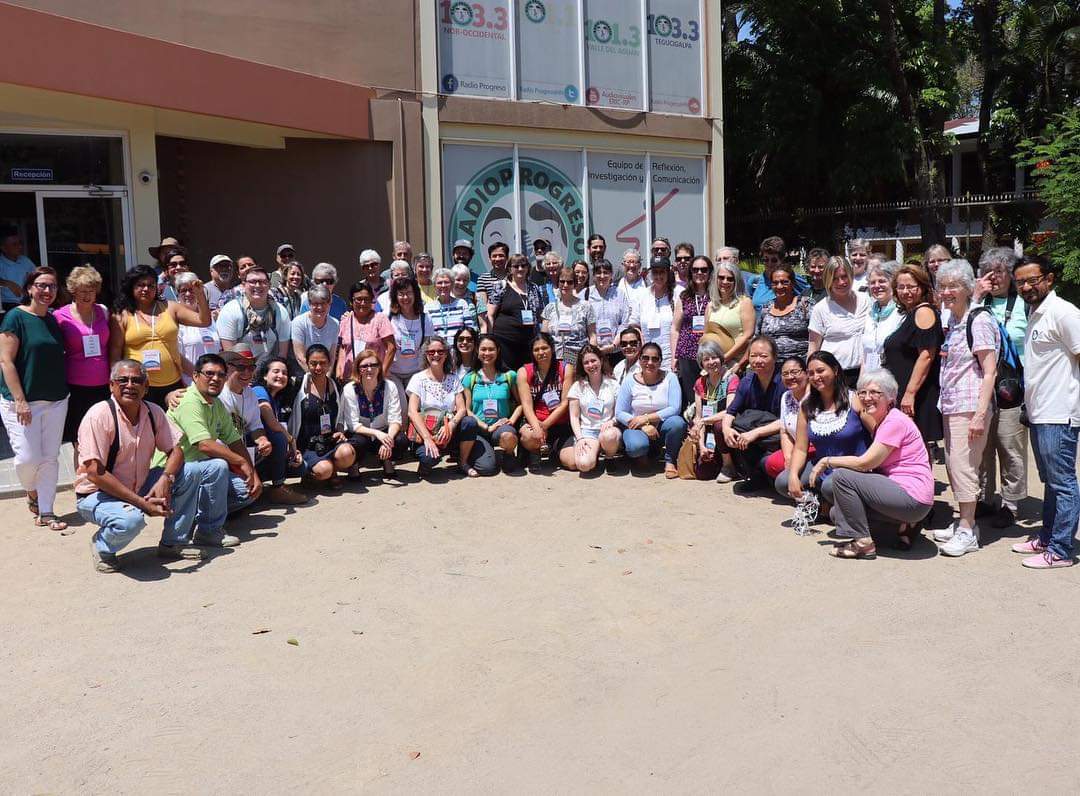
30 people gathered on the evening of May 16 to hear from Rabbi Brant Rosen and Rabbi Lynn Gottlieb about their participation in the March 2019 People of Faith Root Causes Pilgrimage to Honduras sponsored by SHARE-El Salvador, the Interfaith Movement for Human Integrity, the Leadership Conference of Women Religious and the Sisters of Mercy. This interfaith group of 72 people formed a “reverse caravan,” on a mission to find out why so many Hondurans are leaving their country behind and journeying en masse to settle in other countries.
Rabbi Gottlieb emphasized the U.S. role in creating the root conditions causing people to migrate. She pointed to more than a century of U.S. corporate economic exploitation of the country. U.S. companies have bought up Honduran agricultural land and used Hondurans as cheap labor to plant and harvest crops for export. While once bananas were the primary commodity, today it is palm oil, grown on plantations which destroy the biodiversity of the land.
Today, both Honduran large landowners and transnational corporations are stealing land and water from indigenous people in order to expand large agricultural enterprises and to build mines and hydroelectric dams. Their actions are enforced by Honduran military and police forces, who use violence against people protesting the theft of their land and water. These are further causes of migration, as people who have been targeted by such violence or who have lost land or access to water sometimes leave if they no longer feel safe or no longer can support themselves.
Rabbi Gottlieb picked up a tear gas canister made in Pennsylvania, which was lying on the ground at the Lenca indigenous communities she visited. She scooped up some water in a bottle from the river sacred to the Lenca people, a river threatened by plans to build a dam, which the people had been protesting. Later, in front of Heidi Fulton, Chargé d’Affaires of the U.S. Embassy in Tegucigalpa, Honduras, Rabbi Gottlieb performed a cleansing ceremony in which she poured the water over the tear gas canister and demanded that the U.S. stop sending such weapons to Honduras to terrorize people.
Rabbi Rosen pointed to the U.S.-supported 2009 coup in Honduras, which supplanted a democratically elected President, Manuel Zelaya, as a root cause of mass migration. Zelaya had supported progressive social reforms, but the coup consolidated the power of the right-wing National Party, whose candidates have “won” every Presidential election since, although each time amid allegations of fraud. The OAS, during the last election in 2017, declared that there were so many irregularities in the vote counting process that no one could be sure who won the election.
Under the National Party, protest has been criminalized by laws with overly expansive definitions of “terrorism,” free speech has been threatened through selectively enforced defamation laws, social goods like education and health services have been privatized, land reform measures have been reversed, and social security and pension funds have been looted. These political realities are another root cause of migration, because many people no longer feel that they can change the conditions that oppress them through peaceful means without getting injured or killed by the government.
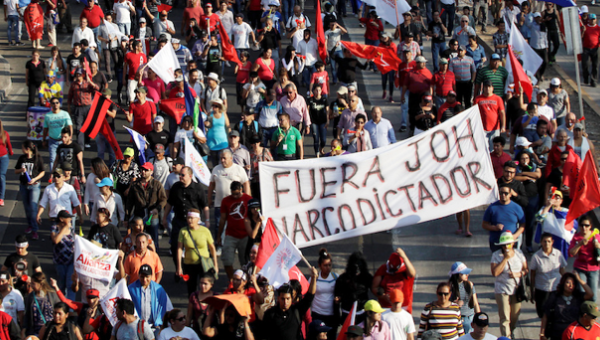
Nevertheless, both rabbis emphasized that many people continue to stay in Honduras and non-violently resist the current Honduran administration. Members of social movements in Honduras actively resist oppressive government policies and demand that the illegal administration of President Juan Orlando Hernandez step down, despite his ongoing attempts to silence their voices through ordering security forces to attack their demonstrations with tear gas and live bullets.
For reports from this delegation, see https://www.presbyterianmission.org/story/delegation-examines-firsthand-the-root-causes-of-migration-in-honduras and https://www.paxchristi.net/news/honduras-pax-christi-co-president-marie-dennis-returns-root-causes-delegation-honduras/7250
For photos from the delegation, see https://www.google.com/search?rlz=1C1GCEA_enUS842US843&q=2019+SHARE+delegation+to+Honduras&tbm=isch&source=univ&sa=X&ved=2ahUKEwjh_f700K3iAhUPiqwKHeRJC1gQsAR6BAgJEAE&biw=1680&bih=858
Three groups within the national Honduras Solidarity Network—Alliance for Global Justice, La Voz de los de Abajo, and Code Pink– also sponsored an emergency delegation to Honduras March 25 – April 2. Their complete report can be found at https://drive.google.com/open?id=1alBO_-Z6sIrbUUuT89FX3K5CMKVMLvL1.
CRLN is co-sponsoring an educational event with Rabbi Brant Rosen to update our members on the current human rights conditions in Honduras. Rabbi Rosen was part of a religious leader delegation to Honduras sponsored by SHARE, organized to provide accompaniment to organizations and individuals under threat.
Date & Time: Thursday, May 16, 7pm
RSVP: Space is limited. Please contact wendy.ilene.carson@gmail.com if you would like to attend and for the address of the event.
In 2019, CRLN supports the following Latin America- and immigration-related bills, all of which are still in Committee. Has your member of the U.S. Congress from Illinois introduced or co-sponsored any of them? If not, call your Senators or Representative and ask them to co-sponsor. You can be connected to their office by calling the Capitol Switchboard at 1-202-224-3121.
Check out the chart below for your member of Congress’ name and current record:
U.S. SENATORS FROM ILLINOIS ON CENTRAL AMERICA AND IMMIGRATION
|
Senator – political party |
S.428 Freedom to Export to Cuba Act of 2019
|
S.716 Guatemala Rule of Law Accountability Act |
S.874 DREAM Act of 2019 |
no bill number yet
SECURE Act |
S.80 John S. McCain III Human Rights Commission |
| Sen. Richard Durbin – D
|
Co-sponsor | Introduced | Co-sponsor | ||
| Tammy Duckworth – D
|
S.428 – Freedom to Export to Cuba Act of 2019: To lift the trade embargo against Cuba.
S.716 – Guatemala Rule of Law Accountability Act: To impose sanctions under the Global Magnitsky Human Rights Accountability Act to combat corruption, money laundering, and impunity in Guatemala, and for other purposes. The bill was proposed in response to President Jimmy Morales’ expulsion of the International Commission Against Impunity in Guatemala and to the charges of corruption against him and other government officials.
S.874 – DREAM Act of 2019: With some conditions, this bill would give lawful permanent residency to any immigrant who entered the U.S. before turning 18, who has had continuous physical presence in the U.S. for 4 years, is law-abiding, and is enrolled in high school or higher education or already has been granted DACA status.
SECURE Act of 2019: Would provide a pathway for people from countries granted Temporary Protected Status (in Latin America, that would be people from El Salvador, Honduras, and Nicaragua), who have been ordered by the current administration to leave the U.S. by specific dates, to apply for lawful permanent residency.
S.80: To create the John S. McCain III Human Rights Commission in the Senate, a counterpart to the Tom Lantos Human Rights Commission in the House, to serve as a bipartisan forum for discussion and promotion of human rights and awareness of human rights violations.
U.S. REPRESENTATIVES FROM ILLINOIS ON LATIN AMERICA AND IMMIGRATION
|
Representative |
Party |
H.R. 1945 Berta Cáceres Human Rights in Honduras Act
|
H.R. 1630 Guatemala Rule of Law Accountability Act |
H.R. 6 American Dream and Promise Act |
H.R. 1898 Cuba Agricultural Exports Act
|
|
| Rep. Bobby Rush (IL-01)
|
D |
Co-sponsor |
Co-sponsor |
Co-sponsor |
reviewing |
|
| Rep. Robin Kelly (IL-02) |
D |
Co-sponsor |
||||
| Rep. Daniel Lipinski (IL-03) |
D |
Co-sponsor |
Co-sponsor |
|||
| Rep. Jesus “Chuy” Garcia (IL-04- new member of Congress)
|
D |
Co-sponsor |
Co-sponsor |
|||
| Rep. Mike Quigley (IL-05) |
D |
Co-sponsor |
Co-sponsor |
|||
| Rep. Sean Casten (IL-06 – new member of Congress)
|
D |
Co-sponsor |
– |
|||
| Rep. Danny Davis (IL-7)
|
D |
Co-sponsor |
Co-sponsor |
|||
| Rep. Raja Krishnamoorthi (IL-08)
|
D |
reviewing |
reviewing | Co-sponsor |
reviewing |
|
| Rep. Jan Schakowsky (IL-09)
|
D |
Co-sponsor |
Co-sponsor | Co-sponsor |
|
|
| Rep. Bradley Schneider (IL-10)
|
D |
Co-sponsor |
||||
| Rep. Bill Foster (IL-11)
|
D |
Co-sponsor |
Co-sponsor |
|||
| Rep. Mike Bost (IL-12)
|
R | |||||
| Rep. Rodney Davis (IL-13)
|
R | |||||
| Rep. Lauren Underwood (IL-14- new member of Congress)
|
D |
Co-sponsor |
||||
| Rep. John Shimkus (IL-15) | R | |||||
| Rep. Adam Kinzinger (IL-16)
|
R | |||||
| Rep. Cheri Bustos (IL-17)
|
D |
Co-sponsor |
Co-sponsor |
|||
| Rep. Darin LaHood (IL-18)
|
R |
H.R. 1945 – Berta Cáceres Human Rights in Honduras Act: prohibits funds from being made available to Honduras for the police or military (including for equipment and training) and directs the Department of the Treasury to instruct U.S. representatives at multilateral development banks to vote against any loans for the police or military of Honduras until the Department of State certifies that the government of Honduras has ended impunity, protects human rights defenders, and taken the military out of domestic policing.
H.R. 1630 – Guatemala Rule of Law Accountability Act. Companion bill to S.716 to impose sanctions under the Global Magnitsky Human Rights Accountability Act to combat corruption, money laundering, and impunity in Guatemala, and for other purposes. The bill was proposed in response to President Jimmy Morales’ expulsion of the International Commission Against Impunity in Guatemala and to the charges of corruption against him and other government officials.
H.R. 6 – American Dream and Promise Act: Companion bill to S.874 and SECURE Act of 2019 to provide a pathway to lawful permanent residency for those currently covered by DACA or other immigrants who were brought here as children who meet the DACA requirements AND those for who had Temporary Protected Status as of a certain date.
H.R. 1898 – Cuba Agricultural Exports Act: would modify the prohibition on United States assistance and financing for agricultural exports to Cuba.
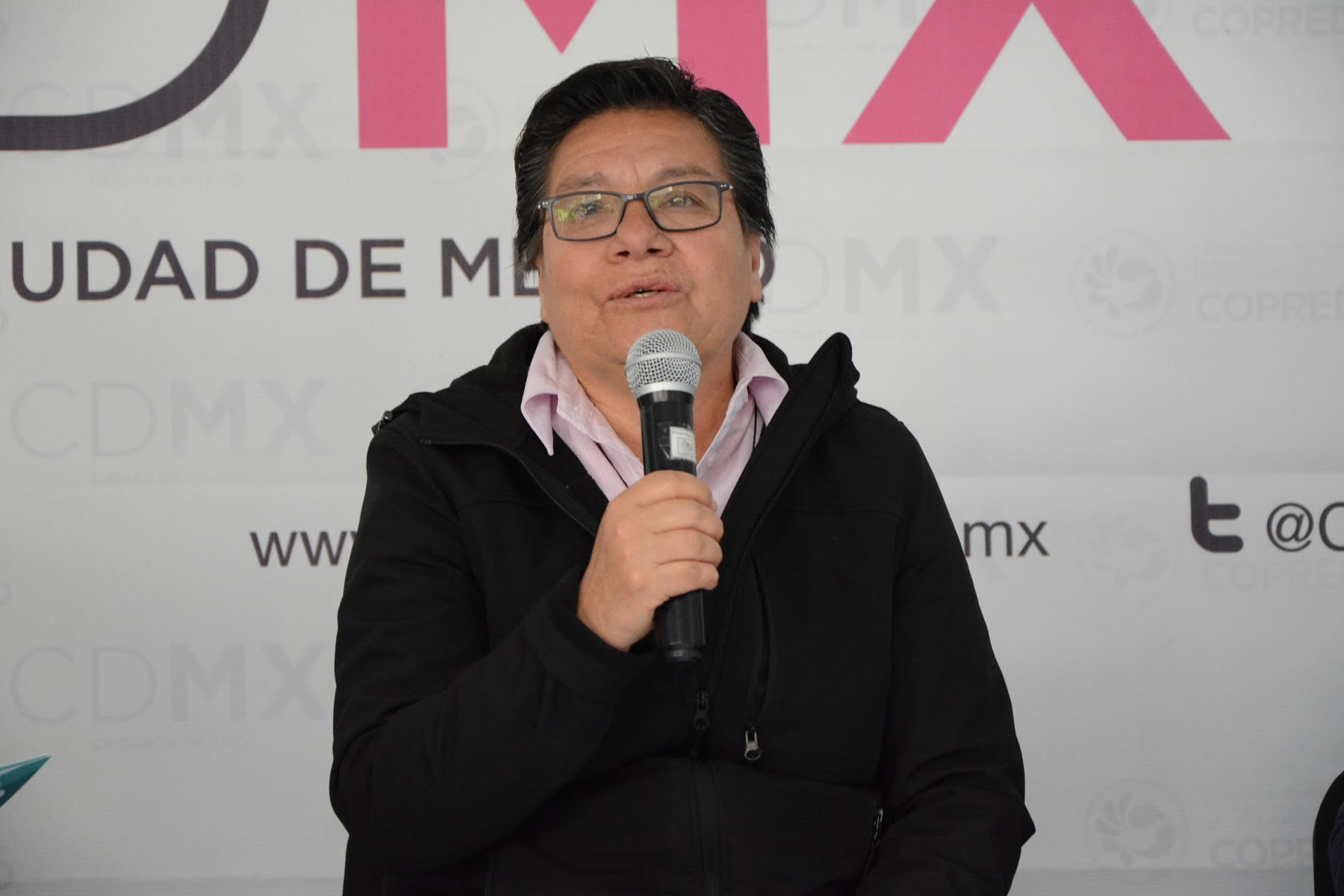
Central Americans In Exile: What Can We Do To Help?
Since October of last year, when large caravans of mostly young people and families from Honduras, Guatemala and El Salvador began moving through Mexico, Maria Magdalena Silva Renteria, known as “Sister Magda,” began to organize humanitarian attention across Mexico for Central Americans and all who seek refuge. Sister Magda is the founder and director of the CAFEMIN shelter for women and children in Mexico City and Coordinator of a national network of frontline migrant defenders in Mexico. She rarely visits the U.S. due to her urgent and life-saving work on the ground. She will make just trhee stops in April–Chicago, Washington, DC and Detroit. Do not miss the chance to connect with this inspiring and thoughtful leader.
Co-sponsored by Alianza Americas, CAFEMIN, and CRLN.
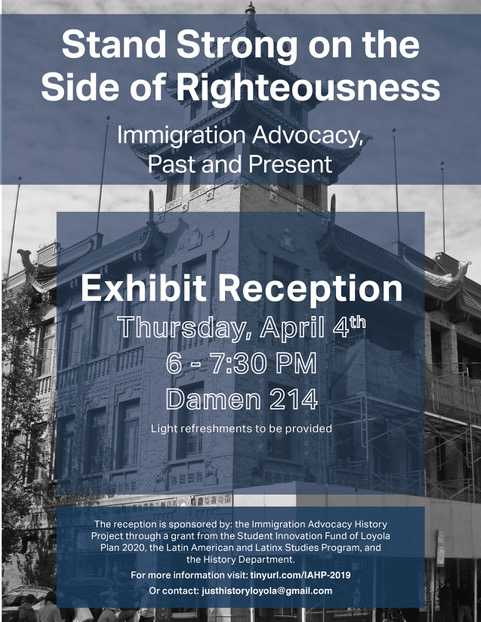
Stand on the Side of Righteousness: Immigration Advocacy, Past and Present
Time: 6-7:30 pm
Place: Room 214, Damen Student Center, Loyola University Chicago 6511 N. Sheridan Rd. Chicago, IL 60626
You are invited to attend the opening reception for an exhibit which draws from interviews with immigration advocates. Some of those interviewed worked with the Chicago Metropolitan Sanctuary Alliance, now a part of CRLN. The exhibit is now open until the end of April on the second floor of the Damen Center. An online version of the exhibit will be available in early April.
The Immigration Advocacy History Project is supported by a grant from the Student Innovation Fund of Loyola’s Plan 2020. The project is an effort of a Loyola graduate student group, Historians for a Just Society. Volunteers interviewed immigration advocates, whose stories will be preserved in the Loyola University Archives & Special Collections. The project also hosted a fall panel on immigrant identity and intersectionality.
For more information, see immigrationadvocacyhistoryproject.wordpress.com or email justhistoryloyola@gmail.com