image-title

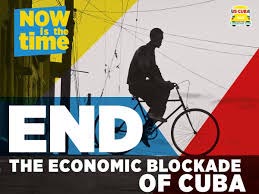
Let’s end US travel and trade restrictions that harm the people of Cuba and the US!

In April of 1960, State Department officials wrote that the goal of the U.S. embargo of Cuba was “…to bring about hunger, desperation and overthrow of the government” (State Department, April 6, 1960).  Today the Cuban people still experience shortages of many essentials including life-saving medicines and medical products.

When we meet with our legislators in DC or in district we advocate for policies that benefit the people of our two countries.  Even though polling shows that 96% of Cubans living on the island support lifting the trade embargo and have said that more tourism would benefit the local economy, President Trump  announced in 2017 that “in solidarity with the Cuban people” the U.S. would add more barriers to trade and travel to Cuba. Since polling has also shown that 63% of Cuban-Americans in Miami-Dade County oppose the continuation of the embargo and 73% of people in the U.S. favor ending the embargo we have to ask who is in favor of these restrictions?

CRLN has worked with faith communities in Cuba and the U.S. for more than twenty years to end harmful U.S. policies, believing that the human rights of Cubans and the people of the US would best be served by lifting all travel restrictions and finally ending the embargo.

We are seeking co-sponsors for the following legislationWe are asking legislators to co-sponsor the following bill that will end restrictions to trade and travel:

S.428 – The Freedom to Export to Cuba Act of 2019 — A bill to lift the trade embargo on Cuba.

U.S. Senators Amy Klobuchar (D-MN), Mike Enzi (R-WY), and Patrick Leahy (D-VT) reintroduced major legislation to lift the Cuba trade embargo. The bipartisan Freedom to Export to Cuba Act (S428) would eliminate the legal barriers to Americans doing business in Cuba and pave the way for new economic opportunities for American businesses and farmers by boosting U.S. exports and allow Cubans greater access to American goods. The legislation repeals key provisions of previous laws that block Americans from doing business in Cuba, but does not repeal portions of law that address human rights or property claims against the Cuban government.  U.S. and Cuban faith communities have long advocated for the lifting of the embargo because of the suffering it causes in Cuba.

We are also asking legislators to urge the State Department to process visas for Cubans in Cuba.  The Trump Administration ordered staff reductions at the US Embassy in Havana, Cuba and at the Cuban Embassy in Washington, DC in response to health issues experienced by some personnel at the US and Canadian Embassies in Havana. Now all staff that would issue visas to Cubans to visit the U.S. have left the Embassy.  The FBI did not find any evidence linking the health issues to actions by the Cuban government during its three visits to the island and the investigation is ongoing.

Now Cubans who want to get visas for tourist travel or permanent reunification with their families must travel to another country to get these visas.  In the past many Cubans were able to obtain visas for five years.  This enabled religious leaders, scientists, artists as well as people with family in the U.S. to travel without applying for a visa each time. This five year visa has been discontinued and Cubans can only receive a visa for one visit in a three month period.   The cost of plane fare, waiting in the third country to see if they can get a visa and the $160 non-refundable fee just to apply have made it financially impossible for most Cubans to apply for a visa.  There must be a way to process Cuban visas in Cuba.  Otherwise the U.S. has effectively created a travel ban against Cubans visiting the US for family reunification or other purposes.

For more information:


More information on S.428 – The Freedom to Export to Cuba Act of 2019 — A bill to lift the trade embargo on Cuba.

https://www.klobuchar.senate.gov/public/index.cfm/2019/2/klobuchar-enzi-leahy-introduce-major-legislation-to-lift-cuba-trade-embargo


Cubans frustrated over U.S. move to end five-year visitor visas

https://www.reuters.com/article/us-cuba-usa/cubans-frustrated-over-us-move-to-end-five-year-visitor-visas-idUSKCN1QZ2D5


Cubans Take to Facebook to Air Grievances Over New Visa Restrictions

https://latinousa.org/2019/03/19/cubansfacebook/


Background Information from before April 2018


Statement by the Cuban Council of Churches regarding recent changes in US policy

https://nationalcouncilofchurches.us/statement-by-the-cuban-council-of-churches-regarding-recent-changes-in-us-policy/


A Cuban pastor’s response to President Trump’s Cuba policies

https://baptistnews.com/article/cuban-pastors-response-president-trumps-cuba-policies/#.Ws6LwC7wYnR


Church World Service Says New Restrictions on Cuban Travel Will Hurt the Cuban People and Churches https://cwsglobal.org/cws-statement-on-cuba-june-2017/


Catholic leaders: Dialogue between U.S. and Cuba must continue

https://www.americamagazine.org/faith/2017/06/20/catholic-leaders-dialogue-between-us-and-cuba-must-continue


U.S. Halt in Visa Services Leaves Cuban Families in Limbo   https://www.nytimes.com/2017/10/05/world/americas/cuba-us-visas.html


Cubans who want to visit the U.S. now face more difficult and expensive hurdles

http://www.miamiherald.com/news/nation-world/world/americas/cuba/article177305716.html


Read More
image-title

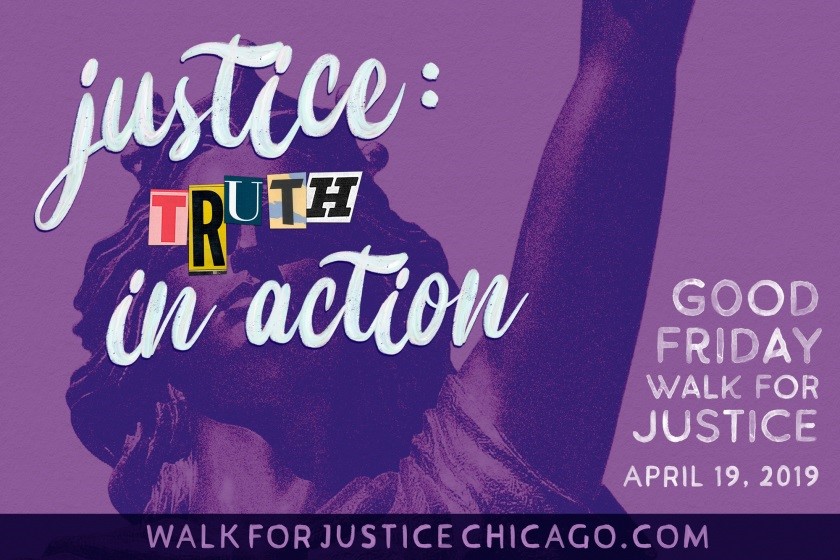
April 19, 12:00-3:00pm

Gather at the Corner of Michigan & Ida B. Wells Drive 

(formerly Congress Blvd)

8th Day Center for Justice organized this annual event before they closed their doors last year, but the tradition lives on! A committee of people have been meeting with former 8th Day staff to plan the 2019 Good Friday Walk for Justice around the theme of Justice: Truth in Action.

We live in a post-truth culture, where “alternative facts” replace actual facts and polarizing judgments have more weight than straightforward evidence.  In our post-truth world, it is not that the truth, science and facts have ceased to exist but that they are so easily dismissed.

As Martin Luther King, Jr. once proclaimed, “I believe that unarmed truth and unconditional love will have the final word in reality. That is why right, temporarily defeated, is stronger than evil triumphant.”

Please join us to boldly proclaim the truth, to call out the lies and to be a people that live the truth so that we can create a world of justice and peace. We are grateful to be joined in the Good Friday Walk for Justice by groups and organizations that are living the truth in action and awakening communities, creating change and transforming systems for the common good.

There is no cost to participate. To sponsor this year’s Walk, make checks payable to CRLN (memo GFWalk) and mail to CRLN, 4750 N. Sheridan Rd. #429, Chicago 60640 or Online: https://bit.ly/2DgARe8

Read More
image-title

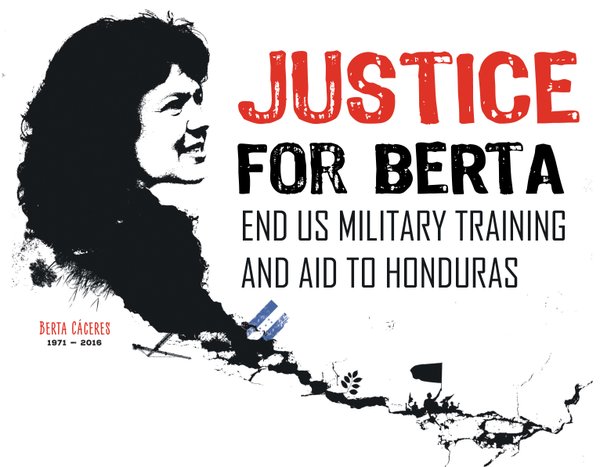
The Berta Caceres Human Rights in Honduras Act, which would cut off military and police aid to Honduras until impunity for their human rights violations ceases, is due to be reintroduced in a couple of weeks. Rep. Hank Johnson has contacted the 70 Representatives who co-sponsored the bill with him during the last session of Congress to ask them to sign on again to show strength of support when the bill is reintroduced. Those from Illinois who signed on in the 2017-2018 session of Congress are Reps. Rush, Lipinski, Quigley, Danny Davis, Schakowsky, and Foster.

The bill never got out of the Foreign Affairs Committee during the last two sessions of Congress with the Republican majority in the House of Representatives. There is a chance that with a Democratic majority and new progressives in office, it will advance to the floor of the House for a vote. In Illinois, we must contact new Representatives Jesus “Chuy” Garcia (IL-4) and Sean Casten (IL-6) for their support on this bill.

CRLN staff and board members will be in DC April 4-8 and will take letters to all Illinois members of Congress at that time. The letters will include a request to support this bill if it has been reintroduced by then, or to cut off military and police aid by other means if the bill has not been reintroduced yet. Email shunter-smith@crln.org with name and address if you give us permission to add your name to your members of Congress’ letters.

Berta Caceres was an inspired feminist, indigenous rights and environmental activist and leader who was murdered on March 2, 2016. While her case went to court and some of those involved in her assassination were convicted, the intellectual authors of her death have yet to be held accountable, according to her family and an international panel of experts who investigated the case. Berta’s family’s and her organization COPINH’s persistence, along with International solidarity efforts with the family and COPINH, was key to getting her case tried in court at all.

Honduras now has an illegal President, Juan Orlando Hernandez, who “won” an election for a second term that was prohibited by the Honduran constitution, and who shut down the vote counting computers repeatedly to tamper with the election results. He is one of the golpistas, one who was behind the 2009 coup, and he is already planning his re-election campaign for 2021. He has consolidated power through appointments of friends in all branches of government and is a dictator in everything but name. There is a direct connection between his misuse of power and the tens of thousands of people leaving Honduras in a mass exodus on the “caravans.” His brother, a former Honduran Congressman, was recently arrested in Miami and charged with being a major mover of cocaine into the U.S., and his personally appointed national police chief has a history of accepting bribes from drug cartels. He has sought the arrest and conviction of journalists and opposition political figures who try to bring such crimes to light. The corruption of his administration is another reason we should not be sending aid to Honduras.

Articles:

Unavision:  “Judge denies bail  to brother of Honduran president arrested on drug charges”

AP:  “Honduran lawmaker faces defamation trial after naming names”

See previous posts on Honduras on the CRLN website for background on the 2017 Honduran presidential election and the international investigation into Berta’s murder, 

Read More
image-title

University of California at Santa Cruz Professor of History Emerita, Dana Frank, was in Chicago on February 27 and was interviewed by WBEZ’s Jerome McDonnell on the program “Worldview.” Here is the link:

https://www.wbez.org/shows/worldview-podcast/historian-dana-frank-on-honduran-politics-us-intervention-food-mondays-can-romanstyle-pizza-make-it-in-chicago/662032dc-bc70-4e42-b647-a7709d8f429a

Professor Frank has just published another book, The Long Honduran Night: Resistance, Terror and the U.S. in the Aftermath of the Coup.  CRLN has 3 copies for sale. Please contact Sharon at shunter-smith@crln.org or call the CRLN office at 773-293-2964 if you would like to buy a copy.

Read More
image-title

By Sidney Hollander, Secretary, CRLN Board of Directors

Guatemala is in the grip of a constitutional crisis that threatens to reinstate a regime of dictatorship and death squads supported by the U.S. government.

This is the message that was delivered to me and my fellow members of a CRLN delegation to Guatemala by a variety of human rights activists in January of this year.  Appalled by the looming threat to the modest progress toward righting the historic wrongs that continue to cast a shadow over public life in Guatemala, these activists deplored the recent U.S. retreat from its previous 12 years of support for the effort to bring justice to Guatemala and pleaded with us to help rekindle that support in the U.S. congress.

Because of the urgency and importance of this moment, explained below, CRLN is forming a Guatemala Working Group. Call the CRLN office at 773-293-2964 or email shunter-smith@crln.org if you are interested in joining a CRLN Working Group on Guatemala.

The United States, with a few notable exceptions, has been playing a relentlessly destructive role in Guatemala since at least 1954 when the CIA-engineered a coup that overthrew a democratically elected reformist regime because it was encroaching on U.S. business interests there.  In the ensuing maelstrom of repression and rebellion the U.S. allied itself with the Spanish-descended economic elite and its military, supplying arms and training in support of a barbarous genocidal counterinsurgency that destroyed 440 Mayan villages and killed over 200,000 people, nearly all of them civilians.

The heavy hand of the U.S. did not stop there.  When survivors of these massacres and related repressions sought refuge in the United States, the Reagan administration barred them, thereby inadvertently giving rise to the Sanctuary Movement of churches and synagogues that sheltered these “illegal” refugees in defiance of the U.S. government.

CRLN is a direct outgrowth of that sanctuary work in the 1980s.  Over the years it has continued to stand with Guatemalans in their postwar pursuit of justice and to call out the U.S. government when it impedes that work.

That is the background of the crisis that CRLN found during its January delegation.  The current constitutional crisis has its roots in the crimes of the counterinsurgency.  The long-delayed effort to bring the perpetrators to justice got a big boost about 12 years ago in a fleeting, breakthrough moment when the Guatemalan government, desperate for some measure of international and domestic legitimacy, agreed to cosponsor a United Nations Commission Against Impunity in Guatemala (CICIG, in the Spanish acronym).  Its mandate was to assist the Guatemalan Attorney General in the development of prosecutions relating to crimes from the past as well as from the present.  The U.S. supplied a portion of the necessary funding.

The CICIG has become a victim of its own success.  In its support of dozens of successful prosecutions of perpetrators of the genocide and of sitting politicians, including a sitting president and vice president, the CICIG has come to be seen as a threat to the allied business and military elites that have long dominated Guatemalan politics and government.  It was the 1970s and 1980s threat to this same elite that caused it to launch the brutal counterinsurgency, so it is no surprise that it has launched a counterattack on the CICIG.

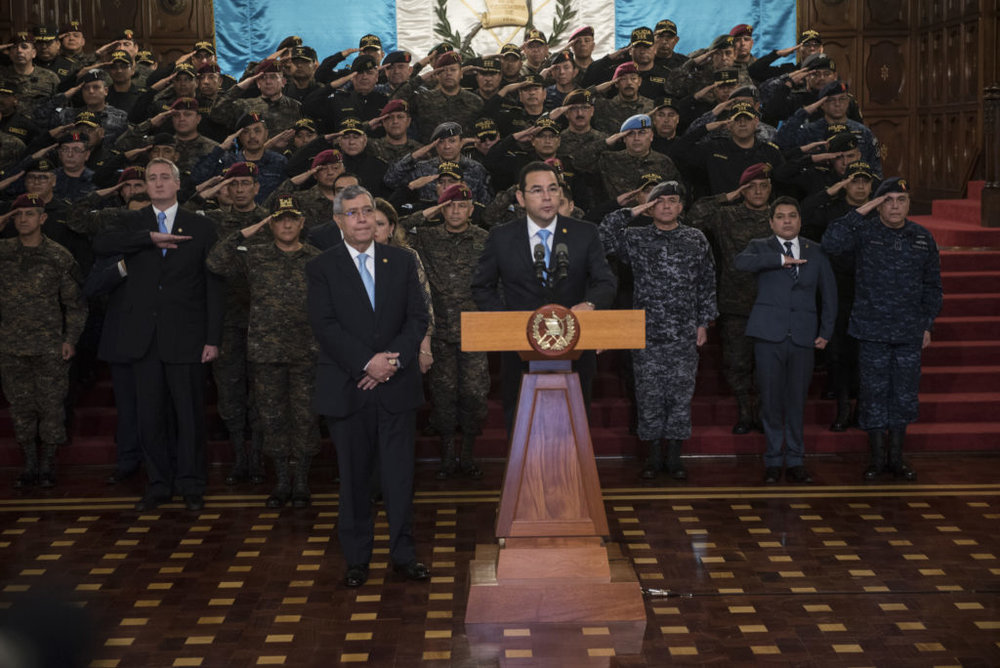
The current crisis was precipitated by the present president of Guatemala who, along with his son and brother, has come under investigation and fears that they will be indicted for corruption.  He and his allies for some time have been attacking the CICIG as an agent of foreign powers that are compromising Guatemalan sovereignty.  They have even used high priced lobbyists to win the support of conservative politicians in the U.S.  These attacks came to a head late last year when the president declared that he was ending the mandate of the CICIG.

The resulting political crisis rapidly became a constitutional crisis when the Constitutional Court ruled that the president lacked the authority to terminate the CICIG unilaterally, the president defied the Court and withdrew police protection from the CICIG workers.  He then sought to indict and remove the Court majority on charges that they had acted against the law by ruling against him.   That is where things stand as of this moment in mid-February.

It is painful to report that the United States has jettisoned its 12-year support for the CICIG.  The State Department and the embassy have issued statements in defense of Guatemalan sovereignty and blandly said they favor the rule of law.  They have remained pointedly silent on the CICG, in contrast with the robust support they have voiced in the past.

Guatemalan human rights activists see the CICIG crisis as part of a larger drift toward dictatorship characterized by the reappearance of death squads, the criminalization of protest and opposition generally, and the subordination of independent branches of government to the control of the president acting on behalf of the old elite.  Emblematic of this drift is proposed legislation that would void the convictions that the CICIG has helped to obtain and forbid further prosecutions of crimes committed during the counterinsurgency, thus reinstating the impunity on which elite rule has rested.  In addition, a companion bill would subject nongovernmental organizations to onerous registration and reporting requirements and would outlaw many of their activities.  If this bill is enacted many of the groups with which CRLN works would find it difficult or impossible to operate, and individual activists would find themselves in even greater jeopardy than they are at present.

The awful developments in Guatemala create a particular moment for CRLN.  As members of CRLN we are not powerless to resist Guatemala’s slide toward dictatorship.  We must remain in contact with our partners there.  We must contact U.S. officials and other leaders.  We must spread the word so that our friends and associates in the U.S. can do the same.

Because of the urgency and importance of this moment, CRLN is forming a Guatemala working group.  All members are invited to join.  I definitely will be participating.  I hope many of us will.  We have a lot of work to do.

Call the CRLN office at 773-293-2964 or email shunter-smith@crln.org if you are interested in joining a CRLN Working Group on Guatemala.


Read More
image-title

CRLN DELEGATION TO GUATEMALA: JANUARY 6 – 19, 2019


CRLN’s 2019 delegation to Guatemala was a very special journey of accompaniment, learning and solidarity. We visited rural communities and met with human rights organizations working to promote justice and peace in Guatemala. We shared meals with our Guatemalan friends, listened to their stories, and explored ways in which CRLN can continue to support their struggle to build a more just and humane society. Throughout our travels and visits, we endeavored to learn about the factors that cause people to leave their homeland and migrate to the US and the factors that could make them want to stay.


New Hope (Chaculá): This year marked the 25th anniversary of the founding of this community of repatriated refugees, who fled genocidal attacks by the Guatemalan Army in the 1980’s. At their request to guarantee their safety, Martha Pierce provided international accompaniment for them as they made their way from the Mexican refugee camps to their new community, and a 25-year partnership began. Since 1994, CRLN and its predecessor, CMSA, have supported the community through annual visits on the anniversary of their return (January 12), support for international human rights accompaniers in the village, and scholarships for students at the local school from funds raised by CRLN’s Pedal for Peace Bike-a-thon. The dedicated young teachers at the school, many of whom have benefitted from these scholarships themselves, believe strongly that a good education will enable their students to remain in Guatemala, rather than migrating to the USA.


The Roots of Migration: Our friends in Chaculá are trying to build their community and their lives in the midst of the ongoing challenges of economic inequality, racism, and corruption that fuel violence and cause some people to make the difficult decision to leave their homeland. In Chaculá, we could easily see the differences in living conditions for those who have family members in the North and those who do not.


The violence that affects much of the country is felt in Chaculá as well.  Situated very close to the Mexico border, they are quite aware of drug trafficking, as well as the passage of migrants through their area. Many people in Chaculá were mourning with the family of a young boy from a neighboring village, who had recently died in US Border Patrol custody.


We had to cut our visit short by a day and return to the city, because people throughout the country were protesting the Guatemalan President’s efforts to end investigations into corruption and impunity that were being carried out by a UN-appointed commission known as CICIG. He defied a Constitutional Court order to allow CICIG to do its work, precipitating a constitutional crisis or “technical coup.”  Everyone we talked to – villagers, taxi drivers, shop-keepers, community leaders  – supported the work of CICIG, and all agreed that corruption of government officials is pervasive throughout the society. The lack of the rule of law, this absence of justice, is one more factor pushing people to leave the country.


While in Chaculá, we heard about regional resistance to a large hydro-electric dam that would displace many indigenous people, while channeling the electric power to other areas of the country. And we saw homemade signs reading “No a la mineria, si a la vida” (No to mining, yes to life) along the roadsides, expressing local opposition to gold and silver mines that are causing environmental damage and health problems in the area. These large mega-projects, which displace people from their land and/or pollute land and water, are another source of migration.


Advocacy: Finally, we met with representatives of our own government, at the US Embassy. We presented a letter from CRLN to Ambassador Luis Arreaga, expressing our concern about the constitutional crisis in Guatemala. We urged the US to speak out more forcefully in support of the rule of law and against corruption, as they have done in the past. We also stated that, if the US wants to help end migration, they should focus their efforts on strengthening democracy, as well as the economy, in Guatemala.


Organizations for justice, human dignity/human rights, and historical memory:

In Guatemala City, we met with NISGUA, an organization that provides accompaniment for human rights defenders who have received threats and builds ties between the peoples of the USA and Guatemala in the struggle for justice, human dignity, and respect for the earth.


A highlight of our trip was a visit to “Common Hope,” where we were hosted by former CRLN staff member, Jenny Dale. She took us to visit a local school, filled with lively and energetic children, that is supported by CH through its programs of child sponsorship and teacher enrichment. We also stopped in a nearby village to meet a woman who had received a room addition through CH. Then Jenny took us on a tour of the CH campus, where they provide teacher trainings, health care, and a space for volunteers. The work of CH not only benefits local Guatemalans, but also provides awareness and understanding to the US volunteers who go there to work and learn. What a treat to see Jenny doing such good and important work!


Another highlight of our trip was a visit to Casa de la Memoria, an interactive museum that illustrates the long and proud history of the Maya people, their experiences of repression, and their courageous resistance and resilience. We followed up with a visit to the Mayan ruins of Tikal. The grand, ancient stone temples and pyramids stand, surrounded by jungle, as testaments to the wisdom and strength of the Maya people. Their deep roots continue to provide guidance and strength as the Maya carry on their struggle for justice, equity, and peace. We are so grateful for this opportunity to learn from, and walk with, the beautiful people of Guatemala.


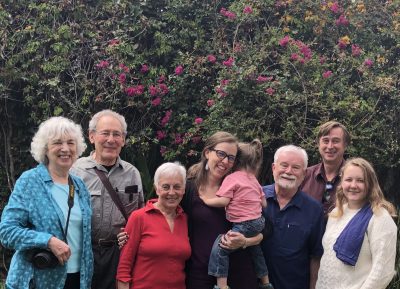
Martha Pierce, Lucy Pierce, Sidney Hollander, Kay Berkson, Michael Swartz, Steven Schippers, Barbara Gerlach


For further reading:

The Guardian–Why are Guatemalans seeking asylum? US policy is to blame                                                                                                                                      https://www.theguardian.com/commentisfree/2018/dec/23/why-guatemalans-seeking-asylum-us-policy?CMP=Share_iOSApp_Other

    

Read More
image-title

Last year, we reported on 25 political prisoners who were jailed during the post-November 2017 protests against the rigged Presidential elections in Honduras. CRLN asked our members to participate in the campaign to free them. Today we report that most of the 25 have been released, but Edwin Espinal and Raúl Eduardo Álvarez remain in prison. We are still advocating for their release.

Monday, the two had a court hearing. Karen Spring, Edwin’s wife, sent the following report:


A TINY STEP IN THE RIGHT DIRECTION …. COURT CONFIRMS THE LACK OF DUE PROCESS IN THE CASE OF POLITICAL PRISONERS EDWIN ESPINAL AND RAUL ALVAREZ


On February 18, political prisoners Edwin Espinal and Raul Alvarez had a hearing in the national jurisdiction sentencing court in Tegucigalpa. The hearing is part of the lead-up to the trial (that still has not been scheduled) and served the following purpose: To argue the lack of due process, from the beginning, of the entire case.


In the hearing, Edwin’s lawyers argued that the case & charges against Edwin should be annulled because the national jurisdiction court system created to try organized criminal networks and structures, does not have jurisdiction to hear the case given that Edwin isn’t part of a criminal group & none of the charges he is accused of, are related to organized crime. Raul’s lawyers requested that the case be sent to the normal court system making similar arguments.


Following these arguments, the court ruled that they would not annul the process arguing that they did not have jurisdiction to hear any petitions or arguments about the case. This is also the reason that we could not proceed to a bail hearing the same day – the court simply would not rule on any petitions given their lack of jurisdiction (confirming the arguments that Edwin and Raul’s lawyers made).


The recent ruling is a considered a small victory for Edwin, Raul and their supporters because the court’s ruling tells us that from the beginning, Edwin and Raul’s constitutional rights have been violated because the judges that have ruled on their case & sent them to prison previously, had no jurisdiction or legal authority to do so.


Next steps: Wait until the case is admitted by the correct normal court then a bail hearing will be requested. This could happen as early as next week.


To watch an interview in Spanish from Edwin’s lawyer, Omar Menjivar following the hearing:


https://criterio.hn/2019/02/18/edwin-espinal-y-raul-alvarez-han-estado-presos-por-orden-dictada-por-autoridad-incompetente-video

Read More

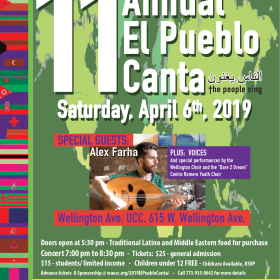
This year’s El Pueblo Canta features musician Alex Farha, a teacher at the Old Town School of Folk Music, who will play music on the oud, a Middle Eastern and North African instrument.

Advance tickets, sponsorships and information about public transportation, parking and childcare: waucc.org/2019ElPuebloCanta

Date: April 6, 2019

Time: 5:30pm doors open–traditional Middle Eastern and Latino food available for purchase

7:00-8:30pm–Concert

Place:  Wellington Avenue UCC, 615 W. Wellington Ave.

Cost:  $25–General admission; $15–students/limited income; Children under 12 FREE.

For more information, call 773-935-0642

All proceeds will go to benefit the immigrant justice work of Centro Romero, CRLN, and Wellington Ave. UCC.

Read More
image-title

Come as an individual or as a team to support scholarships for University students in Cinquera, El Salvador, who will return to their community to share their new skills in agriculture, business, teaching and organizing. Children are welcome–there will be special lanes for kids. Free pizza, prizes, and fun for all! Sponsored by Chicago-Cinquera Sister Cities.

Cost: $25/individual, or bowl for free with $50 in donations from others.

Date and time: Saturday, March 16, 2:00-5:00pm

RSVP to shunter-smith@crln.org if you would like to be on a CRLN team to support this project of our partner organization, Chicago-Cinquera Sister Cities!

Read More
image-title

Place: Edgewater Presbyterian Church, 1020 W. Bryn Mawr Ave., Chicago 60660

Time: 7 – 8:30pm

Public transportation: 2 blocks east of CTA Red Line Bryn Mawr stop

Parking: St. Andrew Greek Orthodox Church, 5649 N Sheridan Rd, Chicago, IL 60660. **You must write a note, “At Presbyterian Church,” and place it on your dashboard, or your car will be towed!

Dana Frank will discuss the role of the labor movement and labor politics in Honduras in the long aftermath of the 2009 military coup that deposed President Manuel Zelaya of Honduras. Honduran labor activists have been the backbone of the popular resistance that has been fighting the repressive coup regime ever since, especially agricultural workers, government employees, bottling-plant workers, and health care workers.   They are struggling to retain basic labor rights that are rarely enforced, while joining the broad coalitions protesting the US-back post-coup regime and claiming labor rights guaranteed under the Central American Free Trade Agreement. This talk will explore labor activism in Honduras–while also analyzing the Honduran government’s destruction of the economy and livelihoods since the coup—that are helping produce the exodus of Honduran refugees at the US border.

Dana Frank is Professor of History Emerita at the University of California, Santa Cruz, where she taught US labor history and other topics for 30 years. She most recently published The Long Honduran Night: Resistance, Terror and the United States in the Aftermath of the Coup. Her previous books include Bananeras: Women Transforming the Banana Unions of Latin America, which focuses on Honduras; Buy American: The Untold Story of Economic Nationalism; and, with Howard Zinn and Robin D.G. Kelly, Strikes:  Miners, Musicians, Salesgirls and the Fighting Spirit of Labor’s Last Century. Her writings on human rights and U.S. policy in post-coup Honduras have appeared in the New York Times, Los Angeles Times, Miami Herald, Houston Chronicle, The Nation, Foreign Affairs, Foreign Policy, Politico Magazine,  and many other publications, and she has been interviewed by the Washington Post, New Yorker, New York Times, National Public Radio, Univision, Latino USAregularly on Democracy Now!and on other outlets.  Professor Frank has testified about Honduras before the US House of Representatives, the California Assembly, and the Canadian Parliament. She has worked closely with banana workers’ unions in Honduras for almost twenty years.

Co-sponsored by CRLN and La Voz de los de Abajo

Read More