


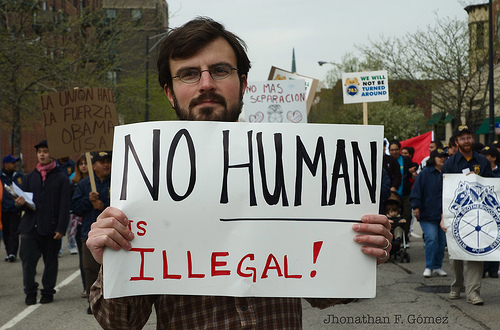
The Chicago New Sanctuary Coalition (CNSC) and Immigrant Welcoming Congregations live out an interfaith vision. We challenge faith communities and leaders through education, advocacy, and action for immigrant justice. We recognize each individual as a child of God and as such, deserving of justice and mercy regardless of country of origin, migratory status, race, ethnicity, religion, age, gender identity or sexual orientation.
We live in a time of an immigration crisis and therefore, as people of faith, we are compelled to social action. We understand that freedom cannot exist for some while is it not fully attainable for others. Freedom cannot exist for some at the cost of the suffering of others: this then is oppression. The United States of America’s current policies are fundamentally exclusionary, oppressive and erroneous in its understanding of the realities of migration.
We recognize structural violence, historically given and economically driven conditions, to be at the root of this crisis. Therefore immigration, trade, environmental and international development policies necessitate transformation to reflect our beliefs in the principles of justice and liberation for all people.
1. Pathway to Citizenship
Immigrants living in the U.S. without authorization must have access to a path to permanent residency and citizenship. Marginalization drives people to depend on underground means of survival; this is dangerous both for these individuals and the common welfare. The current crisis is destroying families and communities and demands a comprehensive solution that will allow for a future for sustainable and just immigration policy. We recognize inclusive legalization as the only way to ensure safety and guarantee rights for all people. A pathway needs to be available for all including skilled and unskilled works and must not be bound to economic barriers that exclude.
2. Family Unity and Integration
Families and households should be allowed to legally migrate and be reunified with family members in a timely and efficient manner. Family values are central to sustainable communities. We believe strongly in a right to reunite and integrate. These tenets should be central in any comprehensive immigration policy reform.
3. Protection for All Human Rights
Human rights are by definition universal. The immigration crisis has perpetuated an infringement on the dignity of the person. Human rights include but are not limited to the universal entitlement and protection of the basic rights to survival, emotional and physical security, and access to housing, healthcare and education. The rights of children deserve special attention because of their particular vulnerabilities.
Violations of human rights occur in both countries of emigration and those of immigration. It is imperative that the rights to mobility, residency and nationality be ensured for all those who migrate to seek the ability to flourish. Along with the United Nations Covenant on Economic, Social and Cultural Rights, we assert all workers’ rights to fair wages that support decent livelihood for workers and their families, the right to organize in trade unions, safe and healthy working conditions. Full worker rights must be recognized, protected and enforced. The state is obligated to uphold these rights.
If any employment-based immigration program is instituted, the number of visas should be revised according to the signs of the times such as current economic reality. The option of a pathway to citizenship must be offered to the worker and their family. All workers should be able to find a pathway to citizenship regardless of skill or education level.
4. Humane Enforcement Strategy
The militarization of border has not successfully stopped the flow of migration. It has damaged the natural environment, has driven migrants into remote desert regions and causes thousands of deaths of men, women and children. Militarization has resulted in excessive spending and has not met its intended goals. ICE and law-enforcement agencies must stop using tactics that terrorize immigrant communities and cease using racial profiling to target certain groups of people. They currently abuse their authority with impunity, rather ICE and law enforcement agencies should be held accountable by independent organizations.
Enforcement-only strategy is not helping immigration or slowing migration. We need to ensure due process and access to legal counsel that is competent in immigration law. Immigration authorities should not treat people with civil offenses as if they were criminals. If immigrants are held in detention facilities, their full human rights must be respected, including access to medical and legal services as well as religious counsel. We also need alternatives to traditional detention and to halt the privatization of detention, especially in the cases of children. There should be no profiting off a failed immigration system.
5. Address Root Causes of Migration
While just and comprehensive immigration reform would represent great progress, we must examine what is really broken. International economic and political conditions often constrain people’s opportunities and make migration one of the few viable options to meet their basic human needs. While migration has historically been a part of the human experience, the complexity and gravity of the current global migration phenomenon requires a broad-based social and political response that includes, but are not exclusive to, the following:
NAFTA (North American Free Trade Agreement) and other free trade agreements have failed to create opportunity for people to fully realize their basic human needs. In Mexico, NAFTA has only exacerbated gaps in wages and increased the cost of basic foodstuffs. NAFTA has not encouraged sustainable economic growth in Mexico nor curbed migration. Bilateral/multilateral trade agreements continue to be negotiated worldwide. Any trade agreement should build mutual, just, and sustainable results for all participating countries.
The World Bank Structural adjustment policies (SAPs), conditions on loans from the International Monetary Fund and World Bank have had severe implications for less developed countries. They have had a paralyzing effect on countries’ ability to lift themselves out of debt. The debt incurred has set up a system of dependence between developed and developing countries. Sustainable and equitable development is necessary for improved well-being and for the an accurate understanding of current migration trends.
Trade, unbridled Capitalism, and “progress” have led to the commodification of the environment of many lesser-developed countries. This has for example shifted subsistence farming into monoculture cash crops destroying local economies as well as causing widespread environmental degradation. Trade agreements need environmental standards.
Climate refugees are also increasing in numbers as a result of Climate Change but also because of the degradation of the ecosystem. As disasters continue to increase with intensity greater numbers of people are being forced to move or migrate. We need to address these emerging needs both in terms of immigration but also from an environmental justice standpoint.
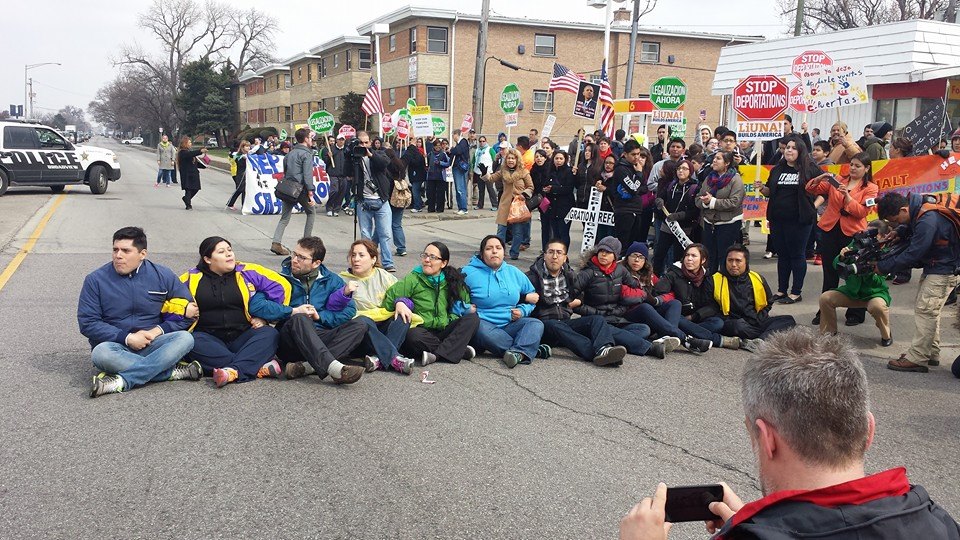
When my friends and family found out that I’d partaken in an act
of civil disobedience this past Tuesday, their immediate reaction was to flood
me with questions about the arrest. A couple of emotions and sentiments were
expressed, much of which were either excitement and/or concern. While the civil
disobedience act itself allowed me to experience strong feelings of solidarity
and oneness, to me the occurrences and processes leading up to the action
itself were every bit as important and incredible.
My experience began with about another 150 people partaking in a
pilgrimage walk from ICE Headquarters in Chicago to the Broadview Detention
Center. Along our half-marathon walk (13 miles), during our communal lunches
and conversations, while were are huddled outside of the Broadview Detention
Center, and up to the moments leading up to, and during the civil disobedience
act itself, I saw and talked some of the most incredibly inspiring and
empowering community leaders I’ve ever had the pleasure of meeting.
It was my personal decision to partake in act of civil
disobedience near the Broadview Detention Center out of a desire to stand in
solidarity with the families and individuals experience unimaginable suffering
and who are those most directly affected by our current immigration system.
Everything that I saw and experienced along the way only reassured me of my
decision to partake in an act of civil disobedience. The last two days and all
the time and effort that went into organizing these actions were all for a
precise end. As the crowds so excitedly reiterated time and time again,
“Two Million is Too Many. Stop Deportations Now!”
At the end of the day, it was the inspiring community leaders and
activists, the community members and allies, the marchers and participants, and
undocumented, unafraid, families and individuals, who really stole the show!
When one considers all this and all the work and community organizing that is
yet to come but most certainly will come, all we did was simply get
arrested.
| Attachment | Size |
|---|---|
 volante – Accion Ejecutiva – Como Prepararse.pdf |
224.8 KB |
Last night, President Obama announced an executive action
that will provide an estimated 4.4 million immigrants temporary relief from
deportation.
Under the President’s actions, age-caps for the Deferred Action for Childhood
Arrivals (DACA) program will be expanded to cover for an additional 300,000
people, protections under DACA will be renewable every three years (previously
two), Secure Communities will be discontinued, and Deferred Action will be
extended to certain parents of United States Citizens and Legally Permanent
Residents. For more detailed information on administrative action, please click
here
.
Yesterday’s announcement is a testament to the hard work of pro-immigrant
organizations across the country, particularly that of undocumented-led
community groups which have fought for these gains through courageous, daring,
and, oftentimes, unconventional tactics.
The Chicago Religious Leadership
Network (CRLN), a network of over 50 congregations and religious communities
across Chicagoland, is committed to participating in the “IL is Ready
Campaign.” Through this campaign, member congregations will be providing
information sessions on the President’s executive announcement and working to
provide legal assistance sessions once applications become available.
While we take a moment to celebrate this hard-earned victory, as people of
faith, we also remember what our sacred texts have taught us: every person
matters and is sacred.
There are nearly 12 million undocumented peoples living in the United States.
Yesterday, the president reminded us that we were all once strangers. Today, we
remind him that principles of our faiths mandate us to love all of our
neighbors, including those who do not meet the specified eligibility criteria.
Minister Steve Van Kuiken, Senior Minister of Lake Street Church, a sanctuary
congregation in Evanston, Illinois stated, “we celebrate the fact that
millions of immigrants will no longer live in constant fear of detention and
deportation. We will continue to offer sanctuary because there are still
millions of other immigrants who live and work in this country still facing the
threat of deportation, workplace exploitation, and the constant fear that their
families will be uprooted or torn apart.”
Faith calls us to be thankful for yesterday’s actions, but faith also requires
us to continue to remain steadfast in our commitment with the undocumented
community. While the protections offered by the President are long
overdue, these actions are not enough. As people of faith we call on our
elected officials, our President, and our Congress to take into account full
human stories, to act with forgiveness and redemption, and to allow all
undocumented immigrants who contribute to their communities to apply for temporary
relief. As we take a moment ourselves to recall this, today the CRLN
reiterates its commitment to continue to apply pressure until the day comes
when there is #Not1More.
For basic information on administrative relief and who is eleible, download our attached Executive Action Cheat Sheets. Available in English and Spanish.
Article by CRLN staff member, Celeste Larkin and Chicago organizer, Martin Macias, published on truthout about a mostly people of color delegation to Colombia to visit African descendant communities organizing for their autonomy, land and lives. Celeste and Martin report back from their trip and explore what it means to be in solidarity with the communities they met in Colombia.
Click here to read the full article.
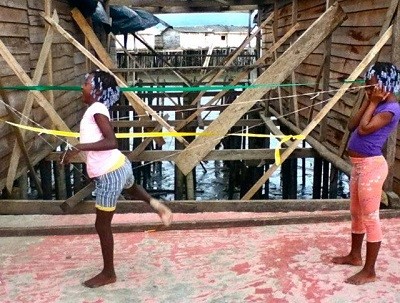
Jumping Rope in Buenaventura:
Children from the community of La Playita play across from the site of where paramilitaries would torture and brutally dismember residents. Residents tore it down and built a community center next door.
For decades, Afro-descendant
communities in Colombia have fought for autonomy and self-determination as a
response to government policies that produce multiple forms of violence in
their communities. Fully aware of, and in solidarity with, mobilizations in
Ferguson, Afro-Colombians recognize the common dreams of movements for racial
justice for people of color people across the hemisphere. Two members of a
delegation that visited these communities in August 2014 reflect on their own
solidarity process and explore the ways that transnational solidarity manifests
(or doesn’t) in movements. How can we move beyond allyship and towards a
practice of co-struggling?
One week after Michael Brown was
murdered in Ferguson, nine US-based activists and artists of color and one white
woman traveled to meet racial justice movement leaders in Colombia. Our
delegation was led by
Proceso de Comunidades Negras
(PCN, Black Community Process), a collective of African-descendant Colombian groups focused
on cultural and political power for Colombia’s black population. The history of
dispossession is a long one for African descendants in Colombia and across the
diaspora i.e. European colonial conquests, subsequent violent and dehumanizing
economies of enslavement, the state’s denial of social services and
reparations. With the energy of the #BlacksLivesMatter mobilizations flowing
through our hearts and minds, we began our weeklong human rights delegation
throughout the Southwest Valle de Cauca region of Colombia.
Communities in that region have
experienced displacement and disenfranchisement (and/or the threat of them) for
decades as a result of large-scale infrastructure development, tourism
expansion projects and agricultural policies that favor production of export
crops (mainly sugar cane) over domestic food production. Some communities are
actively resisting illegal mining operations that destroy and usurp their
ancestral territories. Residents are actively resisting the destruction/capture
of their land which comes as a result of illegal mining operations. The
directors of these illegal enterprises operate with impunity – which is further
demonstrated by their use of paramilitary forces to threaten or assassinate
community leaders.
Reparations
And if thy brother, a Hebrew man, or
a Hebrew woman, be sold unto thee, and serve thee six years; then in the
seventh year thou shalt let him go free from thee. And when thou sendest him
out free from thee, thou shalt not let him go away empty: thou shalt furnish
him liberally out of thy flock, and out of thy floor, and out of thy winepress:
of that wherewith the LORD thy God hath blessed thee thou
shalt give unto him. And thou shalt
remember that thou wast a bondman in the land of Egypt, and the LORD thy God
redeemed thee: therefore I command thee this thing today.
– DEUTERONOMY 15: 12-15
It’s with this Biblical passage that
Ta-Nehisi Coates started his crucial essay, ”
The Case for Reparations
The passage has very real implications: if a person or community has been
subjected to a traumatic period (or century) of bondage and dispossession, it
would be unjust and ahistorical to expect that they can immediately begin a
productive, happy life with such a deficit in power, resources, and
self-determination. Indeed, the historic and collective dispossession of
Afro-Colombians must be reconciled through amends and reparations, or the
imbalance of power at all levels of society will continue and their newfound
“equality” will be nominal only.
Yet instead of redistributing the
wealth created off the backs of generations of people of color and through
racist and violent projects of dispossession, the US government has
successfully streamlined capital and resources into the lucrative projects of
the military industrial complex which has been utilized to maintain order more
than protect and serve. The racialized patterns of criminalization within this
environment of military build-up have created an era wherein the bodies of
people of color are treated as criminal until proven innocent. And it is within
this setting of very immediate violence and years of residual trauma that
Coates’ call for reparations historicizes the urgency for fundamental changes
for communities of color.
CLICK HERE TO CONTINUE READING THE ARTICLE.
[
Image credit: Design Action Collective
]
Join CRLN and our community partners in calling for Expanding Sanctuary all throughout Holy Week!
This year, Holy Week kicks off for us with the 6th Annual
Occupy Palm Sunday
in the Logan Square & Humboldt Park community of Chicago.
We join the Logan Square Ecumenical Alliance (LSEA), the Logan Square Neighborhood Association (LSNA), and others this Sunday starting at 12:30pm to Rally and Public Prayer at Palmer Square Park (east-side of the park) at 1PM. We rally and pray for an expanded vision of sanctuary for ALL that works to end police violence, deportations, and criminalization!
On Palm Sunday, we will continue to demand a stronger “Welcoming City Ordinance” that provides stronger protections to undocumented communities and the passage of recommendations to the ‘FOP Contract Resolution’ for police accountability
.
Second, join us downtown on
Good Friday
for the 8TH Day Center for Justice’s Annual Walk for Justice
. Join the CRLN contingent for the Fourth Station: ‘Helped in the Struggle,’ two Fridays from now from 12PM-3PM at the corner of Michigan and Congress! Each year we join together for this modern-day Way-of-the-Cross to shed light on unjust societal structures and to reflect on how we can work to dismantle them. The 2017 Good Friday Walk for Justice will provide the space to name and explore our visions for a just and peaceful world. Our faithful vision of justice and peace includes expanding sanctuary. We imagine our Beloved Community as a place of care and safety for everyone, no matter where they come from, what they look like, or how they express their gender or sexuality.
However, our nation’s administration has a different vision, one that limits care and safety to a homogenous group and criminalizes others. It seeks to separate from the
Beloved Community certain groups, including ourselves and our neighbors, who are undocumented, immigrant, refugee, Muslim, Black, Arab, Native, queer—and to label us as threats.
We resist this limited vision, based on fear and criminalization. We will embrace our vision of sanctuary and imagine how our faith communities can provide community care and safety for ALL. We will create the kind of world we want to live in.
See you this Holy Week!
To learn more, please contact CRLN’s Immigration Organizer at
crodriguez@crln.org
.
—
OTHER UPCOMING EVENTS:
Expand Sanctuary in Chicago: Community Action Meeting
from 11AM-1PM at 2229 S. Halsted.
Come learn about the campaign to expand sanctuary protections for all Chicago, and find out how you can organize in your neighborhood!
Stay tuned for April’s City Council meeting & vote on the Welcoming City Ordinance amendments & the FOP contract recommendations resolution.
Tell our mayor and city council to stand up to Trump and take action that doesn’t just symbolically defend immigrants but transforms our city’s policies to stop targeting us for imprisonment, risk of deportation, and state violence at the hands of police and aggressive immigration agents.
SAVE THE DATE for May Day 2017.
Join us at the International Workers Day March on Monday, May 1st at 1pm, starting at Union Park (Ashland and Lake) followed by a Chicago Federation of Labor (CFL) event at 4pm at Daley Plaza
.
—
LEARN MORE ABOUT EXPANDING SANCTUARY:
‘
Black People Need Sanctuary Cities, Too
’ by Janaé Bonsu (BYP 100)
‘
A Radical Expansion of Sanctuary: Steps in Defiance of Trump’s Executive Order
’ by Marisa Franco (Mijente)
NEW VIDEO
: Black, Latinx, Muslim, Trans and LGBTQ communities are redefining and expanding what sanctuary means to protect themselves and each other from not just immigration enforcement but all the threats coming from 45’s regime. (BYP 100 & Mijente)
¡Únete a CRLN y a nuestras organizaciones amigas para pedir la expansión del Santuario durante toda la Semana Santa!
Este año, la Semana Santa comienza para nosotros con
el 6to Anual
Ocupación del Domingo de Ramos (Occupying Palm Sunday)
en la comunidad de Logan Square y Humboldt Park de Chicago. Nos unimos a la Logan Square Ecumenical Alliance (LSE), Logan Square Neighborhood Association (LSNA), y otros este domingo a partir de las 12:30 pm para un mitin y oración pública en Palmer Square Park (al este del parque) a la 1:00PM. Nos reunimos y oramos por una visión ampliada del santuario para TODXS que trabaja para acabar con la violencia policial, las deportaciones y la criminalización.
El Domingo de Ramos, continuaremos exigiendo una
“Welcoming City Ordinance”
más fuerte y que proporcione más protecciones a las comunidades indocumentadas y la aprobación de recomendaciones a la
“Resolución de Contrato de FOP”
para la rendición de cuentas de la policía.
En segundo lugar, únase a nosotros en el centro de la ciudad el Viernes Santo para la
Caminata Anual por la Justicia de
8th Day Center for Justice
.
Únase al contingente de CRLN para la Cuarta Estación: ‘Ayudando en la Lucha’, el viernes 14 de abril de 12 PM a 3PM en la esquina de Michigan y Congress. Cada año nos unimos para este Vía Crucis moderno para dar luz a las estructuras sociales injustas y para reflexionar sobre cómo podemos trabajar para desmantelarlas. La Caminata por la Justica del Viernes Santo del 2017 proveerá el espacio para nombrar y explorar nuestras visiones para un mundo justo y pacífico. Nuestra visión fiel de justicia y paz incluye la expansión del santuario. Imaginamos a nuestra amada comunidad como un lugar de cuidado y seguro para todxs, sin importar de dónde provengan, cómo se vean o cómo expresen su género o sexualidad.
Sin embargo, la administración de nuestra nación tiene una visión diferente, que limita la atención y la seguridad a un grupo homogéneo y criminaliza a otrxs. Busca separar de la comunidad a ciertos grupos, incluidos nosotrxs y nuestrxs vecinos, que son indocumentadxs, inmigrantes, refugiadxs, musulmanes, negrxs, árabes, nativxs, extrañxs, y nos etiquetan como amenazas.
Resistimos esta visión limitada, basada en el miedo y la criminalización. Vamos a abrazar nuestra visión de santuario e imaginar cómo nuestras comunidades de fe pueden proporcionar cuidado comunitario y seguridad para TODXS. Vamos a crear el tipo de mundo en el que queremos vivir. ¡Nos vemos esta Semana Santa!
Para obtener más información, comuníquese con la Organizadora de Inmigración de CRLN en
crodriguez@crln.org
.
OTROS EVENTOS :

Resisting Displacement: Expanding Sanctuary in the Americas
Our communities in the Americas—whether immigrant or
campesino
or indigenous or Afro- descendant—are pushed off their land and sometimes out of their countries by large economic forces pursuing profits. For these forces, there are no borders. Many who are displaced are finding ways to connect with others in the Americas to resist deportation and dislocation. All seek to create safer spaces in which to live in the Americas.
Come for social time with CRLN members and staff and hear from Claudia Lucero, Cinthya Rodriguez and Sharon Hunter-Smith about how CRLN is addressing these issues and ways to get involved.
Sunday, May 21, 2017
3:00-6:00pm
Christ Lutheran Church
3253 West Wilson Ave.
Chicago IL, 60625
Tickets are $50 or $25 student/low income
Please RSVP to Marisa Leon Gomez Sonet at
mleongomez@crln.org
by May 17.
Refreshments will be available. Parking available nearby.
—
Resistiendo el Desplazamiento: Expandiendo el Santuario en las Américas
Nuestras comunidades en las Américas – ya sea inmigrantes
o campesinxs
o Indegenxs, o Afro-descendientes- están siendo desplazadas de sus tierras y a veces de sus países por grandes fuerzas económicas que persiguen las ganancias. Para estas fuerzas, no hay fronteras. Muchxs de lxs que están siendo desplazadxs buscan maneras de conectarse con otrxs en las Américas para resistir la deportación y la dislocación. Todxs buscan crear espacios más seguros para vivir en las Américas.
Acompáñanos para una tarde social con el personal y miembros de CRLN. Claudia Lucero, Cinthya Rodríguez y Sharon Hunter-Smith presentaran sobre cómo CRLN está abordando estos temas y formas en las que tú puedes involucrarte.
Domingo, 21 de Mayo del 2017
3:00 a 6:00pm
Iglesia Luterana de Cristo (Christ Lutheran Church)
3253 West Wilson Ave.
Chicago IL, 60625
Los boletos cuestan $ 50 o $25 para estudiantes y personas de bajos ingresos.
Por favor reservar con Marisa León Gómez enviando un correo electrónico a
mleongomez@crln.org
antes del 17 de mayo.
Habrán bocadillos y bebidas. Estacionamiento disponible cerca.
15:00
to
18:00
Berta Caceres’ Case
COPINH denounces the continous will of the Honduran State to keep in impunity the case of Berta Cáceres Flores. Read their statement here: (Spanish only)
http://copinhonduras.blogspot.it/2017/04/el-copinh-denuncia-la-reiterada.html
On April 7th,
Two letters by US Senators and Representatives were sent to the US Secretary of State Rex Tillerson expressing their concern about the situation of human right defenders in Honduras.
78 US politicians demand that military and police aid to Honduras be withheld until the situation for human rights defenders improves drastically in the country.
CRLN staff and board members participated, in a Voz de los de Abajo delegation in March, as human rights observers in a march by COPINH and its allies to the Supreme Court. They delivered a letter containing a constitutional challenge to the legality of the Legislative Decrees authorizing the Agua Zarca Hydroelectric Project on the Gualcarque River, something Berta had wanted to do before she was killed. That was March 1, and the Constitutional Chamber has not yet admitted it for consideration by the Supreme Court.
*Karla Lara and Melissa Cardoza, feminists, social justice organizers in Honduras and close friends of Berta Caceres, are doing a US tour April 20th to May 23rd.
Melissa Cardoza’s book,
13 Colors of the Honduran Resistance,tells thirteen stories of women who joined the resistance to the U.S.-backed 2009 coup d’etat. She will be touring along with her fellow member of the Honduran “Red de Defensoras,” or network of women rights defenders, beloved Honduran jazz/folk protest singer
Karla Lara,
who appears in one of the book’s stories and has been an icon and sharp voice in the resistance.
They will be in Chicago with CRLN on April 30th, Join Us.
Read more about Karla and Melissa and their work here.
2017 National Elections
The Supreme Electoral Tribunal (TSE) is an ally of the Juan Orlando government, by letting him run for the 2017 elections, despite that re-election is prohibited by the Honduran constitution. Now, the TSE wants to forbid the Party Against Corruption (PAC), a major opposition party, from the national elections on November. The TSE wants PAC to hold an internal leadership election on May 21ST. However, this date will give the political opposition just four days to decide on a political alliance- making it extremely hard to form such alliance. By May 25, all alliances must be officially listed.
Garifuna and Indigenous Communities
The UN Special Rapporteur on Indigenous Peoples,
Victoria Tauli-Corpuz, visited Honduras from April 16-21st.
She met with the highest national governmental authorities, representatives of indigenous peoples, civil society organizations and the private sector.
Her first visit to the country was in November 2015
. This second visit was a follow up on observations and recommendations regarding the process to regulate the free, prior and informed consent of indigenous and Afro-Honduran peoples. She presented recommendations to the Honduran government, and many fear that these
recommendations will be ignored once again.
The Honduran government is currently drafting a free, prior, and informed consent (FPIC) law. However indigenous organizations, such as OFRANEH (Garifuna) and COPINH (Lenca) , denounce that the government is
marginalizing indigenous communities from the process and instead the Juan Orlando’s administration is taking over.
There has been a
recent violent attack against labor leaders at the international company Fyffes.
Solidarity Center reports that “Moisés Sánchez, secretary general of the melon export branch of the Honduran agricultural workers’ union, Sindicato de Trabajadores de la Agroindustria y Similares (STAS), and his brother, union member Misael Sánchez
, say they were attacked late last week by six men wielding machetes as they left the union office in the southern town of Choluteca
, an area where agricultural workers harvest melons and other export produce”.
Caso de Berta Caceres
COPINH denuncia la reiterada voluntad del Estado hondureño de mantener en la impunidad el caso de Berta Cáceres Flores. Lea su declaración aquí: (en español solamente).
http://copinhonduras.blogspot.it/2017/04/el-copinh-denuncia-la-reiterada.html
El 7 de abril, dos cartas de parte de Senadores y Representantes de los Estados Unidos fueron enviadas al Secretario de Relaciones Exteriores de los Estados Unidos, Rex Tillerson,
expresando su preocupación por la situación de los defensores de derechos humanos en Honduras.
78 políticos estadounidenses exigen que la ayuda militar y policial a Honduras sea retenida hasta que la situación de los defensores de derechos humanos mejore drásticamente en el país.
Parte del personal y miembros de CRLN participaron en una delegación de La Voz de los de Abajo en marzo, como observadores de derechos humanos en una marcha de COPINH y sus aliados ante la Corte Suprema de Honduras. Entregaron una carta que contenía una impugnación constitucional a la legalidad de los Decretos Legislativos que autorizaba el Proyecto Hidroeléctrico Agua Zarca en el Río Gualcarque, algo que Berta había querido hacer antes de ser asesinada. Eso fue el 1 de marzo, y la Sala Constitucional aún no lo ha admitido para la consideración por el Tribunal Supremo.
* Karla Lara y Melissa Cardoza, feministas, organizadoras de justicia social en Honduras y amigas cercanas de Berta Cáceres, están realizando una gira estadounidense del 20 de abril al 23 de mayo. El libro de Melissa Cardoza, 13 Colores de la Resistencia Hondureña, cuenta trece historias de mujeres que se unieron a la resistencia después del golpe de Estado del 2009 respaldado por Estados Unidos. Ella estará de gira junto con su compañera de la Red de Defensoras de Honduras, Karla Lara, la amada cantante hondureña de jazz y folk , que aparece en una de las historias del libro y ha sido un icono y voz de la resistencia.
Estarán en Chicago con CRLN el 30 de abril, únase a nosotros.
Lea más sobre Karla y Melissa y su trabajo
Elecciones Nacionales del 2017
El Tribunal Supremo Electoral (TSE) es un aliado del gobierno de Juan Orlando Hernández, al permitirle ser parte de las elecciones del 2017, a pesar de que la reelección está prohibida por la Constitución hondureña. Ahora, el TSE quiere prohibir el Partido Anti-Corrupción (PAC), un importante partido de la oposición, de las elecciones nacionales de noviembre. El TSE quiere que el PAC celebre elecciones de liderazgo interno el 21 de mayo. Sin embargo, esta fecha dará a la oposición política sólo cuatro días para decidir sobre una alianza política, lo que hace extremadamente difícil formar esa alianza. Para el 25 de mayo, todas las alianzas deben estar listadas oficialmente.
Comunidades Indigenas
La Relatora Especial de las Naciones Unidas sobre Pueblos Indígenas, Victoria Tauli-Corpuz, visitó Honduras del 16 al 21 de abril. Se reunió con las más altas autoridades gubernamentales nacionales, representantes de los pueblos indígenas, organizaciones de la sociedad civil y el sector privado. Su primera visita al país fue en noviembre de 2015. Esta segunda visita fue un seguimiento de las observaciones y recomendaciones sobre el proceso para regular el consentimiento libre, previo e informado de los pueblos indígenas y afro hondureños. Ella presentó recomendaciones al gobierno hondureño,
y muchos temen que estas recomendaciones sean ignoradas una vez más.
El gobierno hondureño está actualmente redactando una ley de consentimiento libre, previo e informado (CLPI). Sin embargo, organizaciones indígenas, como OFRANEH (Garifuna) y COPINH (Lenca),
denuncian que el gobierno está marginando a las comunidades indígenas del proceso
y en su lugar la administración de Juan Orlando está tomando el liderazgo.
Ha habido un reciente ataque violento contra líderes sindicales en la empresa internacional Fyffes. El Centro de Solidaridad informa que “Moisés Sánchez, secretario general de la rama exportadora de melón del Sindicato de Trabajadores de la Agroindustria y Similares (STAS), y su hermano, sindicalista Misael Sánchez, dicen que fueron atacados la semana pasada por seis hombres con machetes mientras salían de la oficina sindical en Choluteca al Sur del pais, donde los trabajadores agrícolas cosechan melones y otros productos de exportación “.


