image-title

CRLN board member, Sidney Hollander, and program director, Gary Cozette, are currently in Honduras on human rights delegation with our partners,


La Voz de los de Abajo

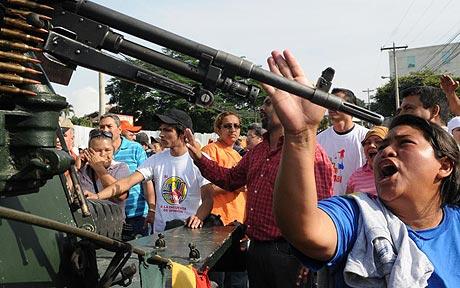
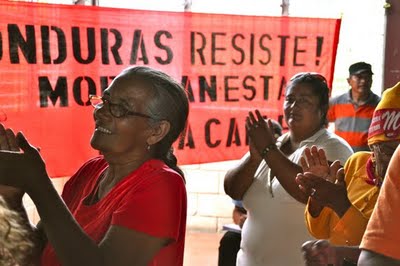
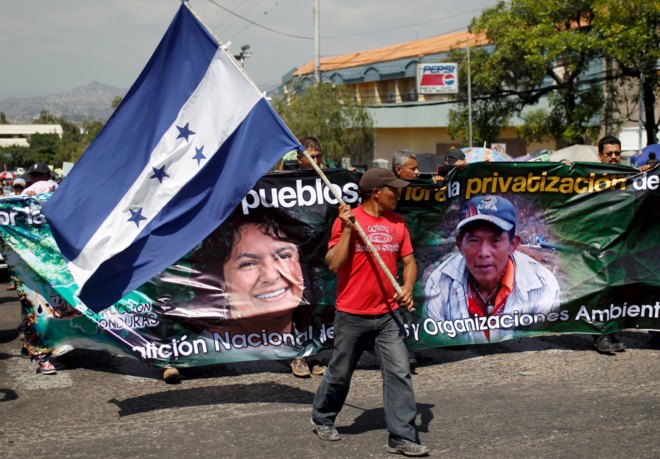
a Chicago-based group. Yesterday, on the anniversary of the coup, the group attended the Resistance March in Tegucigalpa, in solidarity with the Resistance movement and in protest of the on-going human rights abuses committed under coup-successor, President “Pepe” Lobo. Below is a letter from Gary and pictures from the march.
Dear CRLN Members and Friends,

Yesterday, our Chicago delegation accompanied the lively, diverse Resistance March in the Honduran capital of Tegucigalpa. Sidney Hollander, the CRLN Board member on this delegation, calculates turn-out by about how many people can fill a baseball stadium, which he estimates at 40,000. His guess? A shade under 40,000. Others estimated as high as 100,000.   We heard unconfirmed reports that some buses coming to the march were not allowed to enter Tegucigalpa. The reason the numbers were lower in Tegucigalpa than in previous major marches is in large part because the Frente has decided to decentralize them. Subsequently, major marches took place in all parts of the country yesterday. In Tegucigalpa, I was amazed by the great number of young people, ages 14-25, participating with great creativity. We hope to have pictures on our web site soon. In the mean time, you can see pictures from one of the web sites noted below in today’s


Hemispheric Brief


coverage of the coup anniversary.

On a negative note,


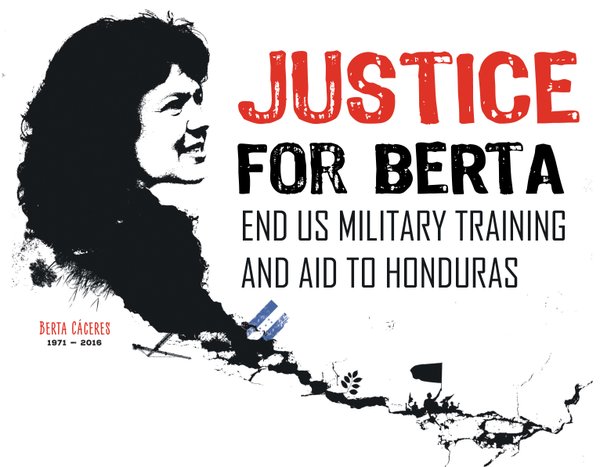
Berta Caceres,


a key leader of COPINH, the national indigenous organization of Honduras, was taken captive by military police in the town of La Esperanza. After the local population mobilized at the police station and an urgent action alert went out, Berta was released several hours after her capture. However, the police confiscated from Berta 400 signed affidavits seeking a national Constitutional assembly. The Resistance Front is organizing across Honduras to secure over 1 million signed affidavits to convene a national constituent assembly to draft a new Constitution to replace the current one drafted in 1982 amid the Cold War violence of the 1980s.  Diverse sectors of Honduran civil society in the resistance movement tell us that the current Constitution is privileging the interests of the oligarchy, the elite and transnational corporations seeking to “loot” their national resources.


Gary L. Cozette, Program Director

Hemispheric Brief – June 29, 2010 / Excerpts covering Honduras

In Honduras, more on the one year anniversary of the coup.

IPS has a good report

from Thelma Mejía who says “defacto” military veto power in the country continues to block any possible political or electoral reforms in the country.  The story comes after the head of the Honduran Supreme Electoral Court (TSE) said the possibility of ending the military’s role as the transporter of ballot boxes during elections was being considered.  Just days later, however, the TSE changed its tune entirely after a meeting with senior military officials.  According to IPS, the TSE now it “will seek to ‘expand’ the functions of the military [in the electoral process], including the possibility of allowing members of the armed forces to vote. According to Leticia Salomón, an expert in military affairs, one of the most significant consequences of last year’s coup has been the growing role of the military in the public sphere.  The country now has “highly politicized security forces, and in the case of the military, the leadership has become a decision-making body, says Salomón.

The pro-coup


El Heraldo


reports on FNRP protests yesterday, saying only about 2000 individuals showed up for marches in the capital commemorating last year’s coup.  I haven’t seen figures from the FNRP itself yet but

Vos el Soberano

does have photos. Pro-coup

La Tribuna

, meanwhile, reports on FNRP marches in San Pedro Sula where some 3000 resistance members took a bridge for nearly three hours.  Meanwhile, the FNRP announced it had collected

some 600,000 signatures

in favor of holding a constituent assembly.  For his part, Mel Zelaya watched events from the Dominican Republic.  In a letter released on the coup’s anniversary, Mr. Zelaya’s harshest words were saved for the United States, which, he now claims, was “behind the coup.”  As the

AP

reports, Zelaya cited what he called the “public support the United States wound up giving to the coup.”  And RAJ at

Honduras Culture and Politics

has a list of recommendations about what the Lobo government could do to start a process of real national dialogue.  I recommend reading in-full.

Read More
image-title


El viernes, 16 de diciembre, CRLN, La Voz de Los de Abajo, y varixs compañerxs de Chicago llevaron 200 cartas de Navidad firmadas por residentes de Illinois hasta la oficina local del Senador Durbin para urgir que ponga un alto de inmediato a toda la asistencia militar de los EE.UU. a Honduras hasta que cumplan con estándares internacionales de derechos humanos.

Miembros y amigxs de CRLN hicieron posible este esfuerzo por sus firmas en las cartas al Senador, quien tiene una posición de alto rango en el Subcomité de Defensa del Comité de Asignaciones. Con esta posición él tiene el poder de suspender la asistencia de seguridad a Honduras dado las violaciones graves y consistentes en contra los derechos humanos en Honduras. Nuestro equipo llevó las cartas a la oficina del Senador y se reunieron con el personal de su oficina, quienes expresaron preocupación por la situación en Honduras y nos prometieron pasar nuestras peticiones al Senador. En este momento, no pudieron darnos una respuesta fija sobre el asunto de la suspensión de la asistencia de seguridad.

Seguiremos presionando el Senador Durbin en el año 2017 y esperamos trabajo duro para ganar el apoyo también de la Senadora-elegida Duckworth.


Estas 200 firmantes también aparecieron en cartas a los miembros de Illinois de la Cámera Baja pidiendo que apoyen H.R.5474 El Proyecto de Ley “Berta Cáceres” de Derechos Humanos en Honduras, una ley que también suspendería la asistencia militar y policiaca a Honduras.

En este momento, siete de los diez Demócratas de Illinois decidieron co-patrocinar H.R.5474, un gran triunfo que no habría sido posible sin la presión de base que por ustedes.


Berta Cáceres

, co-fundadora del Consejo Cívico y Popular de Organizaciones Indígenas de Honduras (COPINH), fue asesinada el 2 de mazo de 2016 y en los nueve meses que han pasado desde su asesinato, las carpetas del caso fueron robados y su familia ha sido excluida completamente del proceso judicial. En julio,

Nelson Garcia

, miembro de COPINH, fue asesinado y

Tomás Gómez Membreño

, Coordinador General actual de COPINH quien visitó a la oficina de Senador Durbin pidiendo que suspenda la asistencia de seguridad en junio del 2016, sobrevivió un intento en contra su vida.

En octubre,

Jose Angel Flores

, Presidente de la organización campesina MUCA (Movimiento Unido Campesino del Aguán) y

Silmer Dionosio George

, otro miembro de MUCA, fueron asesinados por hombres armados mientras salían de una reunión de miembros de MUCA. Más activistas y defensores de derechos humanos fueron

detenidos y amenazados

por fuerzas de seguridad Hondureñas mientras manifestaban pacíficamente en contra de la privatización de las autopistas. El reporte más reciénte sobre derechos humanos en Honduras de la Asociación de Participación de los Ciudadanos aclaró

que en 2016 hubieron 32 asesinatos

de defensores de derechos humanos, activistas ambientales, y defensores de derechos campesinos e Indígenas.


A pesar de estos ataques, acusaciones creíbles de la complicidad del estado Hondureño, y un nivel de impunidad de 95%, los EE.UU. ha mandado $200 millones en la forma de asistencia militar y policiaca desde el golpe de estado en el 2009. Además, el mes pasado, el Departamento del Estado certificó—con poca o sin evidencia—que el gobierno Hondureño cumplió con condiciones de derechos humanos puestas por el Congreso Estadounidense, así soltando $55,000,000 en asistencia de seguridad.

Como respuesta, aproximadamente 200 residentes de Illinois fueron representados en la entrega de las cartas de navidad a la oficina del Senador urgiendo que use su, “poder para suspender la asistencia de seguridad hasta que la policía y ejército Hondureño cumplan con los estándares internacionales de derechos humanos. Nuestros impuestos ya no deben apoyar las fuerzas de seguridad Hondureñas con los recursos materiales y legitimidad internacional para poder cometer violaciones de derechos humanos con impunidad.”


Mientras la Sesión 114va del Congreso ya se terminó para el 2016, seguiremos apoyando nuestrxs compañerxs en Honduras y presionando al Senador Durbin y todxs los oficiales elegidxs para suspender la asistencia de seguridad Estadounidense a Honduras. Seguiremos exigiendo que respondan a los asesinatos y violencia en contra de lxs defensores de derechos humanos en Honduras.

Read More
image-title

More Death Caused by Honduran Military and Paramilitaries

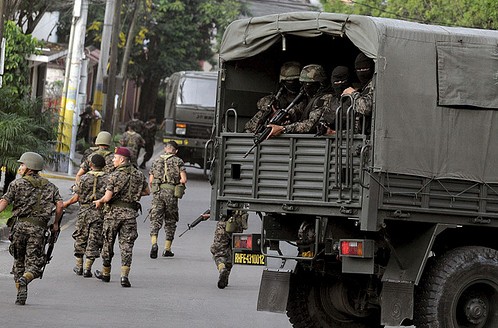
CRLN’s partners, La Voz de Los de Abajo, report on their blog about the latest military and paramilitary violence in Honduras.  Media, newspapers, radio stations, and journalists have been targeted for repression, abduction and execution; this latest episode included a police attack on Radio Uno in the town of San Pedro Sula.  At least one death was reported.  For more information, check La Voz de Los de Abajo’s blog Honduras Resists at

http://hondurasresists.blogspot.com/

Read More
image-title

Honduras es el país más peligroso del mundo para ser un activista ambiental y uno de los más peligrosos para ser periodista, miembro de un sindicato o miembro de un movimiento social opuesto a las políticas actuales de la administración hondureña. Los miembros del ejército y la policía han sido implicados en actos de violencia contra los miembros de estos grupos, incluyendo asesinatos. El 97% de los crímenes cometidos en Honduras quedan sin resolver, y sin consecuencias para los perpetradores.

En este contexto, les damos las gracias por sus firmas apoyando el Proyecto de Ley de Derechos Humanos en Honduras Berta Cáceres (H.R. 5474). Las firmas ayudaron a CRLN a convencer a 7 de 10 representantes demócratas de Illinois en los Estados Unidos a copatrocinar esta importante legislación presentada por el representante Hank Johnson. A finales del 2016, el proyecto de ley, que suspendería la ayuda de seguridad de los Estados Unidos a Honduras en espera del cumplimiento de las normas internacionales de derechos humanos, reunió un total de 52 copatrocinadores en todo el país.

Debido que la sesión del Congreso número 114 terminó el 3 de enero y cualquier legislación que no llegó a la Cámara y el Senado para su votación terminó con ella, el Proyecto de Ley H.R. 5474 tendrá que ser reintroducido en la sesión del Congreso número 115 que va desde ahora hasta finales de 2018. El representante Hank Johnson planea reintroducir este proyecto de ley.

Tan pronto como esto ocurra, CRLN se pondrá en contacto con los y las representantes de Illinois para pedirle a los firmantes (Schakowsky, Gutiérrez, Davis, Rush, Quigley, Lipinski) que firmen de nuevo. Nos pondremos en contacto con aquellxs de ustedes en sus distritos para que contacten a sus representantes, se identifiquen como miembros de CRLN, les agradezcan por su copatrocinio el año pasado y pedirles apoyo para que vuelvan a firmar.

Para aquellos de ustedes en los distritos cuyos representantes no fueron co-patrocinadores, vamos a construir nuevos argumentos por los cuales deben ser co-patrocinadores y nos pondremos en contacto con ustedes en el momento apropiado para recolectar firmas de nuevo para mostrar el apoyo que hay en sus distritos para este proyecto de ley. Además, tenemos una nueva oportunidad de hablar con los representantes elegidos en noviembre (Brad Schneider en el Distrito 10, que reemplaza a Bob Dold, y Raja Krishnamoorthi, que reemplaza a Tammy Duckworth, ahora una de los Senadores de Illinois en el Distrito 8).

Es de vital importancia para las personas cuyas vidas están bajo amenaza en Honduras que Estados Unidos deje de suministrar armas y entrenar a las fuerzas de seguridad bajo la autoridad del actual presidente hondureño, Juan Orlando Hernández, cuyo partido utilizó y privó ilegalmente al público de los fondos designados para la el sistema de salud para financiar su última elección y que acaba de orquestar un cambio a la constitución para reelegirse como presidente en el 2017. Bajo su administración, fuerzas militares y policiales han sido desatadas para actuar violentamente en contra de quienes se oponen a la corrupción y las maniobras antidemocráticas de muchos de los que actualmente están en el poder.

Read More
image-title

ARCHIVE:

Read More
image-title


Given Honduras’ human rights situation, CRLN will provide for its members a monthly update on human right issues afflicting the country.


(Español aquí)

  • The Honduran authorities arrested

    another suspect of the assassination of Berta Caceres, Henry Javier Hernandez Rodriguez

    , a former member of the Honduran military, in Tamaulipas, Mexico. Berta’s family demands the arrests of those that planned the murder. However, the Honduran authorities don’t seem to be making any effort to prosecute the real intellectual authors of Berta’s assassination.
  • Gustavo Castro, who survived an assassination attempt when Berta Caceres was murdered,

    filed a formal accusation against the Honduran State for human rights violations.

  • Global Witness released a report that denounces

    , after a two-year investigation, that 120 environmental activists have died since 2010 in Honduras and that at the heart of the conflict are the rich and powerful elites, among them members of the political class. The Guardian analyzed the Global Witness report, focusing on the involvement of politicians and the business elite in the murder of the environmental defenders. Global Witness also denounces that the U.S. continues to provide security aid to Honduras despite the continuous human right violations by the state. Just this week, the U.S. gave

    the first Alliance for Prosperity funds

    ($125 million) to the Honduran government.
  • President Juan Orlando Hernandez is seeking a reform to the Penal Code and introduction of new legislation which would provide more power to the security forces of the country. Also, with this legislation, police, military and security forces who kill or injure civilians in “defense” would be exempt from justice.

    CARITAS Honduras

    said this legislation would bring the country back to the 80’s when the opposition and media were persecuted and practices of forced disappearances occurred regularly.

    Amnesty International, among other international and national organizations, is critical of this reform of the Penal Code.
  • Miriam Miranda and other members of the Afro-Honduran Garifuna cultural group OFRANEH were harassed and threatened by the Honduran Police in early January. The police wanted to illegally detain Miranda and three other human right defenders, during a checkpoint in La Ceiba. Miriam has protective measures from the Inter-American Commission on Human Rights (CIDH).
  • Journalist Igor Padilla, was assassinated in the Northern part of Honduras. Honduras is one of the most dangerous and deadliest countries in the world to be a journalist. Padilla became the 63rd media worker to be killed since 2003. 50 of the 63 murders took place since 2009 and 24 alone in 2014 and 2015.
  • OFRANEH is fighting against Indura Hilton, which wants to build resorts on their ancestral lands in Northern Honduras, and denounces the role of the Attorney’s General Office in granting access to that land to Indura Hilton
  • Honduras celebrated National Women’s day this past January 25

    th

    , and

    local women right’s defenders and organizations protested the continuous violence and discrimination against women in the country.
  • President Hernandez is actively seeking an illegal re-election, prohibited by the Honduran Constitution, and is harassing the opposition. In the previous election, the National Party stole funds from the Social Security system, leaving sick and economically poor people without medicine and treatments, in order to finance his political campaign.
Read More
image-title

Chile, 1985:


Women soaked by water cannon during a demonstration against Pinochet on International Women’s Day in Santiago. Photograph: Julio Etchart/Julio Etchart

This week, CRLN joins millions of people around the world commemorating the 40th anniversary of Chile’s U.S.-backed military coup, which led to 17 years of dictatorship and tens of thousands of opposition activists murdered, disappeared, tortured, exiled, and imprisoned. Time has healed some, but also brought profound determination for truth and justice.

As more time goes by, the truth of what happened and the full dimension of the violence becomes even clearer, and the country’s institutions are forced to assume their responsibility.

Argentine-Chilean novelist, playwright, essayist, academic, and human rights activist Ariel Dorfman writes in the New York Times about how he survived the bombing of the presidential palace just by trading a shift with a colleague and friend. He also writes about the durable impacts of the coup that have spread throughout the globe:

“The most lasting legacy of Chile’s Sept. 11 were the economic policies implemented by Pinochet. My country became, in effect, a laboratory for a neoliberal experiment, a land of  unrestrained greed where extreme denationalization of public resources and suppression of workers’ rights were imposed on an unwilling populace. Many of these merciless policies were later deployed by leaders across the globe”.

Democracy Now!’s Amy Goodman interviews Joan Jara, the widow of Chilean singer Víctor Jara,

who has just filed a civil lawsuit in U.S. court against the former military officer who allegedly killed Jara 40 years ago. Jara’s accused killer, Pedro Barrientos, has lived in the United States for roughly two decades and is now a U.S. citizen.”

Jara’s family is suing him under federal laws that allow U.S. courts to hear about human rights abuses committed abroad.”


TAKE ACTION! and join SOAWatch in calling for accountability for Victor Jara’s murder by Pedro Barrientos : “Jara was first held and tortured in the  infamous Estadio Chile (since renamed Estadio Victor Jara), which was turned into a nightmarish detention and torture center after the coup. Survivors and other witnesses claim that military officers broke Jara’s hands with the butts of their rifles before mockingly asking him to play his famous songs. Defiantly, Jara sang part of ‘Venceremos’ (We Will Win). His body was later dumped in the street, found riddled with 44 bullets and signs of extensive torture.”

Read a recounting by Hugh O’Shaughnessy, a prize-winning journalist who has written on Latin America for over 40 years, of the days immediately before and following the coup in Chile, where he was working as a journalist:

“As had already been the case after the military coups in Brazil in 1964 and then in Uruguay, Paraguay, Bolivia and Argentina, and as was to be the case latterly in modern Iraq, Afghanistan and Guantánamo Bay, the military and police torturers were ready with their electrodes, thumbscrews and waterboarding equipment to defend ‘western Christian civilisation’.”

Many had been brought to a peak of perfection in their
trade in the US itself or in its bases in the Panama canal zone by US instructors.”

Read More
image-title


Dada la situación de derechos humanos en Honduras, CRLN proporcionará a sus miembros una actualización mensual de los problemas de derechos humanos que afligen al país.


  • Las autoridades hondureñas

    arrestaron a otro sospechoso del asesinato de Berta Caceres, Henry Javier Hernández Rodríguez, ex miembro del ejército hondureño,

    en Tamaulipas, México. La familia de Berta exige el arresto de los que planificaron el asesinato. Sin embargo, las autoridades hondureñas no parecen estar haciendo ningún esfuerzo para enjuiciar a los verdaderos autores intelectuales del asesinato de Berta.
  • Gustavo Castro, quien sobrevivió a un intento de asesinato cuando Berta Cáceres fue asesinada,

    presentó una acusación formal contra el Estado hondureño por violaciones a sus derechos humanos.

  • Global Witness publicó un informe que denuncia, tras una investigación de dos años,

    que 120 activistas ambientales han muerto desde el 2010 en Honduras y que en el centro del conflicto están las élites ricas y poderosas, entre ellas miembros de la clase política. Global Witness también denuncia que los Estados Unidos continua proporcionando ayuda de seguridad a Honduras a pesar de las continuas violaciones de derechos humanos cometidas por el estado hondureño . Sólo esta semana, los Estados Unidos dio los primeros fondos de la Alianza para la Prosperidad ($ 125 millones) al gobierno hondureño.
  • El presidente Juan Orlando Hernández está buscando una reforma al Código Penal y la introducción de nueva legislación que proporcionaría más poder a las fuerzas de seguridad del país. Además, con esta legislación, las fuerzas policiales, militares y de seguridad que matan o lesionan a los/las civiles en “defensa” estarían exentos de la justicia.

    CARITAS Honduras

    dijo que esta legislación llevaría al país de regreso a los años 80 cuando la oposición y los medios de comunicación fueron perseguidos y las prácticas de desapariciones forzadas ocurrieron regularmente.

    Amnistía Internacional critico las reformas propuestas al Código Penal.
  • Miriam Miranda y otros miembros del grupo cultural garífuna afro-hondureño OFRANEH fueron hostigados y amenazados por la Policía hondureña a principios de enero. La policía quería detener ilegalmente a Miranda y a otros tres defensores de derechos humanos, durante un puesto de control en La Ceiba. Miriam tiene medidas de protección de la Comisión Interamericana de Derechos Humanos (CIDH).
  • El periodista Igor Padilla, fue asesinado en la parte norte de Honduras. Honduras es uno de los países más peligrosos y mortales del mundo para ser periodista. Padilla se convirtió en el 63º trabajador de los medios de comunicación asesinado desde el 2003. 50 de los 63 asesinatos ocurrieron desde el 2009, después del golpe de Estado, y 24 solo en el 2014 y 2015.
  • OFRANEH está luchando contra Indura Hilton, que quiere construir centros turísticos en sus tierras ancestrales en el norte de Honduras, y denuncia el papel de la Procuraduría General en otorgar acceso a esa tierra a Indura Hilton
  • Honduras celebró el Día Nacional de la Mujer el pasado 25 de enero, y las defensoras y organizaciones locales de derechos de las mujeres protestaron contra la continua violencia y discriminación contra las mujeres en el país.
  • El presidente Hernández está buscando activamente una reelección ilegal, prohibida por la Constitución hondureña, y está hostigando a la oposición. En la elección anterior, el Partido Nacional robó fondos del sistema de la Seguridad Social, dejando a los/las enfermos/as y las personas con pocos recursos económicos sin medicinas y tratamientos, para financiar su campaña política.
Read More
image-title

ACTION ALERT!


CRLN and our partner La Voz de Los de Abajo are sending just shy of 30
people to observe the Honduran elections on November 24th.

The current political climate of Honduras has led to the deaths of 18 candidates
from the opposition party as well as dozens of journalists, lawyers and human
rights defenders, of which only a handful of cases have been solved.

As impunity reigns in Honduras and citizens lose faith in their
governmental istitutions,

Democratic Senator Tim Kaine of Virginia is
circulating a letter to Secretary of State Kerry


demanding that the U.S.

– which has tremendous influence in Honduras –

press the Government of
Honduras to ensure the right of all its citizens to peacefully assemble,
campaign and vote.

Click here to tell your Senator that you want him or her to sign Senator
Kaine’s letter!

Support the Honduran people’s right to a democratic process!
Support the international monitoring efforts!

Click here to make your voice
heard!

You can also call Senator Durbin’s office at 202-224-2152 and ask that
Senator Durbin sign on Tim Kaine’s letter on the Honduran elections. Be sure to
tell them that your friends at CRLN and La Voz de Los de Abajo are going to
Honduras and that you’re looking to your elected officials to support the work
you’ll be doing down there to monitor the November 24th elections.


Read More
image-title


Three CRLN staff and board members traveled to Honduras February 28 – March 8 together with La Voz de los de Abajo, one of CRLN’s partner groups. Below is a reflection by Sharon Hunter-Smith upon visiting two communities engaged in land recuperation as part of the National Center of Rural Workers.

Tegucigalpa and La Paz, Honduras; March 6, 2017


(Español Aqui)


Our group from Chicago stood staring at the rough wooden table, which held 2-dozen or so spent tear gas canisters plus a couple of bullet shells, collected by the 9

th

of July community from the area immediately surrounding the place where we stood. The largest one, designed to be fired from a rifle, was stamped “Made in U.S.A.” The connection between U.S. military and police aid to Honduras and the violent persecution of impoverished Honduran farmers was crystal clear in the objects before us.

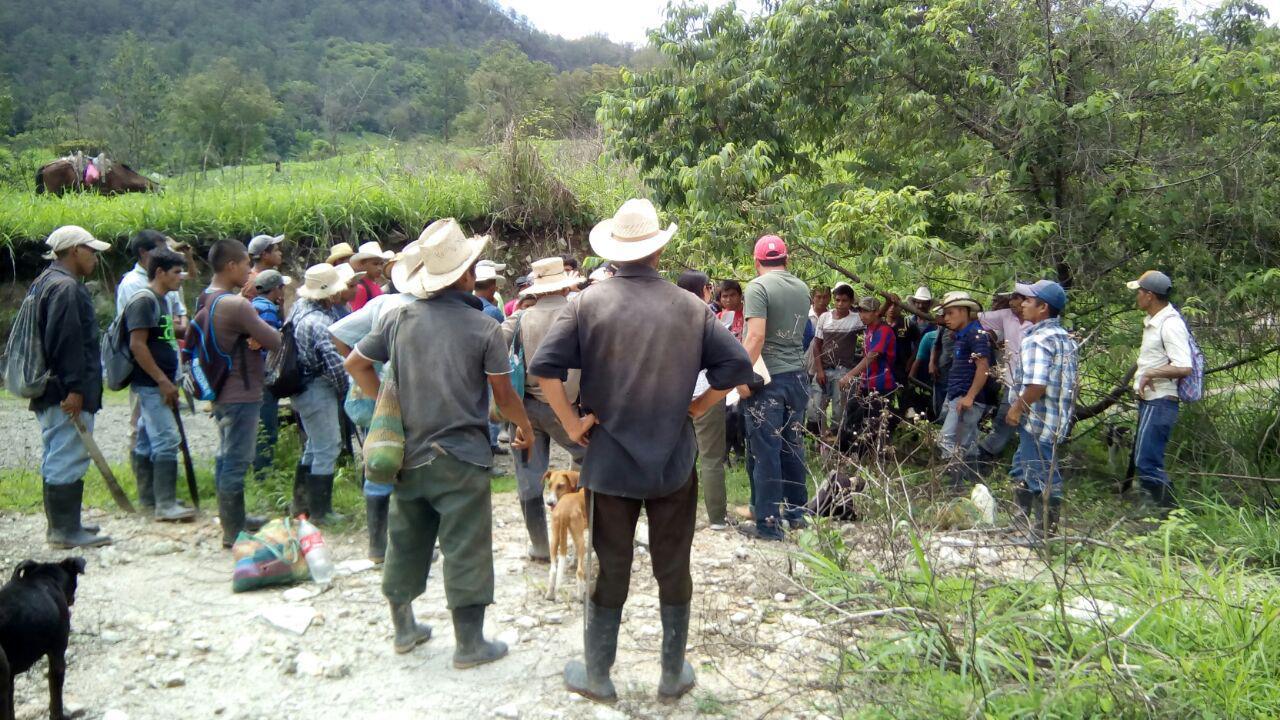
The original rural community of 28 families has been tear gassed and evicted from their simple hand-built dwellings and cultivated land 26 times by the Honduran military or police. In the last surprise eviction on January 13, 2017, the police followed the fleeing people, even women and children, across the valley, shooting all the way. One man was shot in the leg and a pregnant woman miscarried after running away, panicked, from the “security” forces. They also tore down and burned houses, stole or burned possessions and tools left in and around the houses, and cut down some of the fruit trees and crops. Since then, the women and children, have moved to a nearby community while the men have re-occupied the land.

“Thanks be to God that we continue to live on this land,” said one man. After each violent eviction, the community’s commitment is to return and resettle on the land within 24 hours of being pushed off, rebuilding houses and restoring crops as they are able. The bravery and endurance that this strategy demands is fed by their hope of land ownership. They experience other threats in the form of arrest warrants against them and death threats from the national or military police. “Every time we receive a group of international people who are in solidarity with us, it gives us the strength to keep going on with our struggle,” said another.

This community of formerly landless people, organized by the Central Nacional de Trabajadores del Campo (CNTC–National Center of Rural Workers), settled this abandoned and desert-like land in 2010. They dug trenches and bought plastic pipes to carry water for irrigation and drinking water from a spring 3 kilometers away. They planted fruit trees and other crops to feed their families. A dry hillside turned green and provided a way to make a living. The CNTC works with 203 other communities, like 9

th

of July, who are reclaiming land and putting it to good use in 14 of the 18 Honduran departments (what in the U.S. would be called states).

The National Agrarian Reform Law provides that idle land fit for farming can be expropriated and awarded to indigent and landless persons by the government, but this does not happen often. To force the issue and obtain the land essential for rural people to support themselves and their families, the CNTC works with landless people to settle and plant on unused, undeveloped or abandoned land. The occupants then file for title to the land under the Agrarian Reform Law with Honduran National Agrarian Institute (INA).


The 9

th

of July community is the most persecuted of all the CNTC communities, but others usually are evicted at least several times in their struggle to obtain land. How long do they have to be on the land before they are granted a title? “We don’t know with this administration. They are not on our side,” answered one man. Some of the CNTC communities have lived and worked on their land for 15-20 years and still do not have title.

Putting this into an even larger context for us, CNTC Director Franklin Almendares explained that 64% of Honduran people are rural, impoverished, and displaced or facing displacement from their land for lack of a title to it. 46% live in extreme poverty. “We are not poor—our land is rich—but we are impoverished, because they throw us off the land on which we live and farm. They want to annihilate those who speak out, who protest, who object to and challenge this system.” At the same time, Almendares pointed out, when large corporate landowners take land without having title to it, the government is complicit with their actions and grant them titles.


Visiting a second land recuperation project, CNTC organizers led us to a piece of land on a plantation that had been abandoned for decades, its owner living in Tegucigalpa.14 young men and boys, most in their teens and early twenties, had arrived on the land 11 days earlier at night.They had made pup tents from pieces of plastic and canvas held up by sticks for shelter, and had begun clearing trees so that they could begin to create fields to plant. The youngest among them appeared to be around 11 years old. They seemed wary and shy,  vulnerable and scared. Most did not talk to us, letting the CNTC organizers explain to us their situation.

All wanted to acquire some land to work on and have something to hope for. They eventually wanted to start a family and needed a way to support them. Without land, they had no hope, and without hope, they had no reason to live.

The CNTC organizers used our visit as a training for these young people—how to receive an international group, how to present themselves. They had coached the leader of the group to introduce himself with a brief description of their objectives in occupying this land. He told us that after arriving, they did not sleep for three nights, worried that the police would find them and evict them. They also had not slept outside before with insects and snakes in the area, and they were getting used to that. With encouraging words, the CNTC organizers told the group that eviction is just a passing misfortune on the way to acquiring land and homes and community. Every group had experienced this, and many had eventually earned their titles. They must work and have hope that they, too, will be successful one day, because this path is the only one that offers them any hope.


What can those of us in the U.S. do to stop the persecution of communities working with the CNTC?

Call your Congressional Representative’s office, ask to speak with or leave a message for the staff responsible for foreign policy, and request that they co-sponsor H.R. 2199, the Berta Cáceres Human Rights in Honduras Act.

This would suspend all U.S. security aid to Honduras, including equipment and training, until they cease their human rights violations. We must stop U.S. funding that enables Honduras to use violence against its own people, people who only want a chance to support their families and contribute to the life of their communities!

Read More