image-title

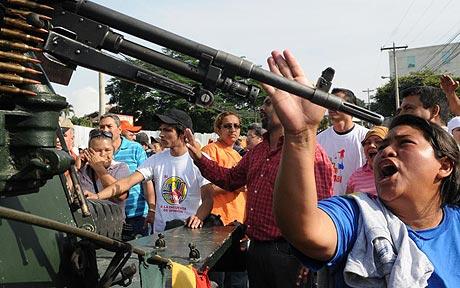
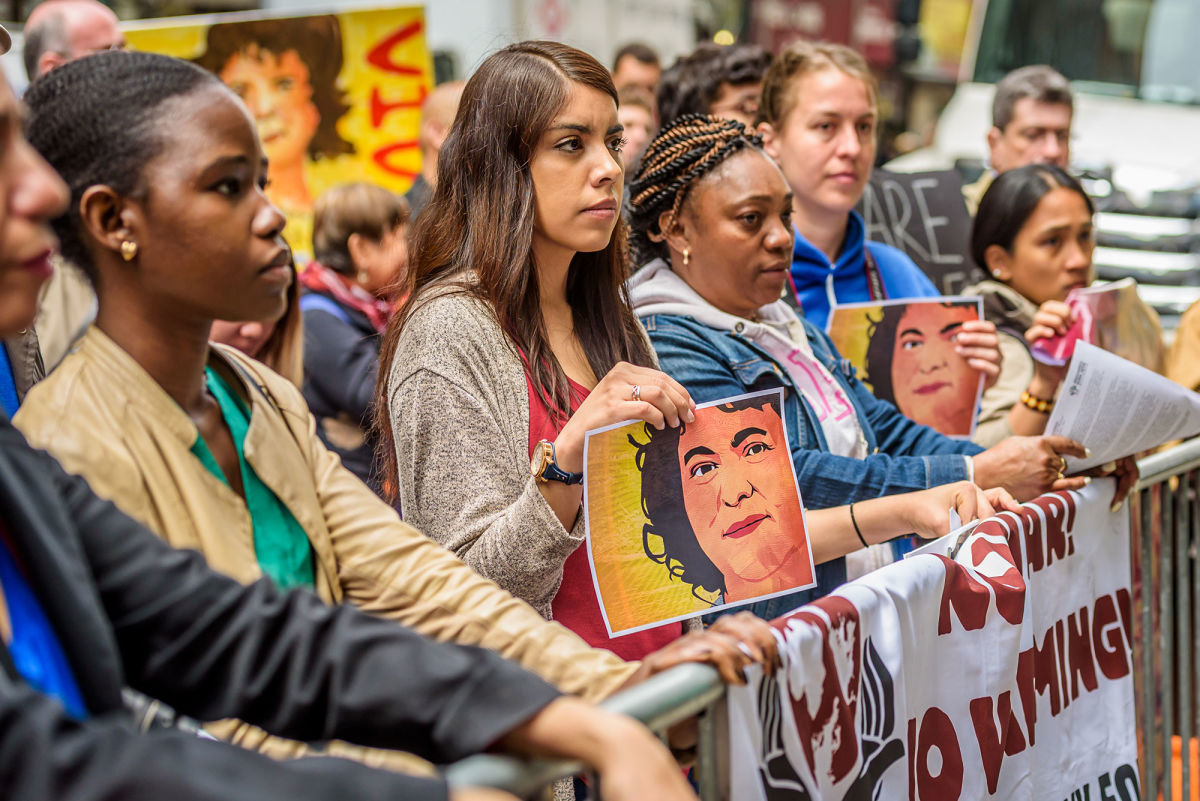
(Español abajo) This week will mark eight months without justice in the assassination of Berta Cáceres. Her murder in March of this year was an escalation against Honduran social movement leaders in an already violent environment rampant with impunity. Meanwhile, Honduran social movements continue at great risk to resist the militarization of their communities with U.S. security aid. There have been

several more high level assassinations

of

human rights leaders

since March–this has got to stop!

Support the work of Central American communities struggling on the front lines!


Click here to sign CRLN’s letter to your Representative


asking them to support H.R.5474, the “

Berta Cáceres Human Rights in Honduras Act

,” which would suspend U.S. security aid to Honduras until the Honduran police and military demonstrate respect for human rights according to international standards.


Resiste Militarización en Honduras HOY

Esta semana marcará ocho meses sin justicia en el asesinato de Berta Cáceres. Su asesinato en marzo de este año fue una escalación en contra de lxs líderes Hondureñxs de movimientos sociales en un ambiente ya lleno de impunidad y violencia. Mientras tanto, los movimientos sociales en Honduras siguen resistiendo la militarización, la cual se lleva a cabo con fondos de seguridad de los EE.UU, de sus comunidades. Desde el marzo,

han sido varios otros asesinatos

de

líderes de derechos humanos

–¡ya basta!

¡Apoye el trabajo de las comunidades en el frente de la lucha!


Firme nuesta carta a su Representante


urgiendo que apoye H.R.5474, el “

Proyecto de Ley de Derechos Humanos en Honduras ‘Berta Cáceres’

,” que suspendería asistencia de seguridad de los EE.UU. a Honduras hasta que su ejército y policía conformen con normas internacionales de derechos humanos.

Read More
image-title

CRLN board member, Sidney Hollander, and program director, Gary Cozette, are currently in Honduras on human rights delegation with our partners,


La Voz de los de Abajo

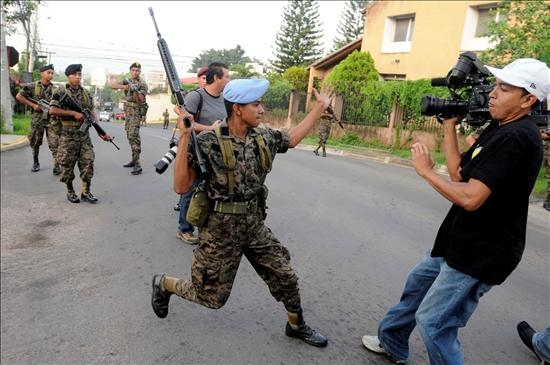
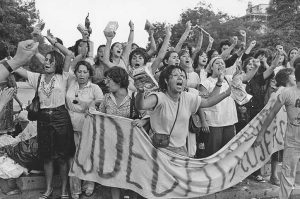
a Chicago-based group. Yesterday, on the anniversary of the coup, the group attended the Resistance March in Tegucigalpa, in solidarity with the Resistance movement and in protest of the on-going human rights abuses committed under coup-successor, President “Pepe” Lobo. Below is a letter from Gary and pictures from the march.
Dear CRLN Members and Friends,

Yesterday, our Chicago delegation accompanied the lively, diverse Resistance March in the Honduran capital of Tegucigalpa. Sidney Hollander, the CRLN Board member on this delegation, calculates turn-out by about how many people can fill a baseball stadium, which he estimates at 40,000. His guess? A shade under 40,000. Others estimated as high as 100,000.   We heard unconfirmed reports that some buses coming to the march were not allowed to enter Tegucigalpa. The reason the numbers were lower in Tegucigalpa than in previous major marches is in large part because the Frente has decided to decentralize them. Subsequently, major marches took place in all parts of the country yesterday. In Tegucigalpa, I was amazed by the great number of young people, ages 14-25, participating with great creativity. We hope to have pictures on our web site soon. In the mean time, you can see pictures from one of the web sites noted below in today’s


Hemispheric Brief


coverage of the coup anniversary.

On a negative note,


Berta Caceres,


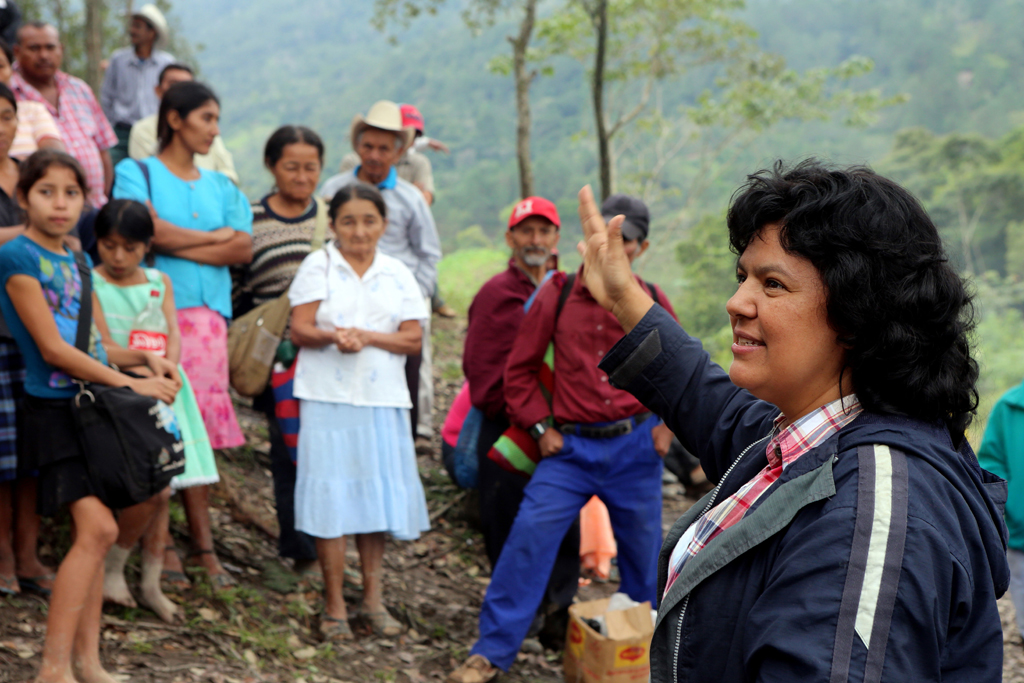
a key leader of COPINH, the national indigenous organization of Honduras, was taken captive by military police in the town of La Esperanza. After the local population mobilized at the police station and an urgent action alert went out, Berta was released several hours after her capture. However, the police confiscated from Berta 400 signed affidavits seeking a national Constitutional assembly. The Resistance Front is organizing across Honduras to secure over 1 million signed affidavits to convene a national constituent assembly to draft a new Constitution to replace the current one drafted in 1982 amid the Cold War violence of the 1980s.  Diverse sectors of Honduran civil society in the resistance movement tell us that the current Constitution is privileging the interests of the oligarchy, the elite and transnational corporations seeking to “loot” their national resources.


Gary L. Cozette, Program Director

Hemispheric Brief – June 29, 2010 / Excerpts covering Honduras

In Honduras, more on the one year anniversary of the coup.

IPS has a good report

from Thelma Mejía who says “defacto” military veto power in the country continues to block any possible political or electoral reforms in the country.  The story comes after the head of the Honduran Supreme Electoral Court (TSE) said the possibility of ending the military’s role as the transporter of ballot boxes during elections was being considered.  Just days later, however, the TSE changed its tune entirely after a meeting with senior military officials.  According to IPS, the TSE now it “will seek to ‘expand’ the functions of the military [in the electoral process], including the possibility of allowing members of the armed forces to vote. According to Leticia Salomón, an expert in military affairs, one of the most significant consequences of last year’s coup has been the growing role of the military in the public sphere.  The country now has “highly politicized security forces, and in the case of the military, the leadership has become a decision-making body, says Salomón.

The pro-coup


El Heraldo


reports on FNRP protests yesterday, saying only about 2000 individuals showed up for marches in the capital commemorating last year’s coup.  I haven’t seen figures from the FNRP itself yet but

Vos el Soberano

does have photos. Pro-coup

La Tribuna

, meanwhile, reports on FNRP marches in San Pedro Sula where some 3000 resistance members took a bridge for nearly three hours.  Meanwhile, the FNRP announced it had collected

some 600,000 signatures

in favor of holding a constituent assembly.  For his part, Mel Zelaya watched events from the Dominican Republic.  In a letter released on the coup’s anniversary, Mr. Zelaya’s harshest words were saved for the United States, which, he now claims, was “behind the coup.”  As the

AP

reports, Zelaya cited what he called the “public support the United States wound up giving to the coup.”  And RAJ at

Honduras Culture and Politics

has a list of recommendations about what the Lobo government could do to start a process of real national dialogue.  I recommend reading in-full.

Read More
image-title


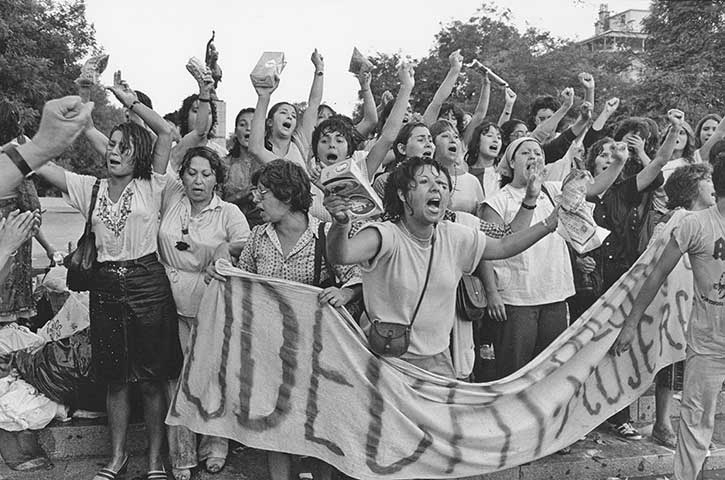
El viernes, 16 de diciembre, CRLN, La Voz de Los de Abajo, y varixs compañerxs de Chicago llevaron 200 cartas de Navidad firmadas por residentes de Illinois hasta la oficina local del Senador Durbin para urgir que ponga un alto de inmediato a toda la asistencia militar de los EE.UU. a Honduras hasta que cumplan con estándares internacionales de derechos humanos.

Miembros y amigxs de CRLN hicieron posible este esfuerzo por sus firmas en las cartas al Senador, quien tiene una posición de alto rango en el Subcomité de Defensa del Comité de Asignaciones. Con esta posición él tiene el poder de suspender la asistencia de seguridad a Honduras dado las violaciones graves y consistentes en contra los derechos humanos en Honduras. Nuestro equipo llevó las cartas a la oficina del Senador y se reunieron con el personal de su oficina, quienes expresaron preocupación por la situación en Honduras y nos prometieron pasar nuestras peticiones al Senador. En este momento, no pudieron darnos una respuesta fija sobre el asunto de la suspensión de la asistencia de seguridad.

Seguiremos presionando el Senador Durbin en el año 2017 y esperamos trabajo duro para ganar el apoyo también de la Senadora-elegida Duckworth.


Estas 200 firmantes también aparecieron en cartas a los miembros de Illinois de la Cámera Baja pidiendo que apoyen H.R.5474 El Proyecto de Ley “Berta Cáceres” de Derechos Humanos en Honduras, una ley que también suspendería la asistencia militar y policiaca a Honduras.

En este momento, siete de los diez Demócratas de Illinois decidieron co-patrocinar H.R.5474, un gran triunfo que no habría sido posible sin la presión de base que por ustedes.


Berta Cáceres

, co-fundadora del Consejo Cívico y Popular de Organizaciones Indígenas de Honduras (COPINH), fue asesinada el 2 de mazo de 2016 y en los nueve meses que han pasado desde su asesinato, las carpetas del caso fueron robados y su familia ha sido excluida completamente del proceso judicial. En julio,

Nelson Garcia

, miembro de COPINH, fue asesinado y

Tomás Gómez Membreño

, Coordinador General actual de COPINH quien visitó a la oficina de Senador Durbin pidiendo que suspenda la asistencia de seguridad en junio del 2016, sobrevivió un intento en contra su vida.

En octubre,

Jose Angel Flores

, Presidente de la organización campesina MUCA (Movimiento Unido Campesino del Aguán) y

Silmer Dionosio George

, otro miembro de MUCA, fueron asesinados por hombres armados mientras salían de una reunión de miembros de MUCA. Más activistas y defensores de derechos humanos fueron

detenidos y amenazados

por fuerzas de seguridad Hondureñas mientras manifestaban pacíficamente en contra de la privatización de las autopistas. El reporte más reciénte sobre derechos humanos en Honduras de la Asociación de Participación de los Ciudadanos aclaró

que en 2016 hubieron 32 asesinatos

de defensores de derechos humanos, activistas ambientales, y defensores de derechos campesinos e Indígenas.


A pesar de estos ataques, acusaciones creíbles de la complicidad del estado Hondureño, y un nivel de impunidad de 95%, los EE.UU. ha mandado $200 millones en la forma de asistencia militar y policiaca desde el golpe de estado en el 2009. Además, el mes pasado, el Departamento del Estado certificó—con poca o sin evidencia—que el gobierno Hondureño cumplió con condiciones de derechos humanos puestas por el Congreso Estadounidense, así soltando $55,000,000 en asistencia de seguridad.

Como respuesta, aproximadamente 200 residentes de Illinois fueron representados en la entrega de las cartas de navidad a la oficina del Senador urgiendo que use su, “poder para suspender la asistencia de seguridad hasta que la policía y ejército Hondureño cumplan con los estándares internacionales de derechos humanos. Nuestros impuestos ya no deben apoyar las fuerzas de seguridad Hondureñas con los recursos materiales y legitimidad internacional para poder cometer violaciones de derechos humanos con impunidad.”


Mientras la Sesión 114va del Congreso ya se terminó para el 2016, seguiremos apoyando nuestrxs compañerxs en Honduras y presionando al Senador Durbin y todxs los oficiales elegidxs para suspender la asistencia de seguridad Estadounidense a Honduras. Seguiremos exigiendo que respondan a los asesinatos y violencia en contra de lxs defensores de derechos humanos en Honduras.

Read More
image-title

(The New York Times did not print this letter from the Coalition Against Impunity, a group of Honduran civil society human rights organizations)

Re: How the Most Dangerous Place on Earth Got Safer

As the Coalition Against Impunity, a group of Honduran civil society human rights organizations, we strongly disagree that the impact of US aid is positive. Our experience on the ground shows thatviolence is rampant — and seriously underreported—and we still face high levels of impunity. For this reason, we recently sent a letter to the US Congress demanding suspension of aid to the Honduran State under the Alliance for Prosperity, due to the lack of political will to protect human rights.

Nazario’s opinion piece calls for more U.S. aid precisely when a group of 31 legislators led by Rep. Hank Johnson has presented the much-needed “Berta Caceres Human Rights in Honduras Act” to suspend all security aid to Honduras following Caceres’ assassination last March. Among those detained are two army officers, one on active duty.

To cite supposed progress in one neighborhood and deduce that US aid benefits our whole country is either careless or tendentious. The human rights crisis in Honduras will only improve when the US ceases to support a government that commits crimes against its own people with impunity and, rather than being sanctioned, is rewarded with millions of US taxpayer dollars.

The Coalition Against Impunity:

Asociación de Jóvenes en Movimiento (AJEM); Asociación de Jueces por la Democracia (AJD); Asociación de Mujeres Intibucanas Renovadas (AMIR); Asociación Feminista Trans (AFeT); Asociación FIAN Honduras; Asociación Hermanas Misioneras de San Carlos Borromeo Scalabrinianas; Asociación Intermunicipal de Desarrollo y Vigilancia Social de Honduras (AIDEVISH); Asociación LGTB Arcoiris de Honduras; Asociación Nacional de Personas viviendo con SIDA (ASONAPVSIDA); Asociación para una Ciudadanía Participativa (ACI-PARTICIPA); CARITAS – Diócesis de San Pedro Sula; Centro de Derechos de Mujeres (CDM); Centro de Desarrollo Humano (CDH); Centro de Educación y Prevención en Salud, Sexualidad y Sida (CEPRES); Centro de Estudios de la Mujer Honduras (CEM-H); Centro de Estudios para la Democracia (CESPAD); Centro de Investigación y Promoción de Derechos Humanos (CIPRODEH); Centro para la Prevención, Tratamiento y Rehabilitación de Víctimas de la Tortura y sus Familiares (CPTRT); Colectivo Diamantes Limeños LGTB; Colectivo Gemas; Colectivo Unidad Color Rosa; Comité de Familiares de Detenidos Desaparecidos de Honduras (COFADEH); Comité de Familiares de Migrantes Desaparecidos de El Progreso (COFAMIPRO); Comité por la Libre Expresión C-Libre; Convergencia por los Derechos Humanos de la Zona Nor Occidental; Crisálidas de Villanueva; Coordinación de Instituciones Privadas por las niñas, niños, adolescentes, jóvenes y sus derechos (COIPRODEN); Equipo de Monitoreo Independiente de Honduras (EMIH); Equipo de Reflexión, Investigación y Comunicación (ERIC-SJ); Feministas Universitarias; Familia Fransciscana de Honduras (JPIC); Frente Amplio del COPEMH; Foro de Mujeres por la Vida; Foro Nacional para las Migraciones (FONAMIH); Foro Social de la Deuda Externa y Desarrollo de Honduras (FOSDEH); Indignados Unidos por Honduras; JASS en Honduras; Movimiento Amplio por la Dignidad y la Justicia (MADJ); Movimiento Diversidad en Resistencia (MDR); Movimiento de Mujeres por la Paz “Visitación Padilla”; Observatorio Permanente de Derechos Humanos de El Aguán; Organismo Cristiano de Desarrollo Integral (OCDIH); Pastoral de Movilidad Humana de Honduras; Red de Mujeres Jóvenes de Cortés; Red de Mujeres Unidas de Colonia “Ramón Amaya Amador”; Red de Participación de Organizaciones de Sociedad Civil Siguatepeque (RPOSC); Red Nacional de Defensoras de Derechos Humanos en Honduras; Tribuna de Mujeres contra los Femicidios; Unión de Empresas y Organizaciones de Trabajadores del Campo (UTC – La Paz).

Read More